008 BREED INDEX

Gifts by breed

Every gift is personalised with your horse's name, breed and yard. The studbook below lists the breeds we recognise in the personalisation form — open any entry for breed-specific gift notes.

The studbook

№ 020 entries · 2026 catalogue
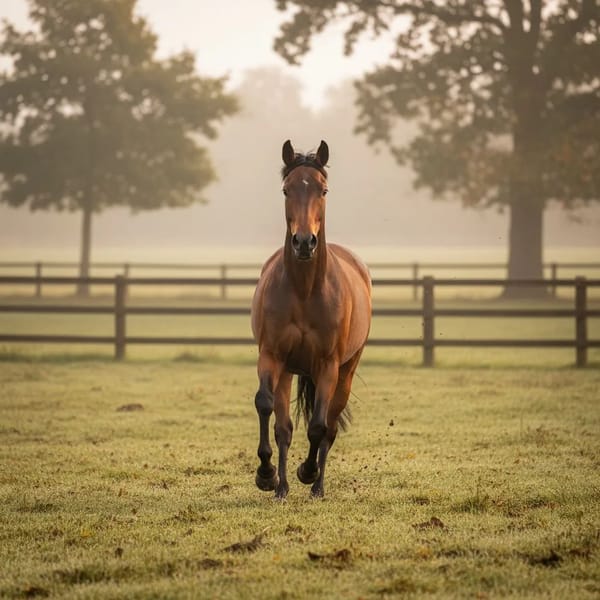
A bay Thoroughbred horse photographed in profile in a paddock, showing the breed's refined head, long sloping shoulder, and deep girth that mark out the British racehorse. № 001
Thoroughbred

Bay, chestnut, off-the-track — the British Thoroughbred has a second career after the racecourse.
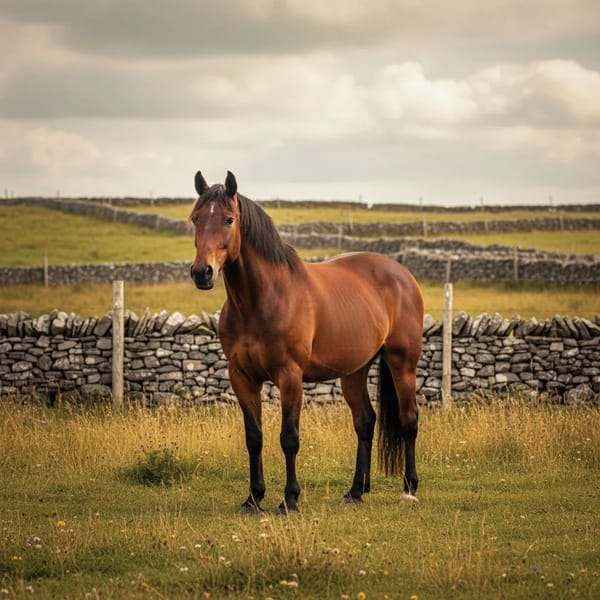
A bay Irish Sport Horse standing in a hunting yard — the Thoroughbred × Irish Draught cross known for substance, bone, and willingness over big fences. № 002
Irish Sport Horse

Tough, kind, brilliant over a fence — the working amateur's eventing horse.
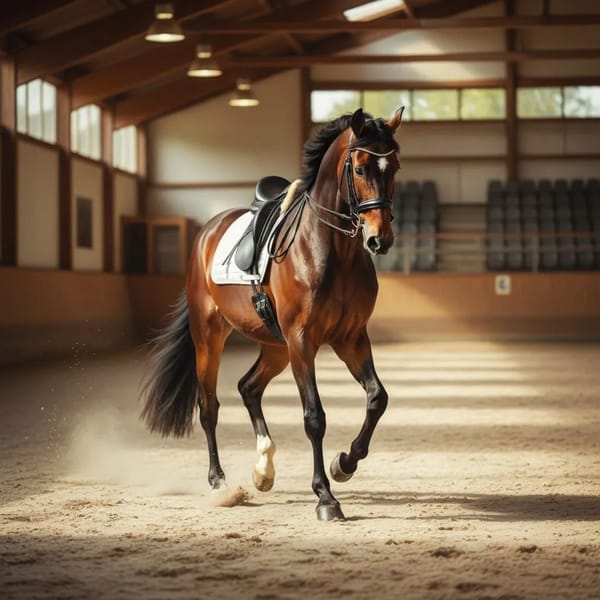
A bay warmblood sport horse in a dressage manège showing the broad topline, powerful hindquarters, and elevated movement of the European sport horse register. № 003
Warmblood

Hanoverian, KWPN, Trakehner, Holsteiner — the European sport horse register family.
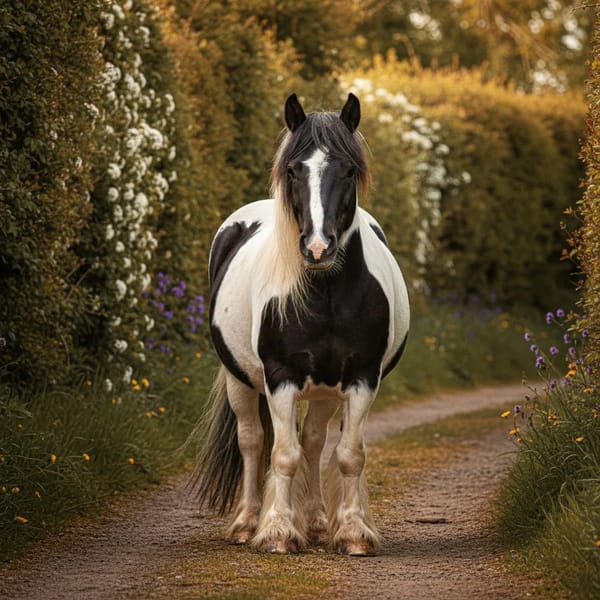
A piebald cob with full feathered legs standing in a field — stocky frame, deep girth, kind eye, the family hacker silhouette of the Welsh and Gypsy cob types. № 004
Cob

The family horse for half the country — cobs do the school-master job for a generation.
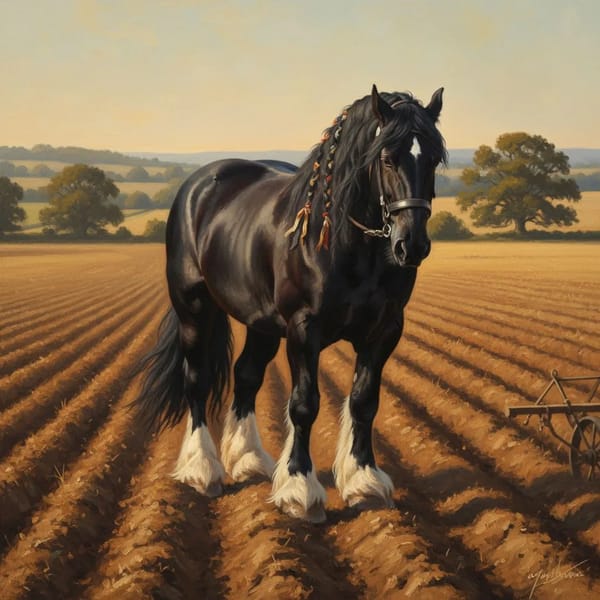
A black Shire heavy horse showing massive feathered legs and the 17–19hh draught silhouette — the British heavy breed listed Priority by the Rare Breeds Survival Trust. № 005
Shire

A tonne of horse with a kind eye and a feathered leg — the Shire is conservation in motion.
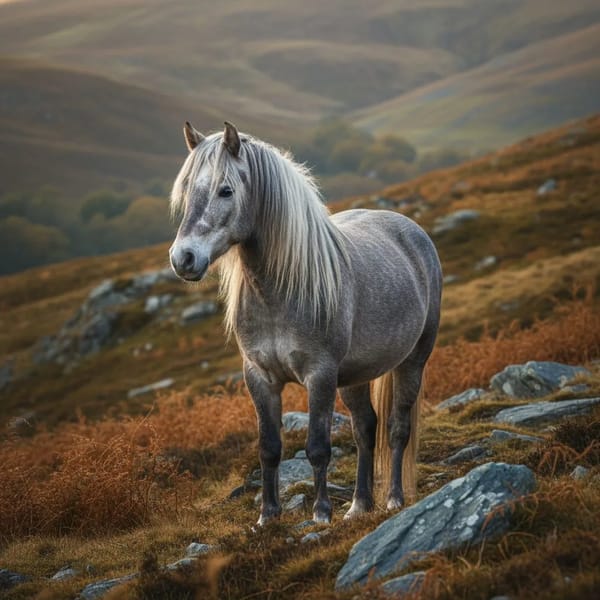
A grey Welsh Mountain pony (Section A) with a long mane and fine head — the original British native pony of Pony Club lead-rein and showing. № 006
Welsh Pony

Four Welsh sections, four different ponies — the breed family that runs British Pony Club.
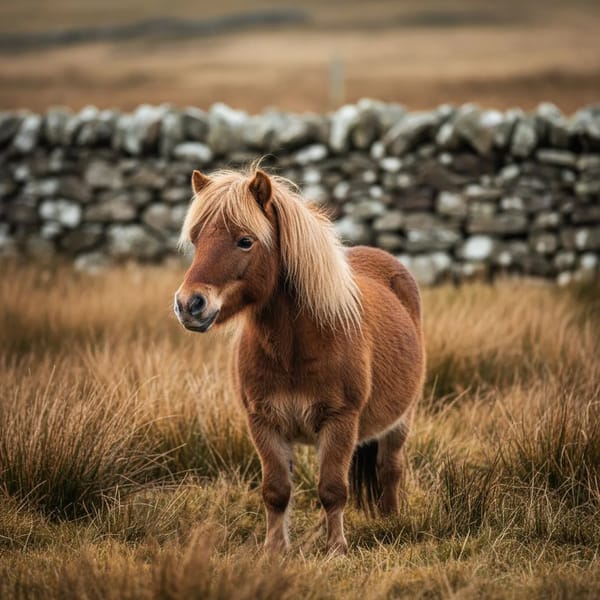
A double-coated Shetland pony with a full mane and tail, standing under 42 inches at the shoulder — the smallest British native breed with the largest character. № 007
Shetland Pony

The smallest British native pony with the biggest personality on the yard.
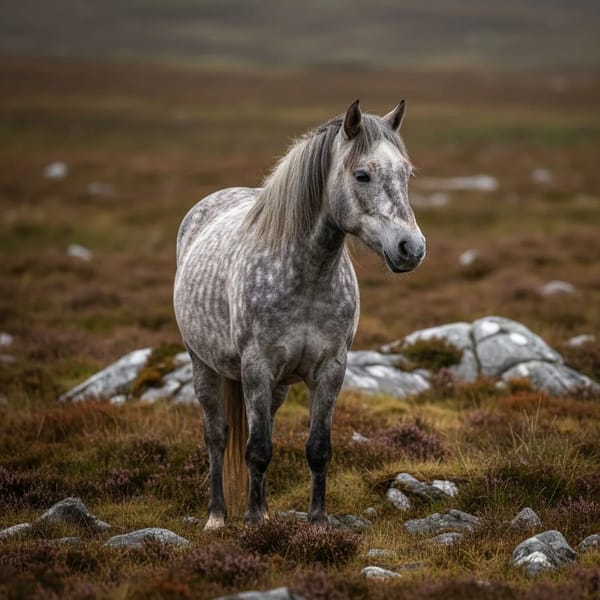
A grey Connemara pony at three-quarter angle — Ireland's native pony, limestone-bred in County Galway, typically born dark and greying out across the first decade. № 008
Connemara Pony

Ireland's native pony — limestone-bred, often grey, often the family's eventer.
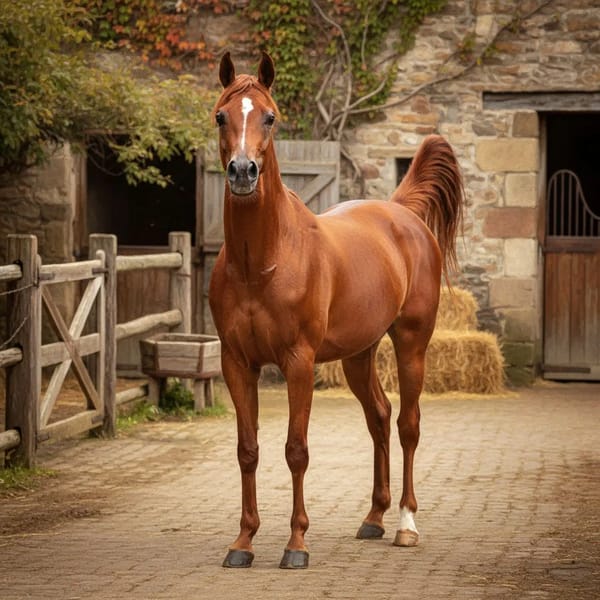
A grey Arabian horse showing the breed's dished facial profile, large dark eye, and high tail carriage — the foundation breed of every modern light-horse register. № 009
Arabian

A millennium of selective breeding — refinement, fine bone, the foundation of every modern light-horse breed.
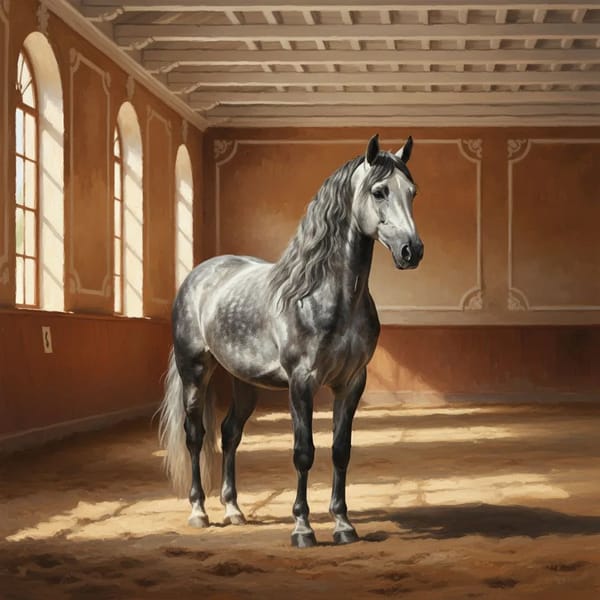
A grey Andalusian (Pura Raza Española) showing the breed's arched neck, thick mane, and elevated forehand — Spain's baroque horse, registered through ANCCE. № 010
Andalusian

Spain's baroque horse — thick mane, arched neck, the breed that built the classical riding hall.
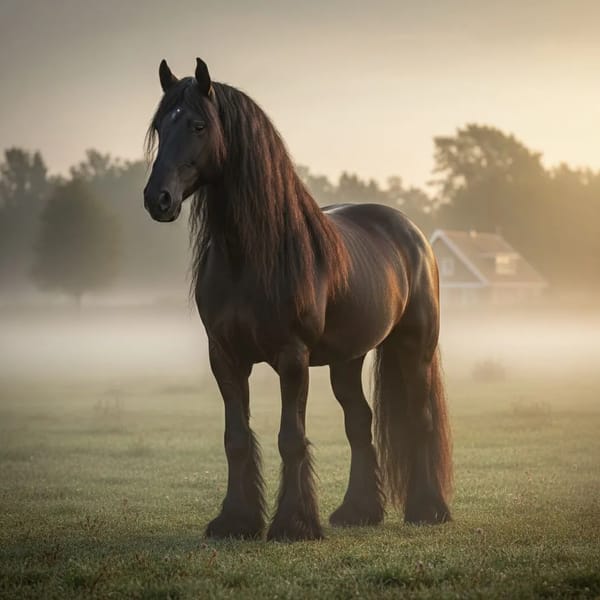
A pure black Friesian horse with abundant feathered legs, long flowing mane, and high knee action — the iconic Dutch breed registered through KFPS Holland. № 011
Friesian

Pure black, abundant feathering, long mane — the dramatic Dutch breed.
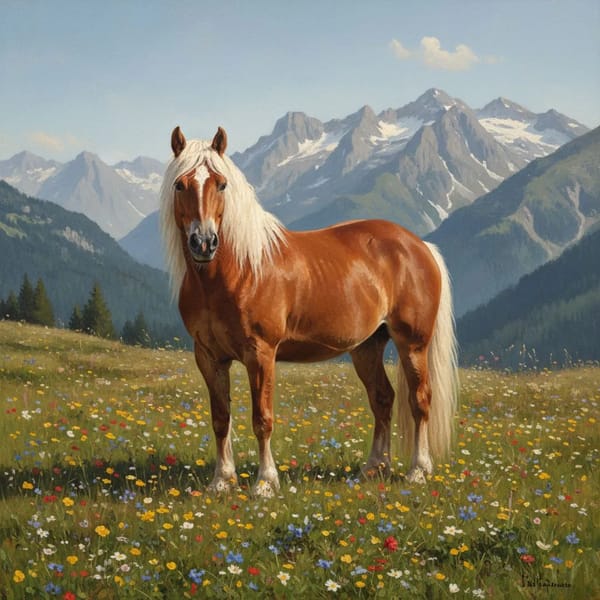
A chestnut Haflinger pony with the breed's signature flaxen mane and tail — the sturdy Tyrolean family pony bred near Hafling in South Tyrol. № 012
Haflinger

Chestnut with flaxen mane, Tyrolean origin, the family pony with a 30-year working life.
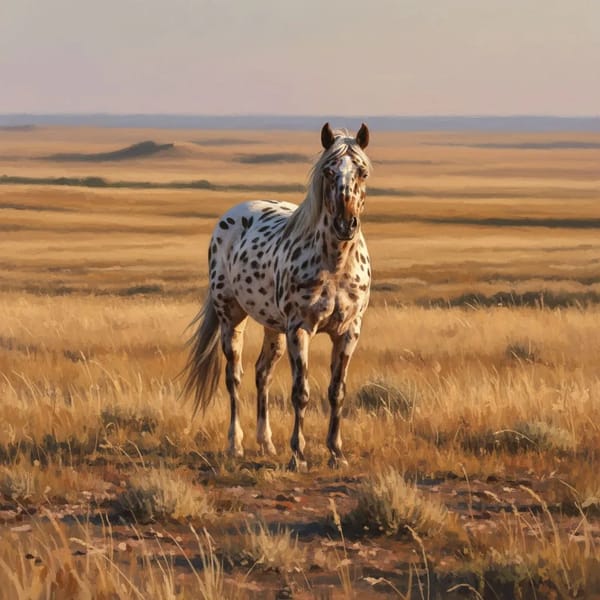
An Appaloosa horse showing leopard-complex spotting, striped hooves, and the white sclera around the eye that identifies the Nez Perce breed of the Pacific Northwest. № 013
Appaloosa

No two Appaloosas look the same — the spotted breed of the Pacific Northwest.
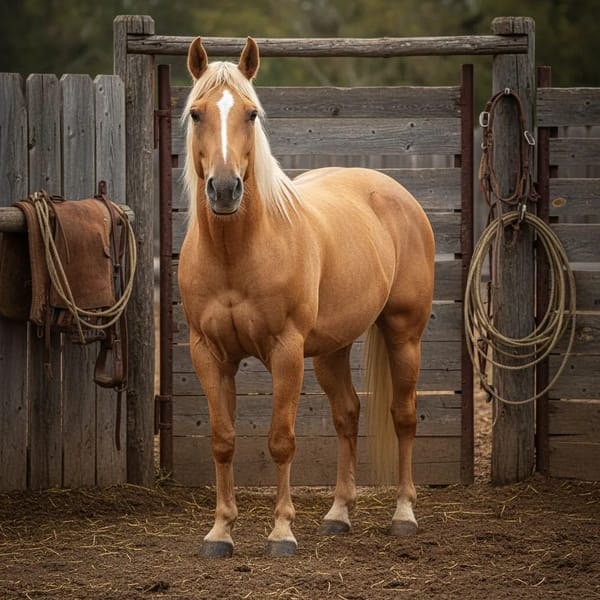
A palomino American Quarter Horse in Western tack — the compact, muscular stock-horse build bred for sprinting the quarter mile and working cattle. № 014
Quarter Horse

America's working stock horse — sprint speed, cow sense, the dominant breed of the global horse register.
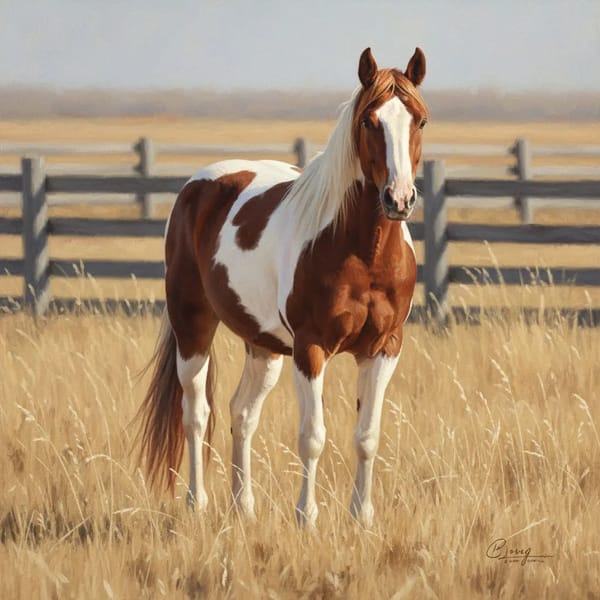
A tobiano American Paint Horse showing the pinto coat pattern — white crossing the topline against a chestnut base, the visually unique stock horse of the APHA registry. № 015
Paint Horse

Tobiano, overo, tovero — every Paint Horse is visually unique by genetic design.
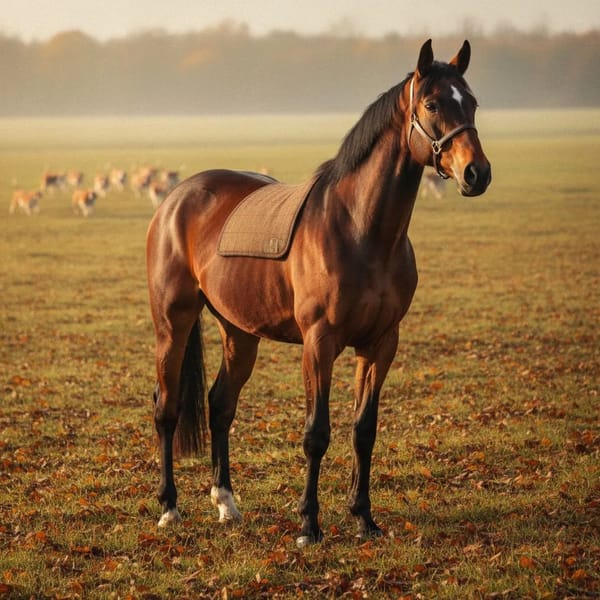
A bay British hunter in a country tack room — bone, substance, the 15.2–17hh Irish-bred sport horse with the temperament for a five-hour day in deep going. № 016
Hunter

Bone, substance, day in deep going — the British hunter is a type that survives.
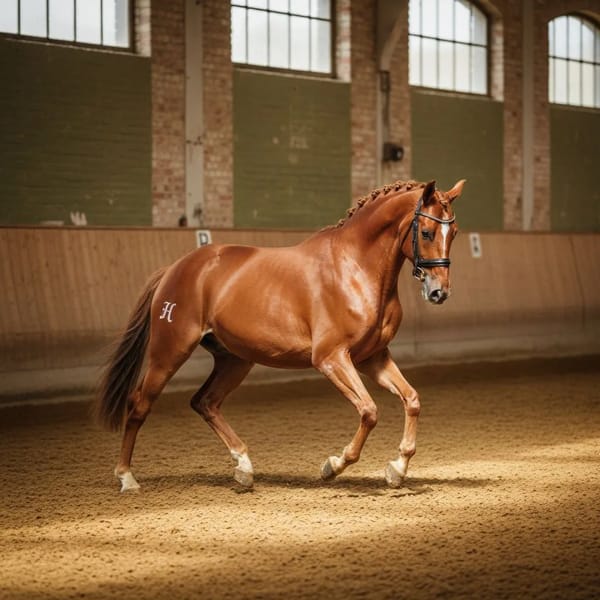
A bay Hanoverian sport horse with the Verband H-brand on the left thigh — the German register that has produced Olympic dressage and showjumping medallists since 1735. № 017
Hanoverian

The branded H — the German register that has produced Olympic medallists for two centuries.
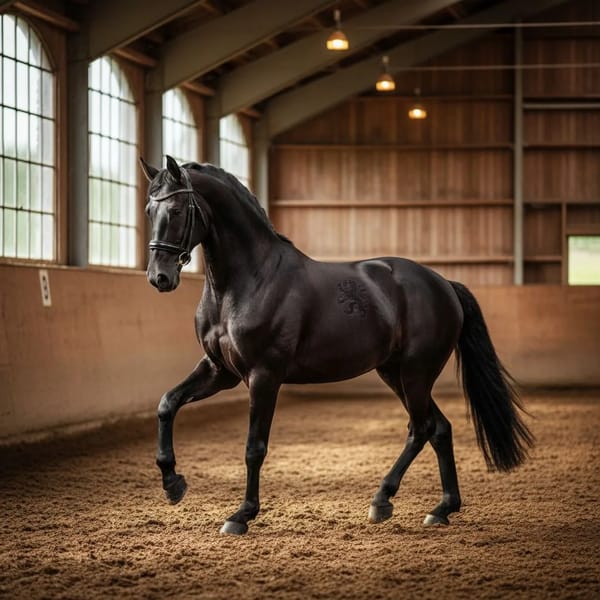
A bay KWPN Dutch Warmblood at a keuring grading, showing the elevated trot and broad topline of the Dutch sport horse register and its crowned-lion neck brand. № 018
KWPN (Dutch Warmblood)

Stamboek, Keur, Ster, Elite — the Dutch sport horse studbook with the predicate ladder.
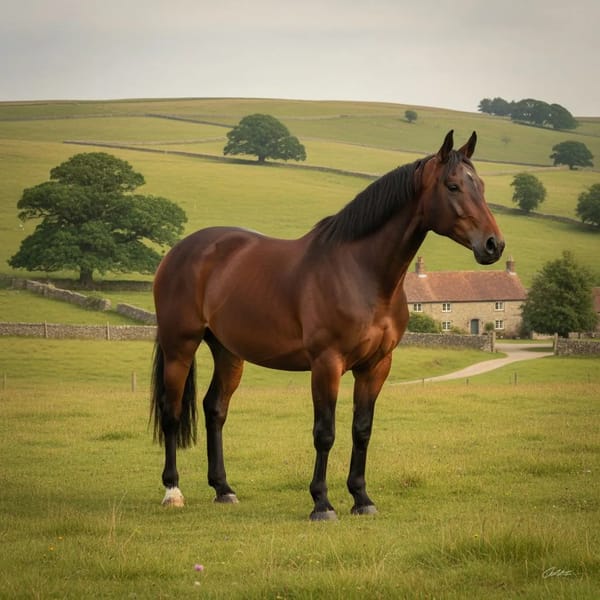
A solid bay Cleveland Bay horse in profile, no white markings — England's oldest established breed, listed Priority by the Rare Breeds Survival Trust. № 019
Cleveland Bay

England's oldest established breed — and one of the rarest in the world.
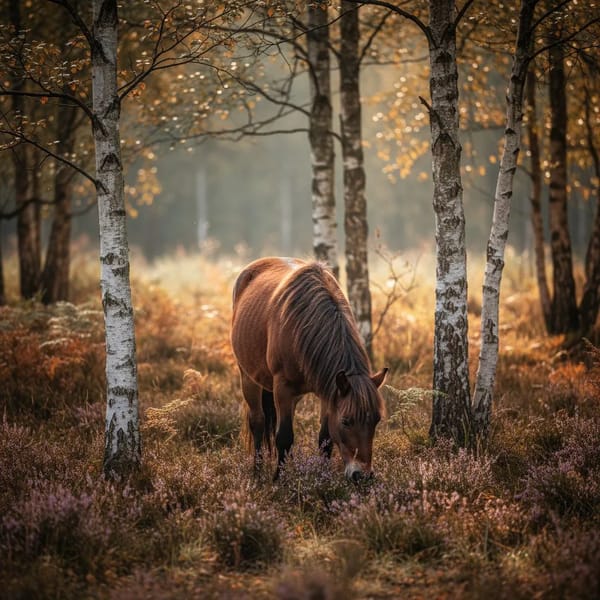
A bay New Forest pony grazing on Crown lands in Hampshire — the semi-feral British native breed under 14.2hh, gathered annually for the Verderers' drift. № 020
New Forest Pony

Hampshire-born, semi-feral, the British family's native pony.