Foal colour calculator
Pick the colour of the sire and the dam, and whether either is grey. You get the chance of each foal colour, shown as a range where the parents' hidden genes could change it.
The colours this pair can make
A bay sire and a chestnut dam. Where a range shows, the answer depends on genes you can't see from the coat; a DNA test of the parents narrows it.
| Foal's base colour | Chance |
|---|---|
| Bay | 25% to 100% |
| Chestnut | 0% to 50% |
| Black | 0% to 50% |
Neither parent is grey, so the foal will not turn grey.
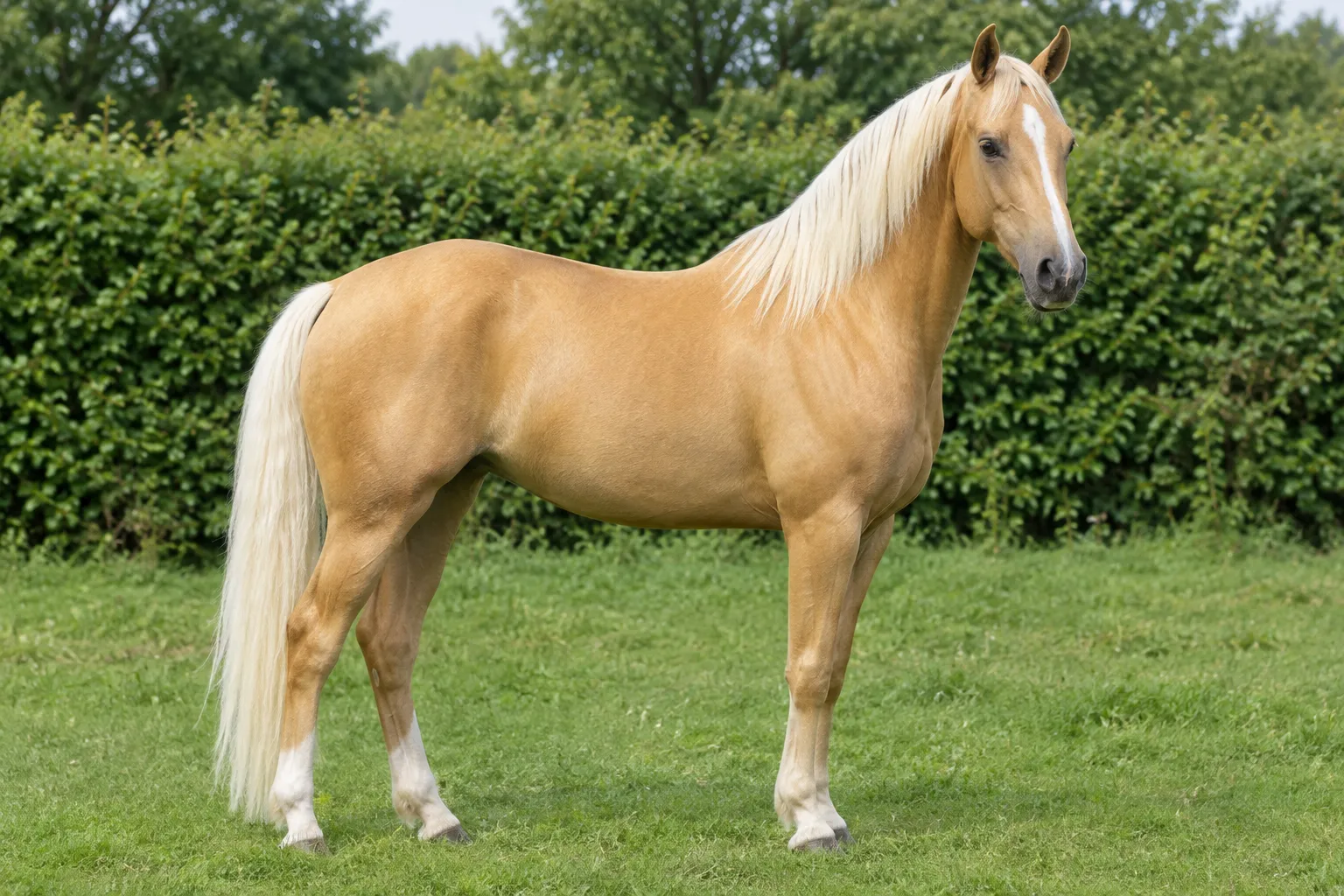
Got a horse worth framing? Turn a photo of them into a portrait, or put their name on a name print.
The four genes it uses
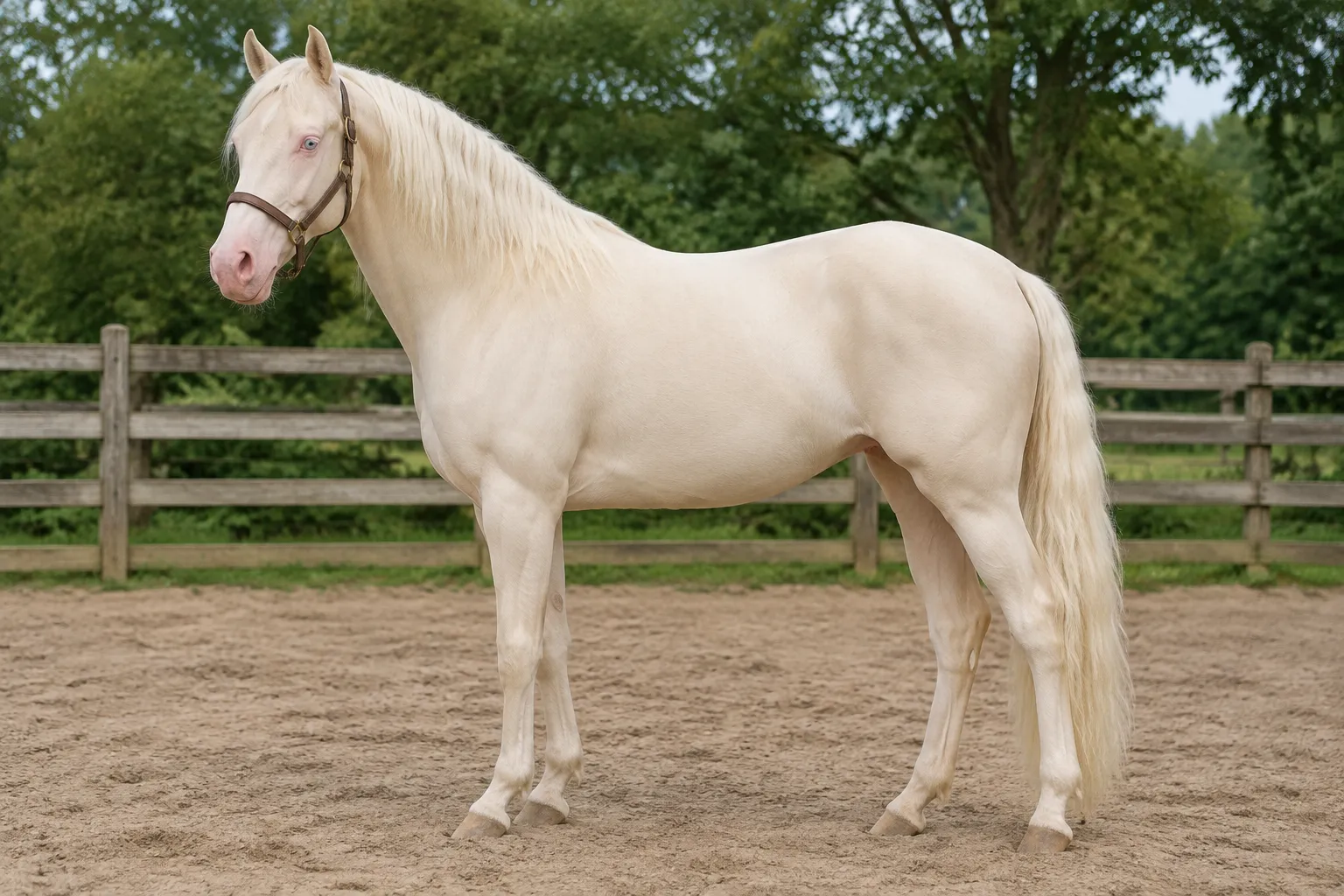
A horse's base colour comes down to two genes. The red factor gene decides whether a horse can make black pigment at all. The UC Davis Veterinary Genetics Laboratory says horses with two copies of the red allele "will not produce black pigment in their coat": they are chestnut.
The agouti gene then decides where any black goes. With at least one A, a horse has "black pigment restricted to the points", which makes a bay. With two a, it has "black pigment distributed uniformly over the body", which makes a black (VGL, Agouti).
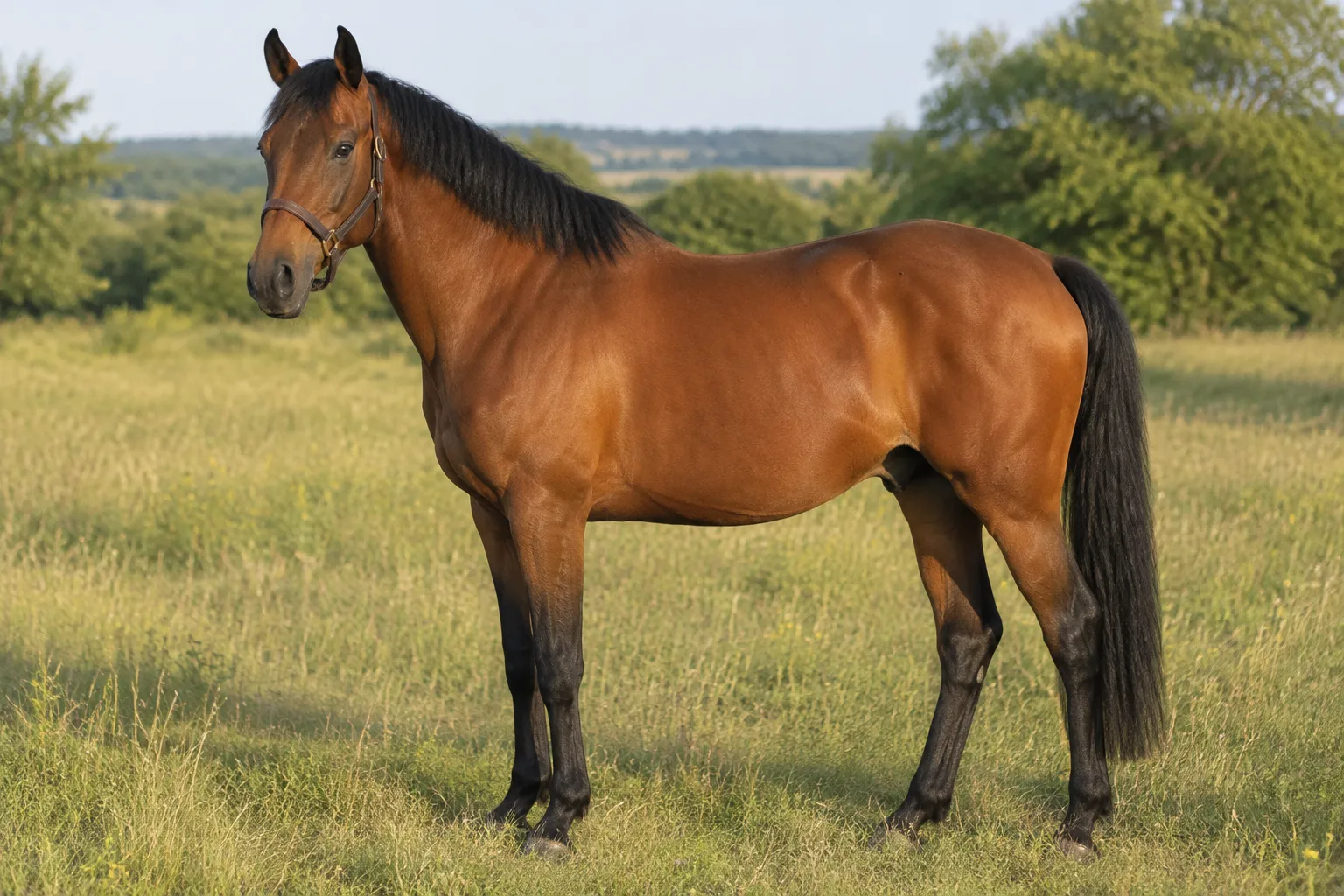
Cream lightens that base. One copy turns chestnut to palomino, bay to buckskin and black to smoky black. Two copies make cremello, perlino and smoky cream (VGL, Cream).
Grey works on top of everything. It is a dominant gene: a horse with even one copy turns grey, whatever else its coat genes say (Wikipedia, on grey horses). Greys are born another colour and lighten with age, which is why the tool asks what colour a grey parent was born.
Why you get ranges
You can't always see a horse's genes in its coat. A bay might carry a hidden red allele or might not. A chestnut carries agouti genes that never show. So the calculator works out the odds for every set of genes each parent could have, and shows the lowest and highest chance of each colour. A DNA colour test of the parents turns a range into one number. This way of showing it is our own; the gene rules are VGL's.
What it leaves out
Only these four genes are in it. Dun, silver, champagne, roan and the white patterns of coloured horses all follow their own genes, and the calculator doesn't model them. Our guide to horse colours covers how each one looks.
Sources
UC Davis Veterinary Genetics Laboratory: Red Factor, Agouti and Cream; Wikipedia: Gray horse. All read 30 October 2026.