Horse colours
Every horse colour starts from two pigments, black and red. Where the black goes, and what dilutes or whitens it, gives every coat from bay to cremello.
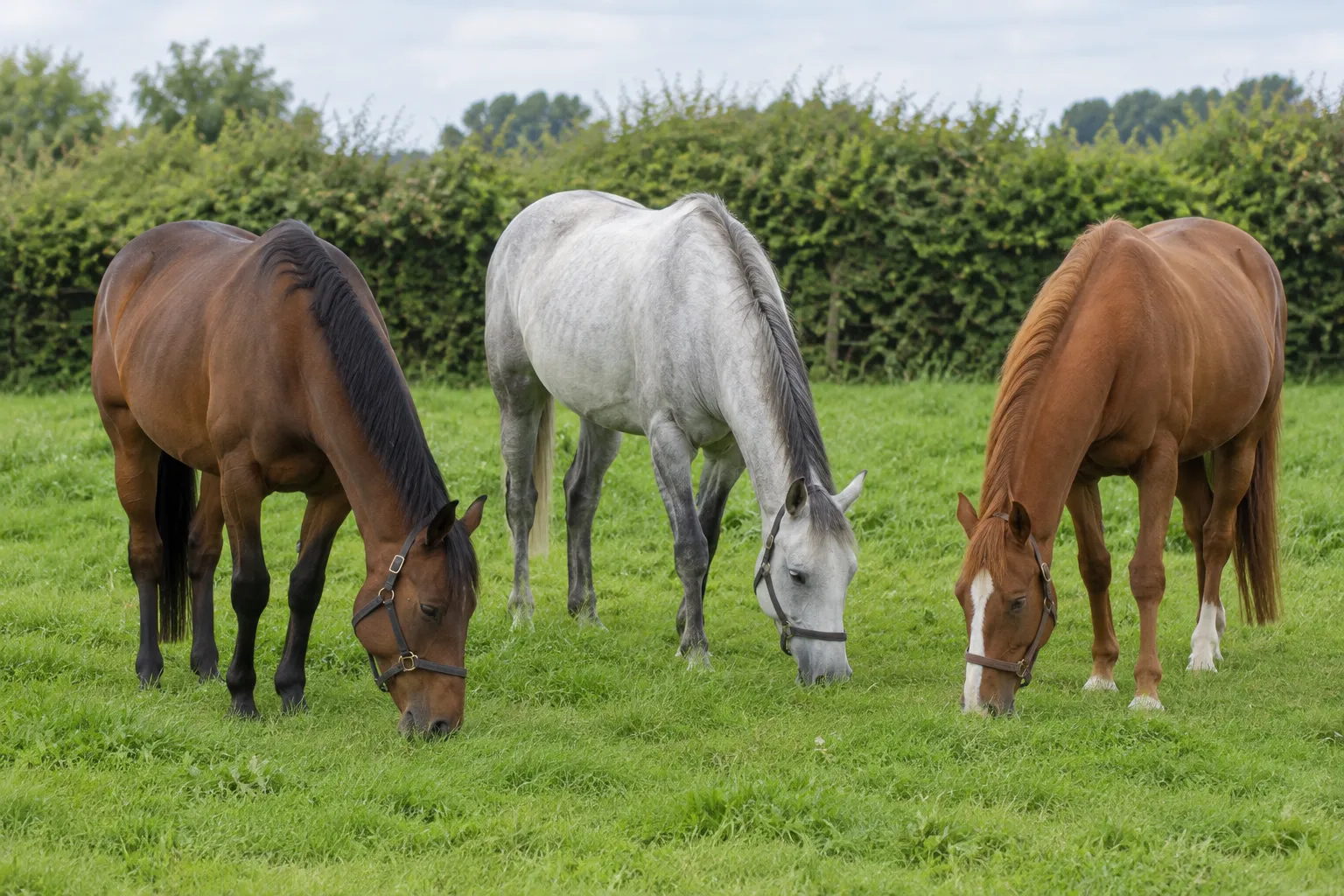
Short answer: horse colours come from two pigments, black and red, and a handful of genes that decide where the black goes and what changes it. Three base colours, chestnut, bay and black, cover most horses. Dilution genes such as cream and dun lighten them, grey and roan add white hair, and patterns such as piebald and skewbald put white patches on top.
| Colour | What you see | What makes it |
|---|---|---|
| Chestnut | Red-gold to liver, no black anywhere | Two copies of the recessive red gene |
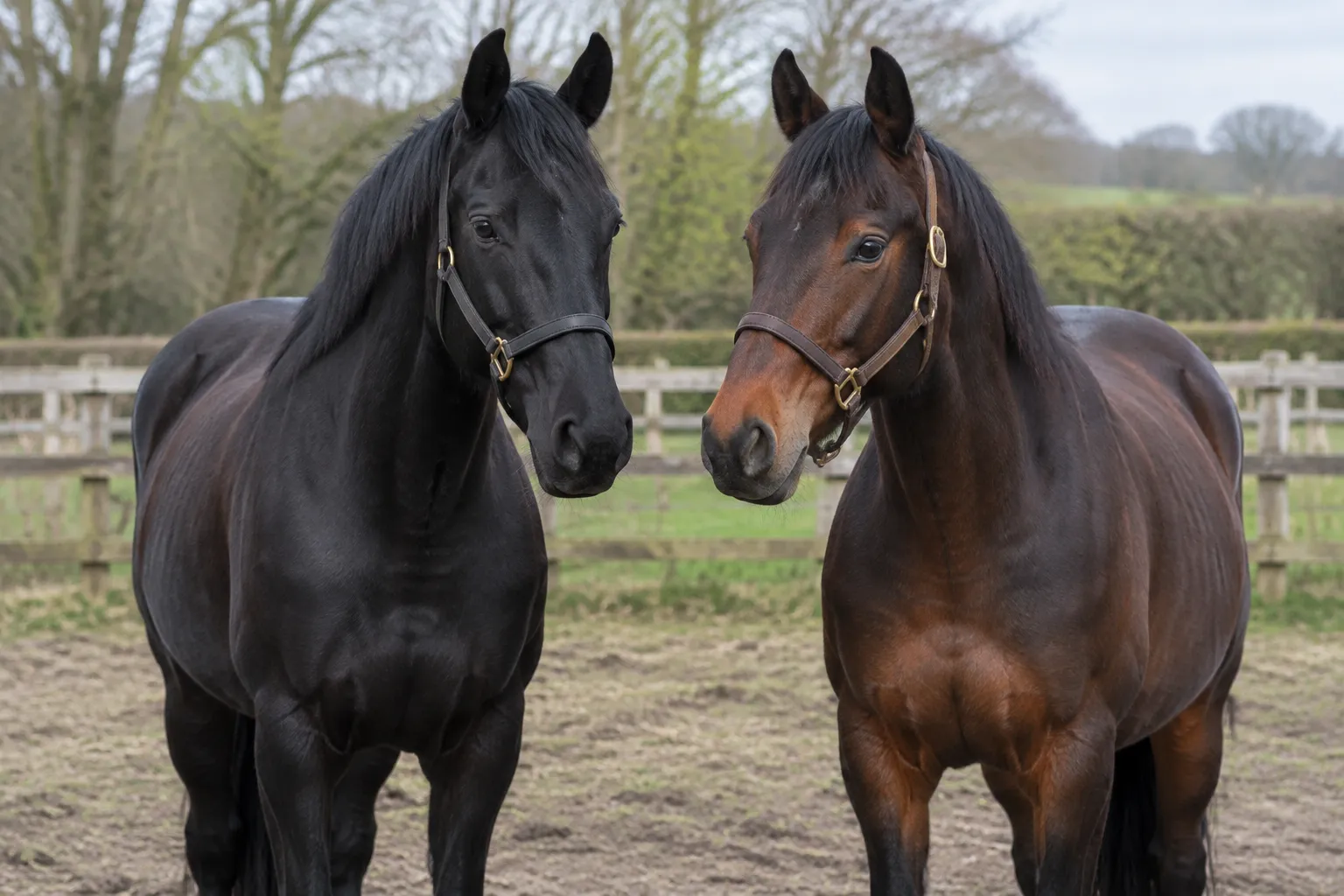
| Bay | Brown body, black mane, tail and lower legs | Black pigment held to the points |
| Black | Black all over, no brown on the muzzle or flanks | Black pigment with nothing restricting it |
| Palomino | Gold body, white or cream mane and tail | Chestnut plus one copy of cream |
| Buckskin | Gold or tan body with black points | Bay plus one copy of cream |
| Cremello | Cream body, pink skin, pale blue eyes | Chestnut plus two copies of cream |
| Dun | Diluted body with a dark stripe down the back | The dun gene |
| Grey | Born coloured, whitens with age | The dominant grey gene |
| Roan | White hairs through the body, solid head and legs | The dominant roan pattern |
| Piebald | Black and white patches | A white pattern on a black horse |
| Skewbald | White patches on any colour but black | A white pattern on any other colour |
The three base colours
A chestnut makes no black pigment at all, so it is red from nose to tail. A bay makes black, but a gene called Agouti keeps it to the mane, tail, lower legs and ear rims. A black has the black with nothing holding it back. The quickest way to tell a black from a dark bay is the muzzle and flanks: any brown hair there means bay.
Dilutions: cream and dun
Cream turns red pigment yellow. One copy makes a chestnut palomino and a bay buckskin; two copies make the pale cremello and perlino, with pink skin and blue eyes. Dun lightens the body but leaves the points dark and adds a stripe along the back, often with faint bars on the legs.
Grey and roan
Both mix white hair into a coloured coat, and they're easy to confuse in a young horse. A grey is born dark and whitens year by year until it looks white. A roan is born with white hairs through its body, keeps a solid head and legs, and looks much the same all its life.
Patches, eyes and markings
A coloured horse has large white patches: piebald on black, skewbald on any other colour. A blagdon has white splashed up from the belly. White on the face can bring a pale wall eye or blue eyes.
Smaller white markings have names of their own. On the face, a star is white on the forehead, a stripe a narrow line down the face, a blaze a wide one, and a snip a patch between the nostrils; a bald face covers most of the face. On the legs, a sock reaches the fetlock and a stocking the knee or hock.
All the colour guides
Each guide below covers one colour or pattern with pictures, the genetics behind it where that matters, and the words British owners use. They start with the base colours and end with the eyes.
Colour is the first thing anyone says about a horse, and the hardest thing for a painter to get right. A portrait made from your own photo keeps your horse's exact shade.