Why do some horses have blue eyes?
Blue eyes in horses come from the genes that place pigment, and there is more than one route to them.
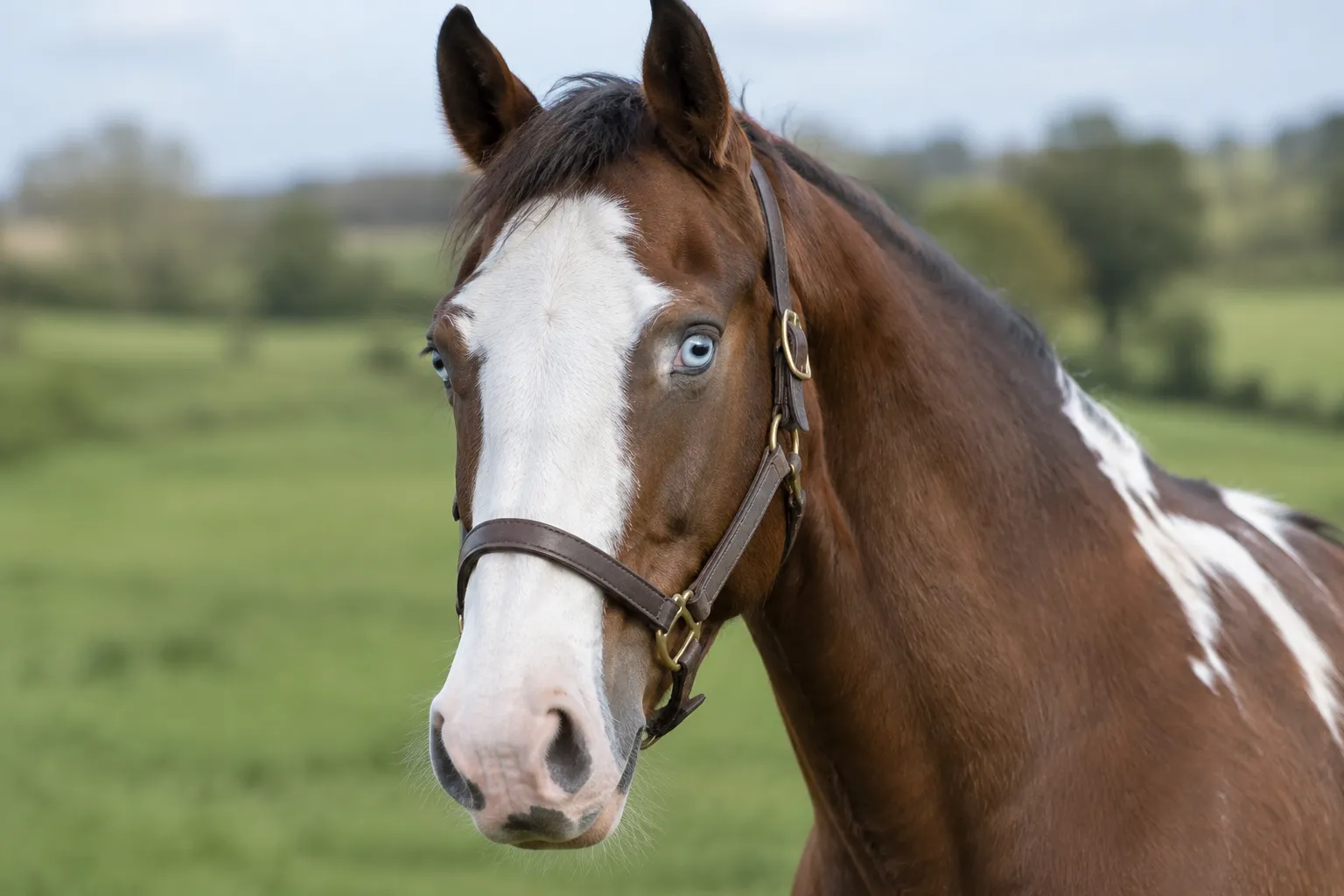
Blue eyes in horses come from the genes that place pigment, and there is more than one route to them. The clearest documented one is splashed white. UC Davis’s Veterinary Genetics Laboratory describes it as “a variable white spotting pattern characterized by a broad blaze, extended white markings on the legs, variable white spotting on the belly, and often one or both blue eyes”, and has identified eight separate mutations that cause it, across two genes.
The three main routes
| Cause | What the horse looks like | The eyes |
|---|---|---|
| Splashed white | Broad blaze, white legs, white on the belly, as if dipped in paint from below | Often one or both blue |
| Two copies of cream | Cremello or perlino: a cream body and pink skin | Pale blue |
| Pearl with one cream | A pale coat that looks like a double cream | Blue or green |
Dilution genes
The VGL records that two copies of the cream allele give cremellos and perlinos, and that the pearl allele “interacts with cream dilution to produce pseudo-double cream dilute phenotypes including pale skin and blue/green eyes”. So a blue eye on a very pale horse and a blue eye beside a broad blaze aren’t the same thing happening.
Blue eyes and hearing
One thing worth stating carefully, because it’s often overstated: the VGL says “some, but not all, splashed white horses are also deaf”. It’s an association to be aware of, not a diagnosis. A horse that does not react to sound behind it, or startles more than its field-mates, is worth mentioning to a vet.
Where you'll see blue eyes
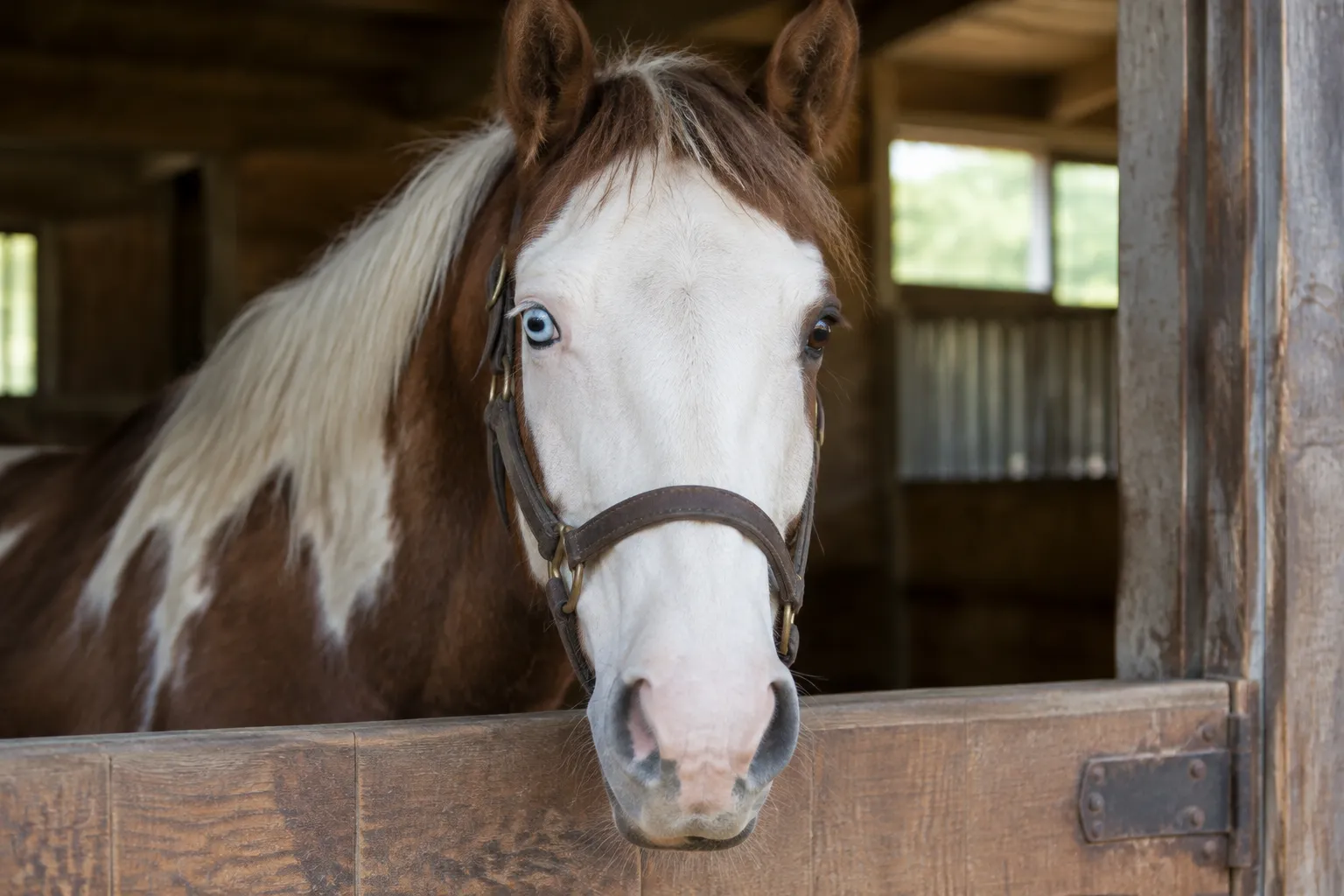
Blue eyes turn up most often on horses with a lot of white on the face, so you'll meet them on coloured cobs and Paint Horses, and on the double-cream colours, where every cremello and perlino has them. Breeds whose standards keep white to a minimum, such as the Friesian and the Cleveland Bay, rarely show them. On a passport or in a sale advert the older British words still turn up for the same thing: wall eye, china eye or glass eye.
If you're buying, a blue eye is a matter of looks. The skin around it matters more: pink eyelids that are crusted or sore in summer need protecting from the sun before anything else.
Living with a blue-eyed horse
The eye itself needs no special care, but the pink skin that usually comes with it does: noses and eyelids burn in strong sun. A fly mask with a UV-blocking visor and a nose flap covers both. Britain’s older word for a pale or odd eye is wall-eyed, and all of it sits on top of a base coat, which is where any description of a horse’s colour starts: see what a bay horse is. A blue eye is also the detail people notice first, so a portrait is made from your own photograph.