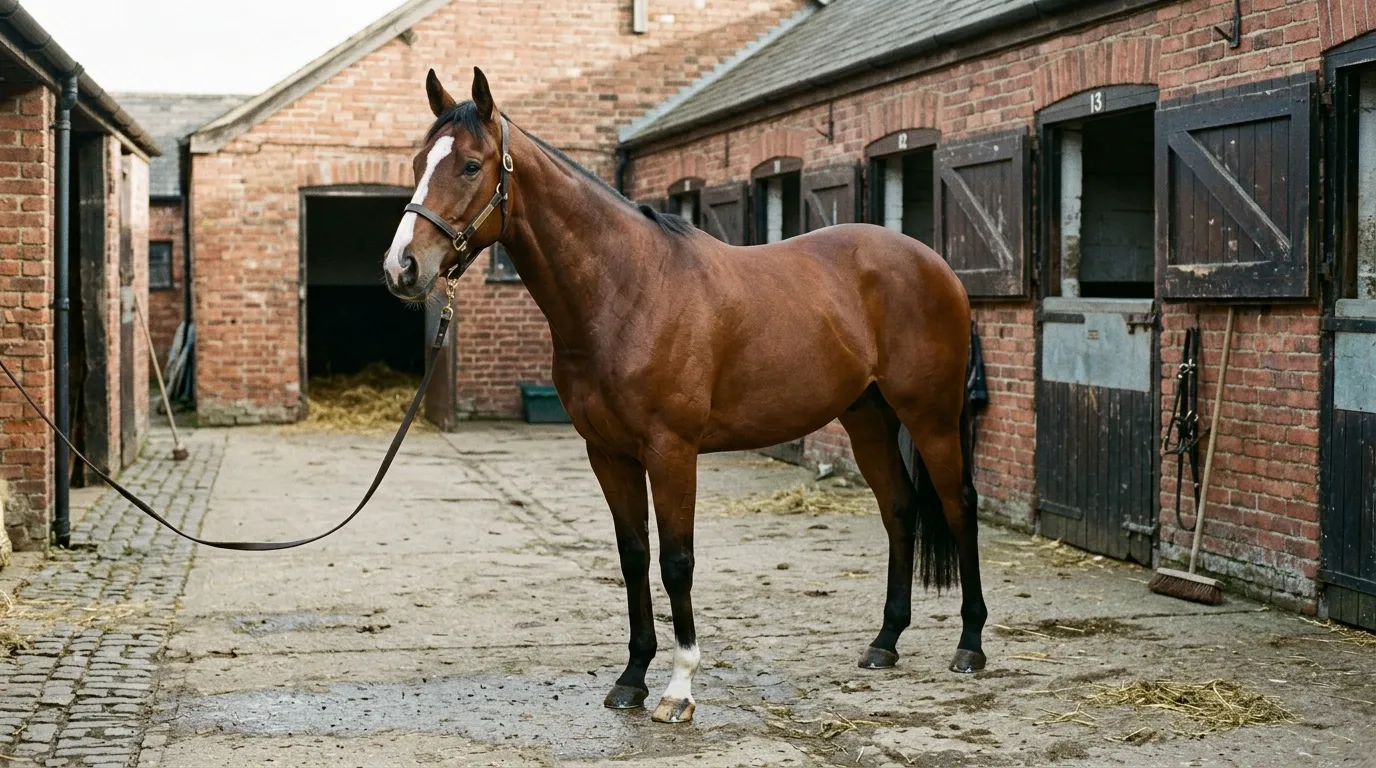
Breed does not decide everything, but it decides enough. What each one was bred to do, how big it gets, and what it costs to keep.
A breed is a starting point, not a personality test, and every yard has a placid Thoroughbred and a sharp cob. What a breed does tell you is what the horse was built for, roughly how much of it there’ll be to feed, and what you’re likely to meet in the ring.
Start with the job
Decide what you want to do before you decide what you want to look at. A horse for hacking alone on lanes needs a steady head more than scope; a horse for affiliated dressage needs paces a judge will reward; a family horse needs to forgive a nervous rider. Breed is shorthand for those qualities, which is why the same few names come up on every yard: the cob for sense, the Irish Sport Horse for a jump, the warmblood for the arena, the native pony for a child who rides in all weathers. Then judge your own riding fairly: a young or green horse needs a confident rider, and most first-time owners do best with a horse of ten or older that has done the job before.
Size, weight and keep
Match the horse to the heaviest and tallest person who will ride it, not the lightest. Bone below the knee, depth through the girth and a short back carry weight; height on its own does not. Then think about feed. Native ponies and cobs live on very little and put on weight on spring grass, while Thoroughbreds and many warmbloods need more feed and more rugging to hold condition through a wet winter.
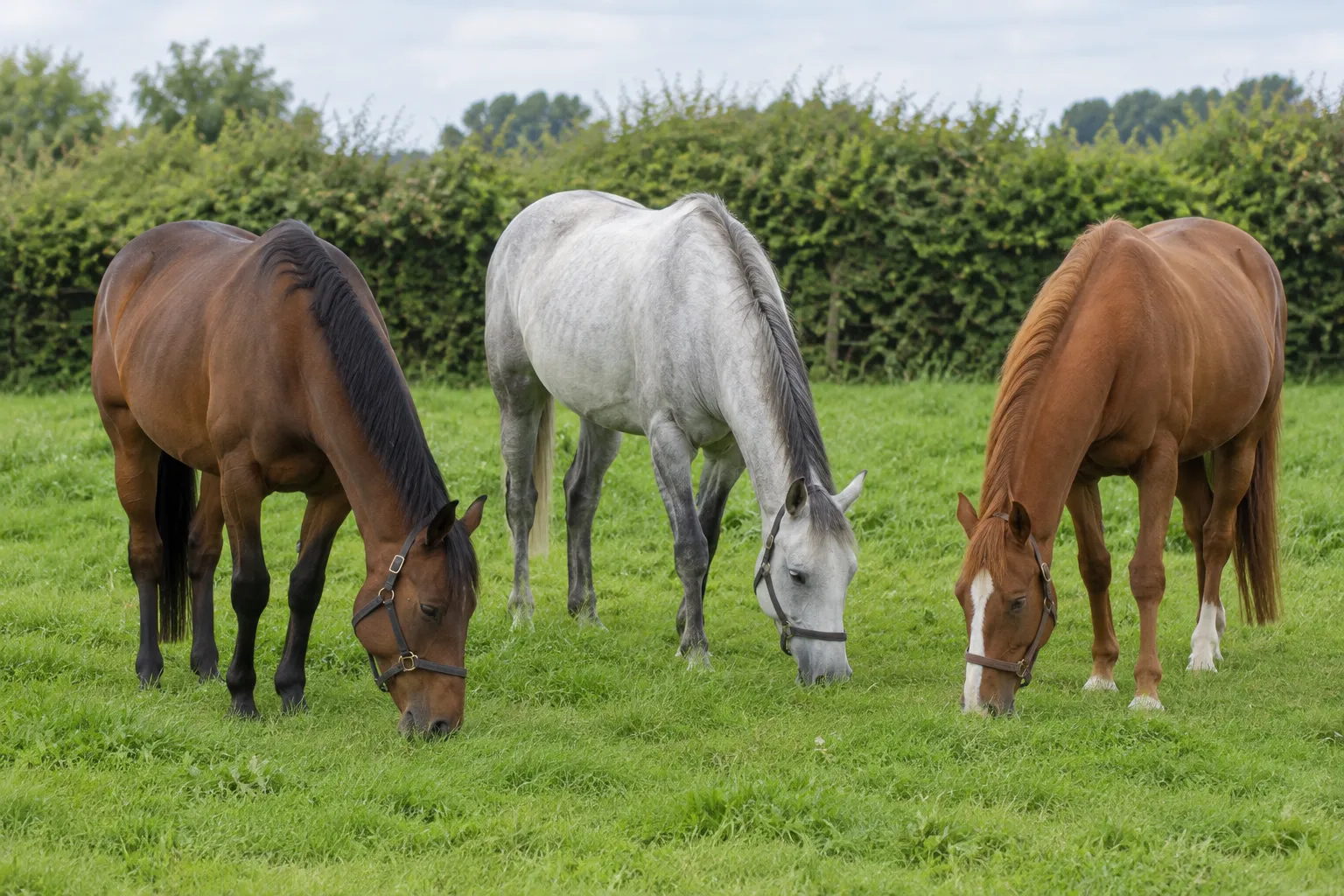
Three builds in one field. What each was bred to do shows in the outline.
Every breed guide below opens with a table of height, colours, uses, origin and breed society, so you can set two side by side, followed by pictures of the breed standing up and at work.
Colours and markings
Colour is the first thing people describe and the last thing that should decide a purchase, but it helps to have the words right. Bay means a brown body with black legs, mane and tail. A coloured horse has large patches of white: piebald over black, skewbald over any other colour. Duns and buckskins look alike and are told apart by the stripe down the back. The colour pages below take each in turn, and the horse colours guide sets them all side by side.
Papers and names
A registered horse carries a studbook name on its passport, often with a breeder's prefix, and a stable name that everyone actually uses. Owners care about both. If you are naming a horse yourself, the name generator gives you somewhere to start. And check the passport before you buy: every horse in the UK must have one, and the microchip number in it should match the horse in front of you.
What to read first
The 21 breed guides come first, each with its table and pictures, then the colours and markings people ask about, and finally naming the horse once it's yours.
When you have got this far, what comes next is the daily round: feeding, rugs, mucking out, hoof care: the unglamorous work that makes a stable a life.