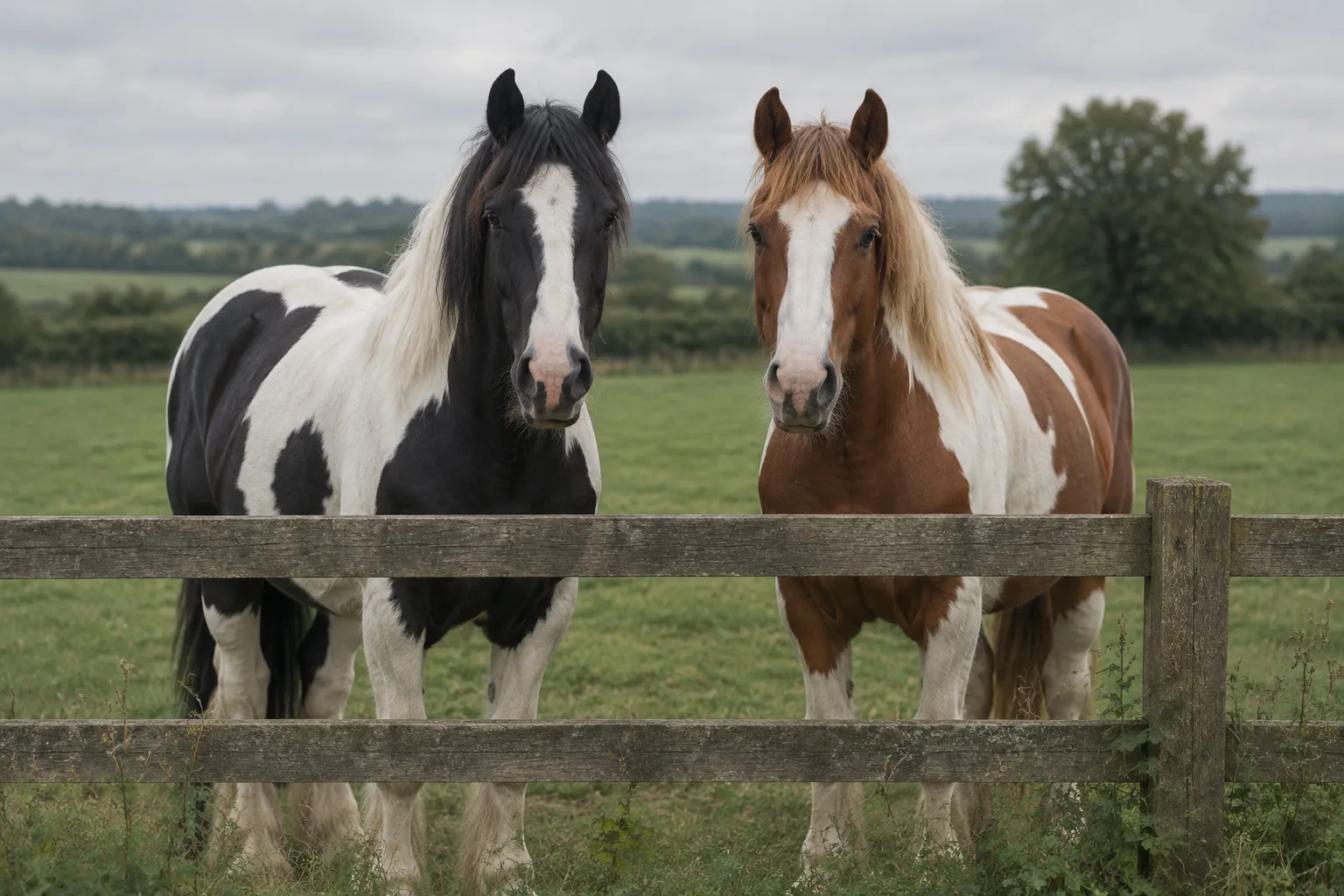
What is a coloured horse?
"Coloured" is the British word for a horse marked in white and one other colour, and it has a registry definition behind it.
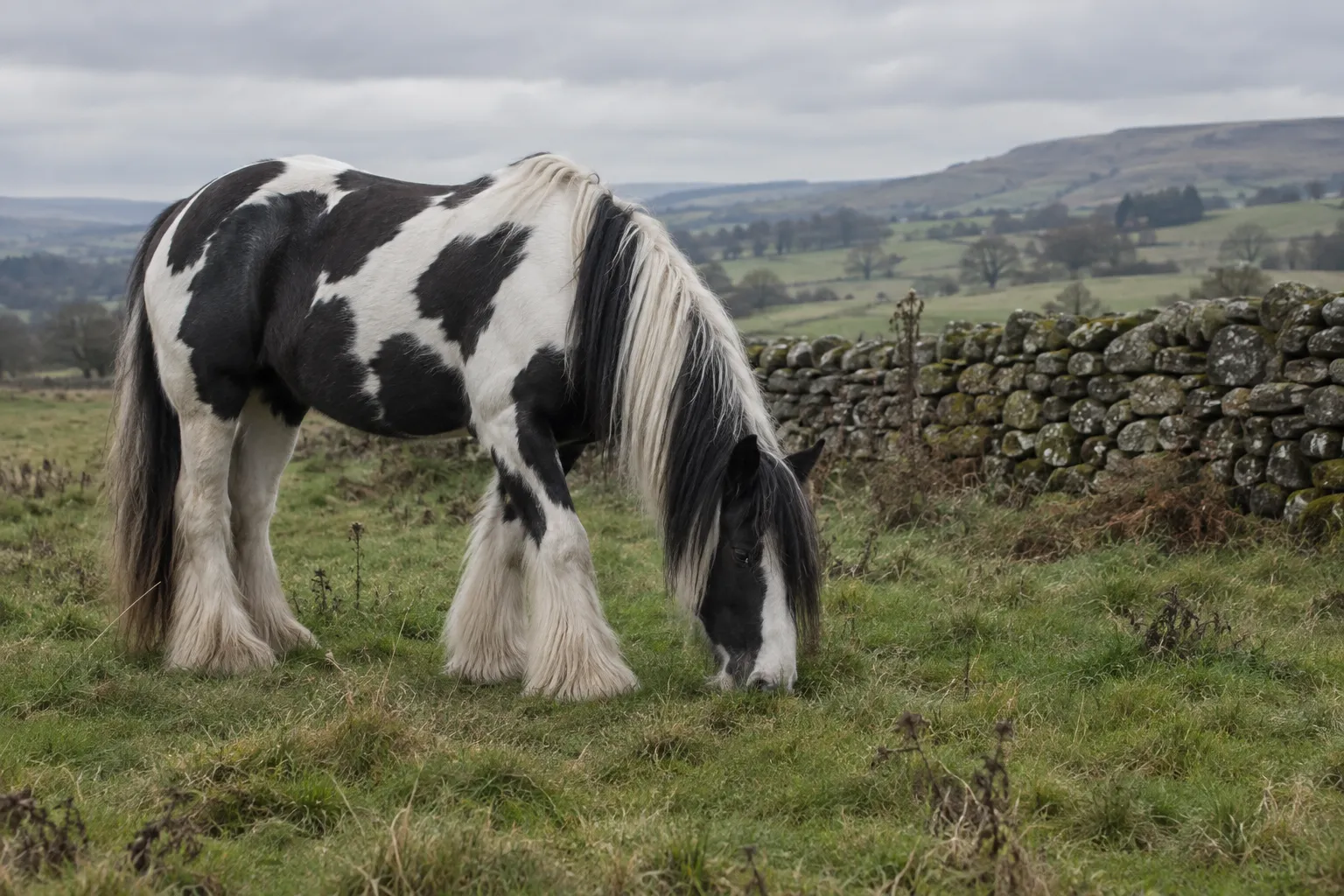
“Coloured” is the British word for a horse marked in white and one other colour, and unlike most colour words it has a registry definition behind it. CHAPS (UK), the Coloured Horse and Pony Society, is a DEFRA-approved studbook and passport issuing organisation founded in 1983, and its About page says it has registered over 20,000 horses and ponies.
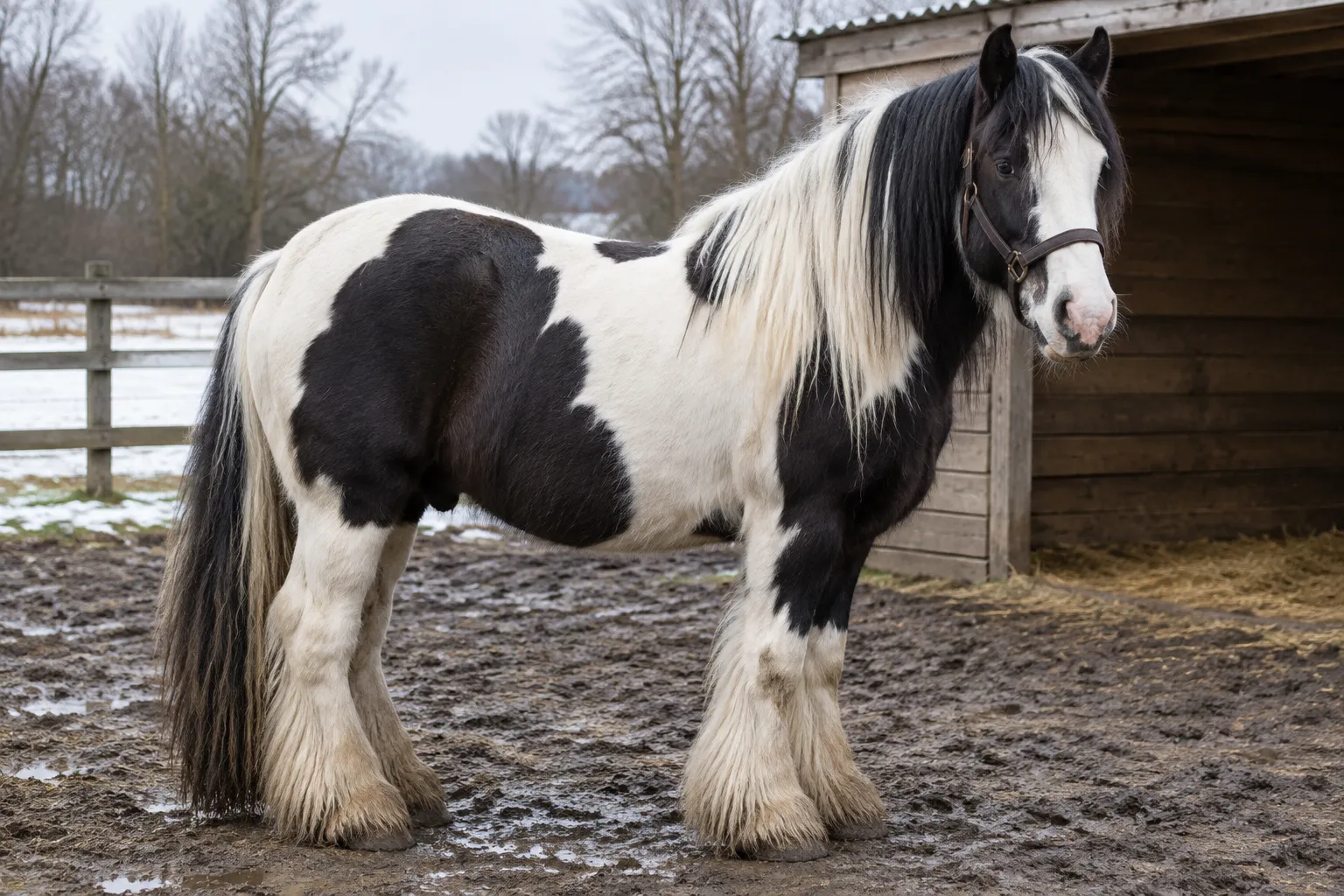
Their handbook sets the test: a coloured horse or pony is one “whose coat colour is either white and black or white and… any other colour, bay, roan, chestnut; with a patch of naturally occurring white above the level of the stifle or e.g. elbow, excluding any face markings”. Manes and tails may be white or part-white. Appaloosas, and animals whose only white is on the belly, don’t qualify.
Why white socks are not enough
That placement rule is the part people miss. Four white socks and a blaze don’t make a horse coloured; the white has to be up on the body. The society also notes horses that are “genetically coloured” without showing enough white, which DNA testing can confirm.
Piebald, skewbald and the patterns
Within “coloured”, the two traditional British words are piebald and skewbald: black and white, or white with any other colour. The shape of the white has names too.
| Pattern | Does the white cross the back? | Edges | Face |
|---|---|---|---|
| Tobiano | Usually, between withers and tail | Smooth and rounded | Mostly dark, with ordinary markings |
| Overo | Rarely | Jagged or irregular | Often bold white |
| Blagdon (sabino) | Seldom | Roaned, blurring into the colour | Wide blaze, white chin |
The colour underneath
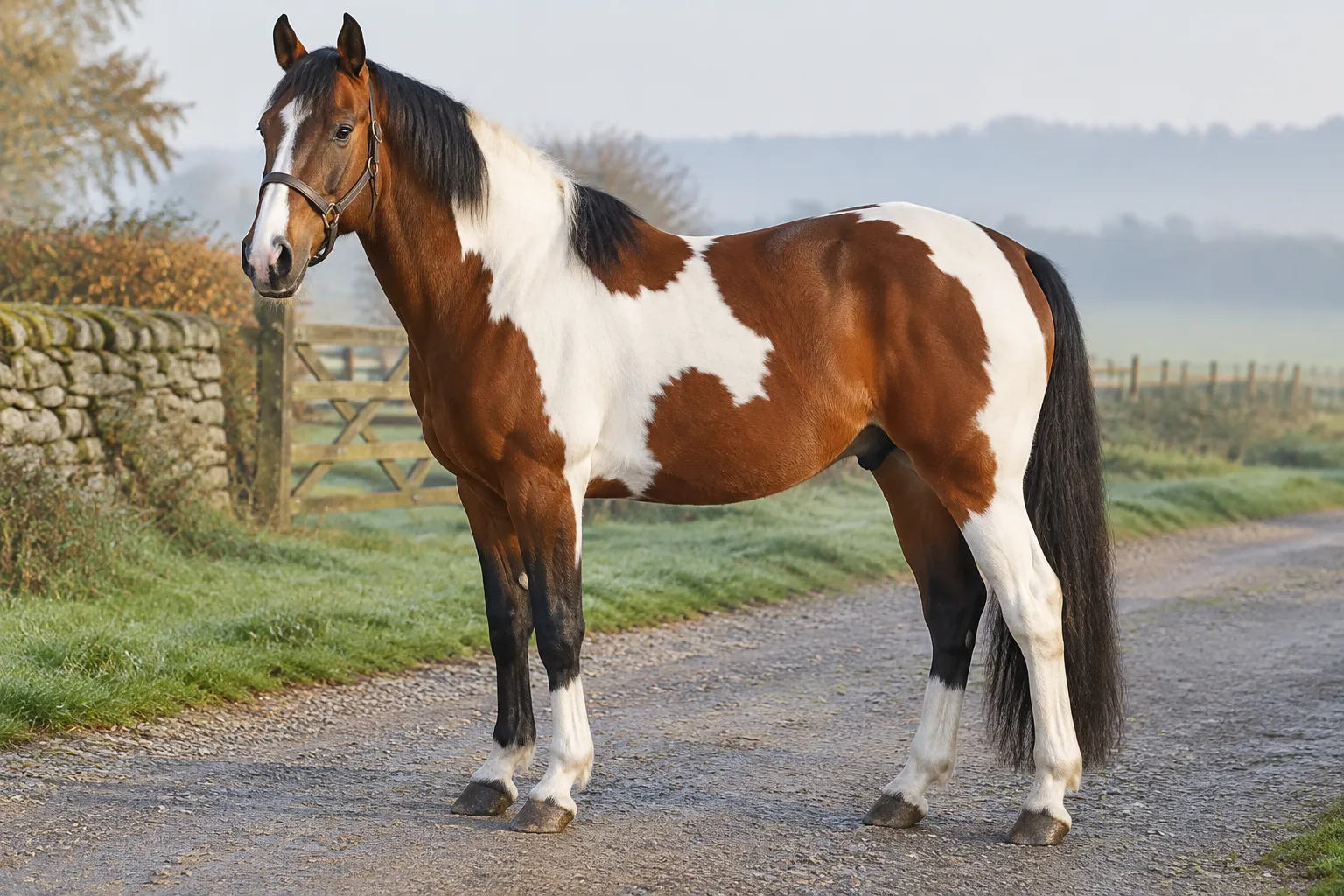
Every coloured horse has a base colour under the white: black for a piebald, and bay, chestnut, brown, dun or palomino for a skewbald. Breeders describe the horse by both, as in a bay tobiano or a chestnut overo. When you describe a horse for a sale advert, a passport form or a portrait, name the base colour first and the pattern second; it is the quickest way for anyone to picture the right horse.
Coloured horses in Britain
The coloured horse most people picture is the traditional cob: short-legged, heavily feathered, piebald or skewbald, long associated with Britain’s Gypsy and Traveller communities and with the horse fairs at Appleby and Stow. But CHAPS registers horses and ponies of every type, and coloured sport horses, hunters and native-type ponies all compete in their own classes at county shows, under CHAPS and the British Skewbald and Piebald Association.
Getting the colour right in a portrait
For a coloured horse the pattern is the horse. A side-on photo in daylight, with the whole body in frame, keeps every patch in the right place, which is the first thing an owner checks. A portrait is made from your own photograph, with a free preview before you pay.