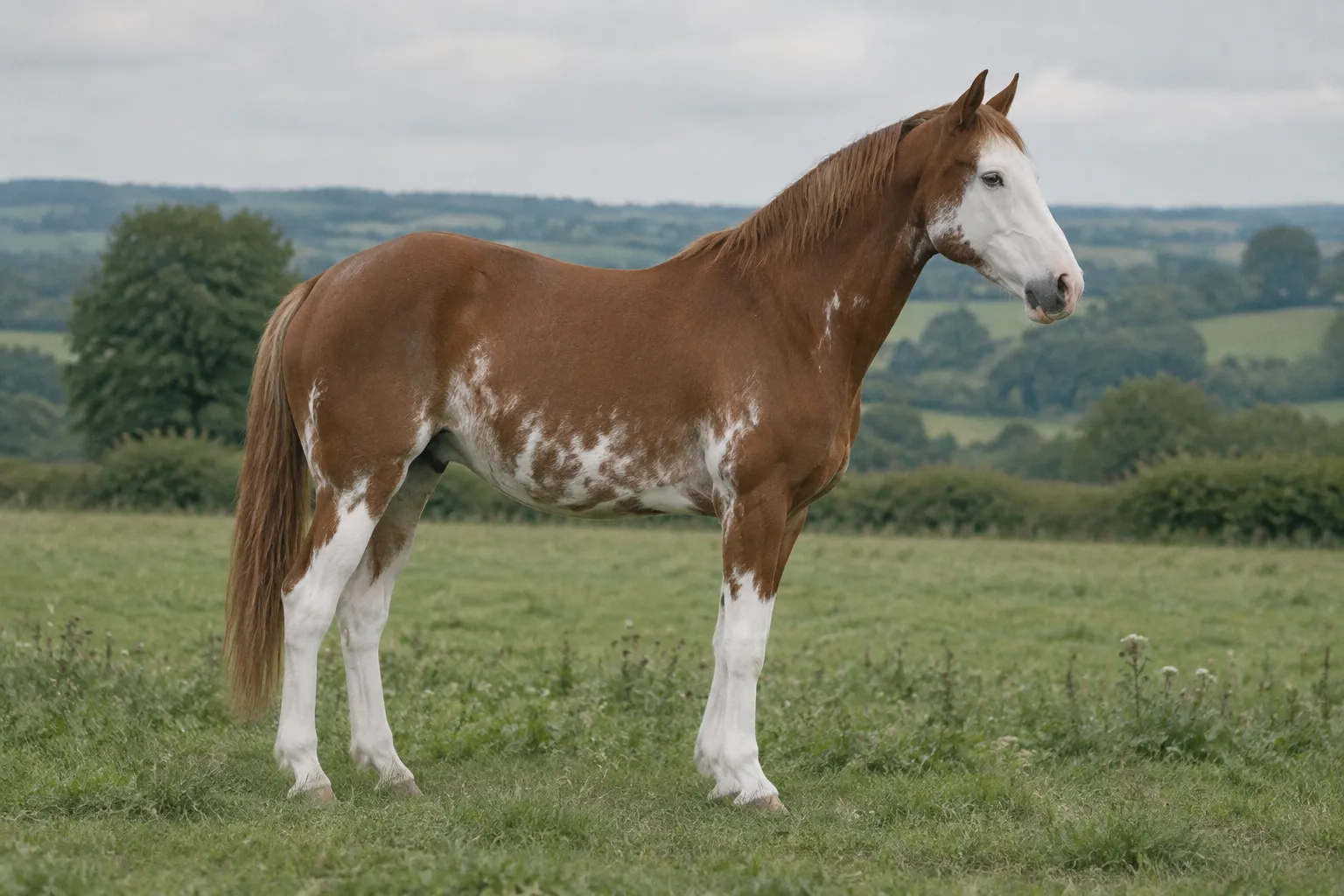
Piebald or skewbald: what is the difference?
Piebald is black and white. Skewbald is white with any other colour: brown, red, bay or chestnut.
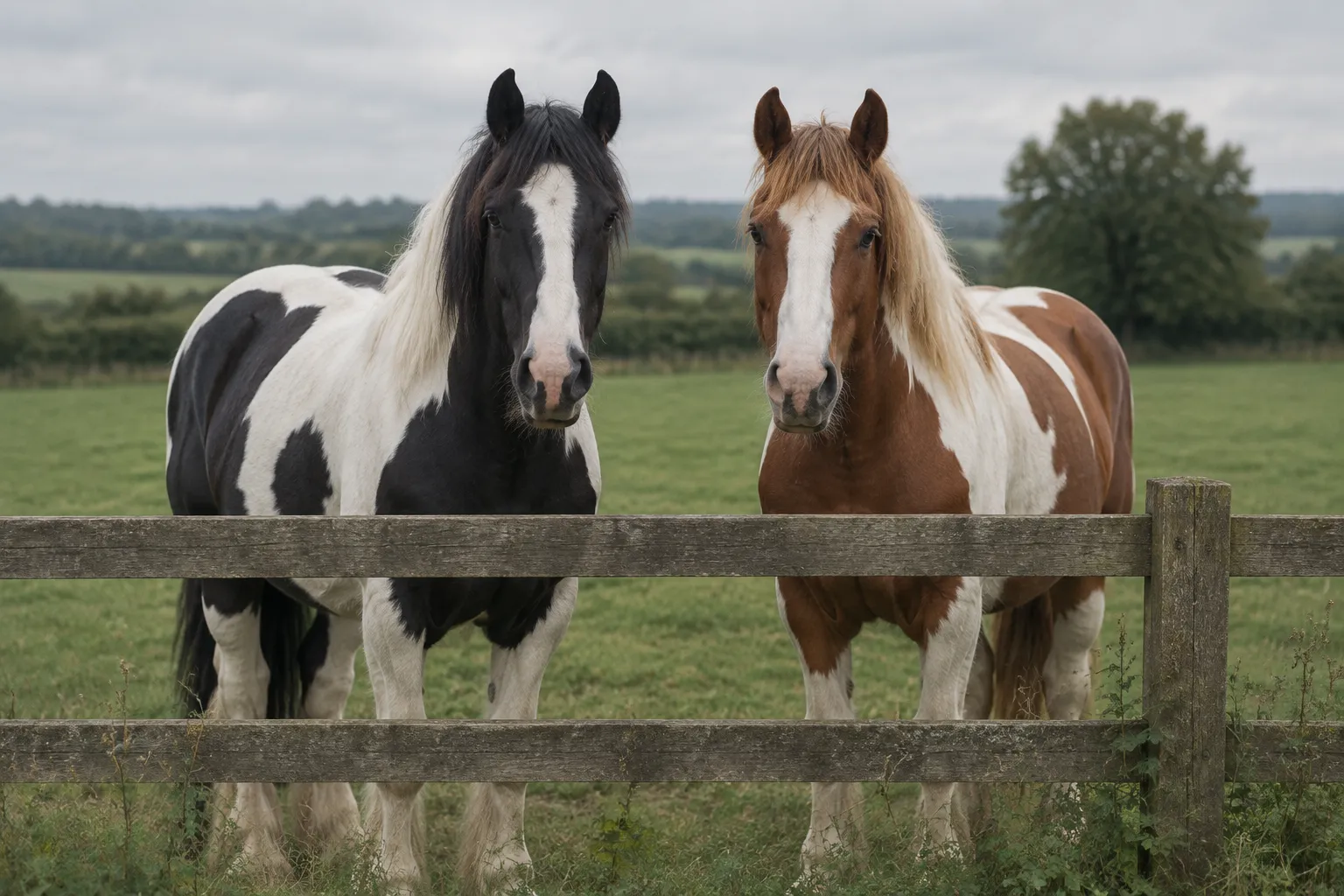
Piebald is black and white. Skewbald is white with any other colour: brown, chestnut, bay or red. That single difference is the reason the British registry splits coloured horses exactly two ways, and both are kinds of coloured horse.
What is a piebald horse?
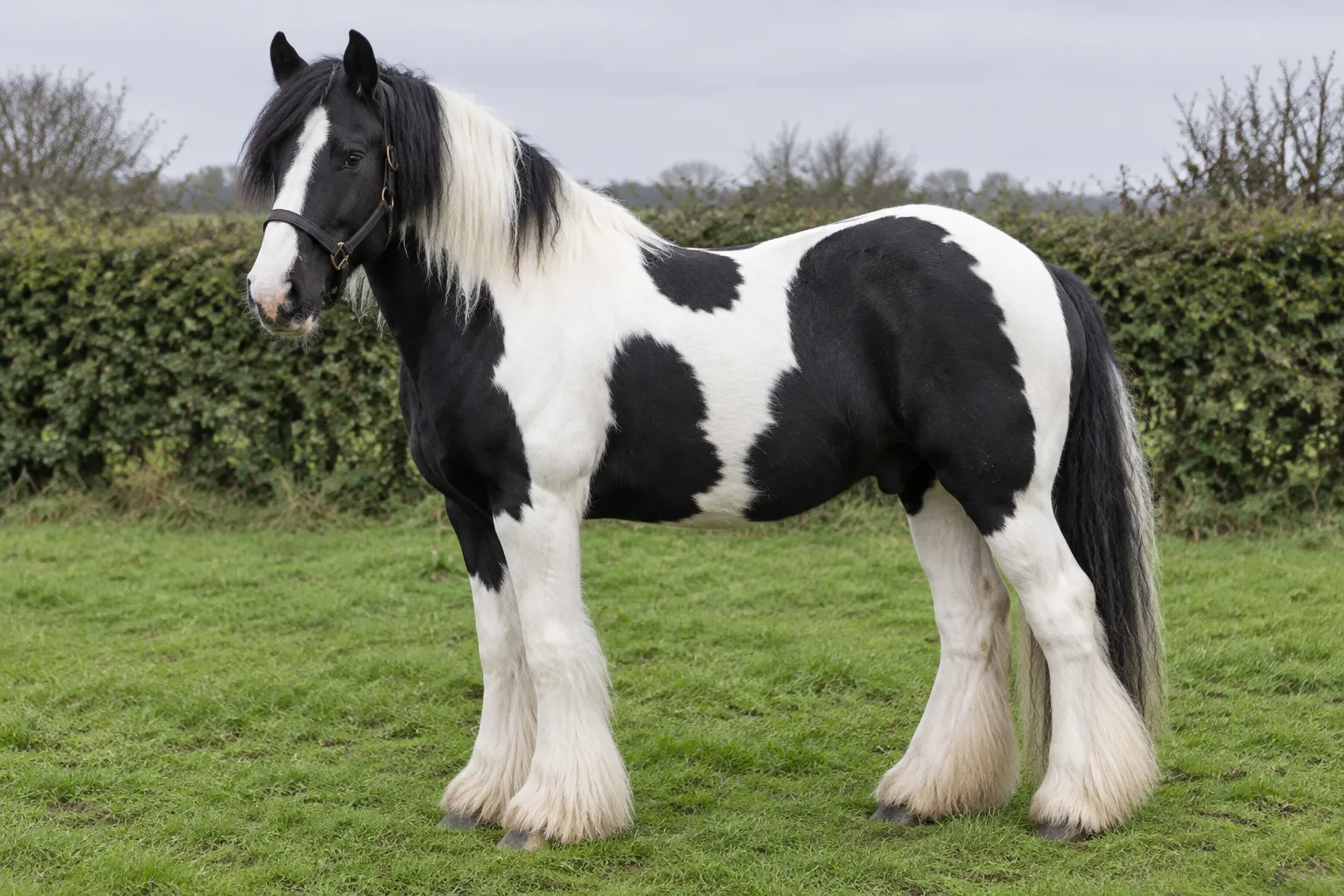
A piebald has patches of black and white and no other colour. Collins English Dictionary gives piebald as “marked or spotted in two different colours, esp black and white”, and as a noun, “a black-and-white pied horse”. The word is sixteenth century, from pie as in magpie, the black-and-white bird. In Britain the piebald most people picture is the traditional cob, stocky and heavily feathered, but the colour turns up in ponies, sport horses and heavy horses too.
What is a skewbald horse?
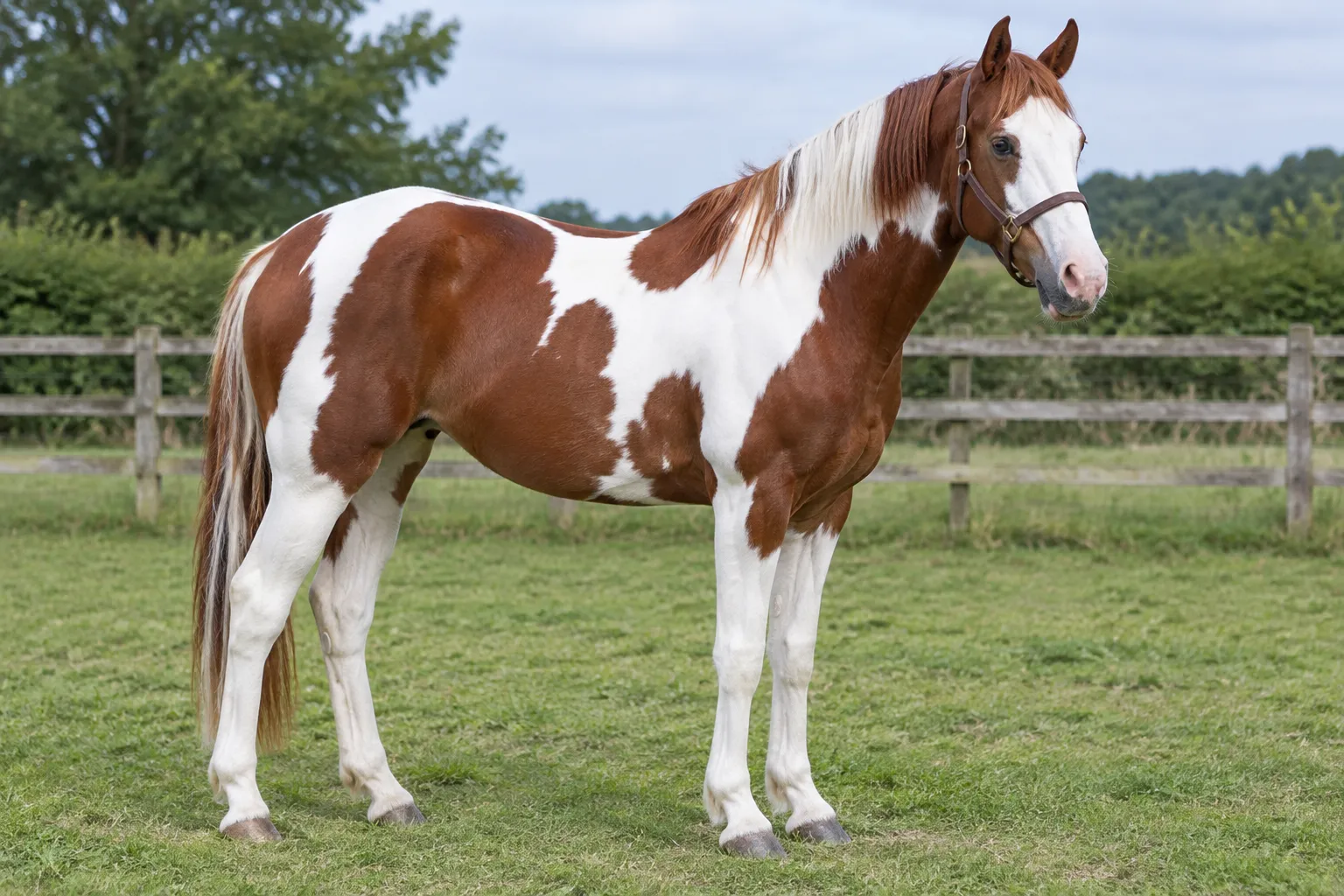
A skewbald is white with any colour except black: chestnut, bay, brown, dun or palomino. The Yorkshire Historical Dictionary, compiled at the University of York, defines it as “irregularly marked with white and brown or red, or some similar colour, used especially of horses”, and cites Adam Eyre’s diary of 1647: “This morne I rid on Scueball to Carlecoates”, a Yorkshireman riding a horse named for its own colour nearly four centuries ago.
Tricoloured and odd-coloured
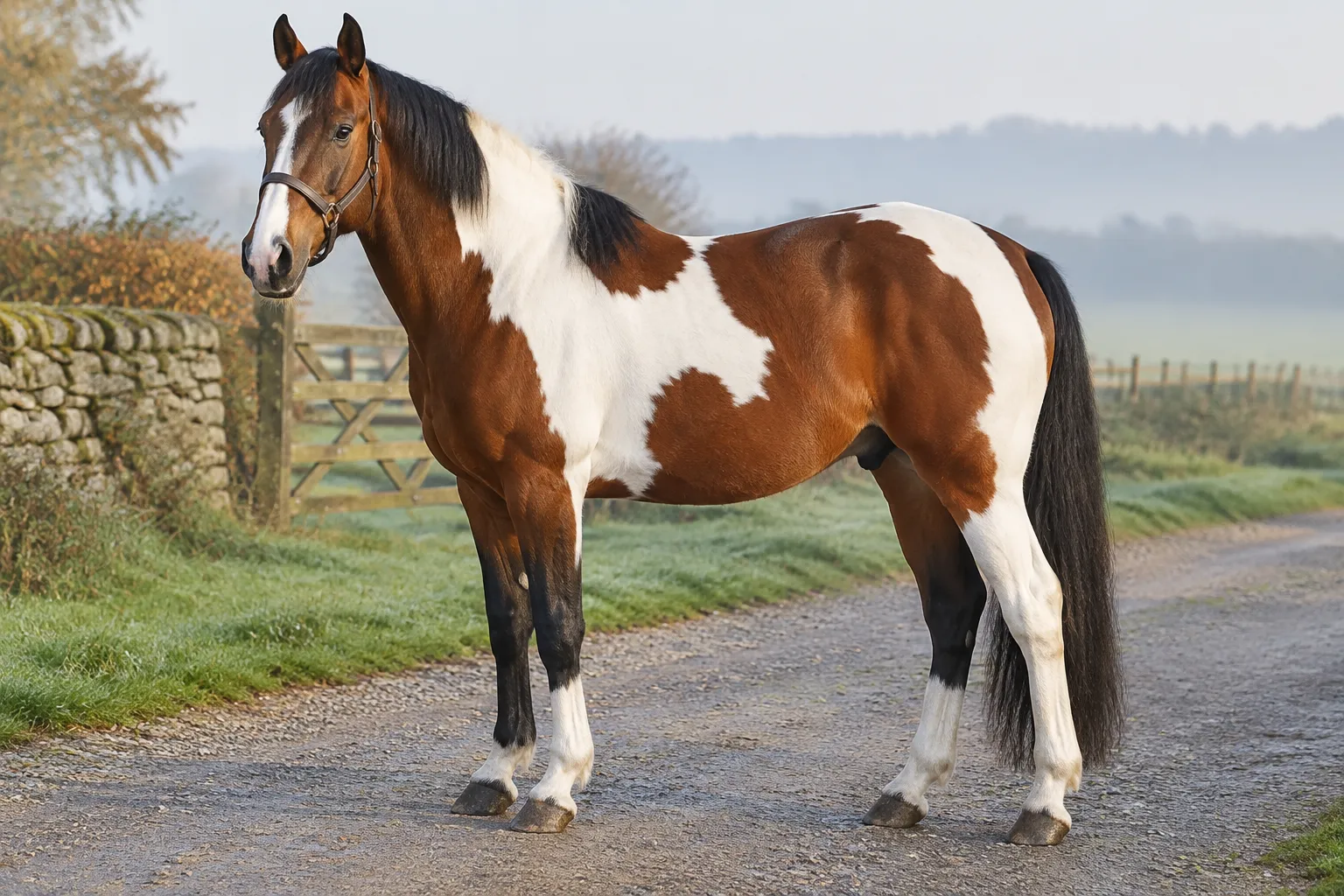
A bay and white horse carries three colours, because bay comes with black: a brown body with a black mane, tail and lower legs. These are usually called tricoloured, and they sit under skewbald, since the body colour is not black. Older British books also use “odd-coloured” for a horse with patches of more than one colour besides white.
The colour terms side by side
| Term | What it means | Typical example |
|---|---|---|
| Piebald | Black and white only | A black-and-white traditional cob |
| Skewbald | White and any colour except black | A chestnut and white pony |
| Tricoloured | Bay and white: brown, black points and white | A bay skewbald |
| Coloured | The umbrella word for both, with white above the stifle or elbow | Any piebald or skewbald |
| Blagdon | Irregular white splashes with roaned edges | A bay with a belly splash and tall white legs |
The patterns behind the colours
Piebald and skewbald describe the colours. The shape of the white has its own names, borrowed from American usage. In a tobiano, the commonest pattern in Britain, the white tends to cross the back between the withers and the tail, the legs are usually white and the patches have smooth, rounded edges. In the overo patterns the white rarely crosses the back, it spreads from the belly and sides, and the face is often bold white. UC Davis’s Veterinary Genetics Laboratory lists DNA tests for the genes behind both; frame overo matters to breeders because a foal that inherits two copies is born with a fatal condition, lethal white syndrome.
Photographing a piebald or skewbald for a portrait
The pattern is as individual as a fingerprint, so photograph it side-on, in daylight, with the whole horse in frame. A custom horse portrait made from that photo keeps the patches where they really are, which matters to an owner who knows every one, and the preview is free before you pay. The traditional cob is where these markings are most at home: see the cob.