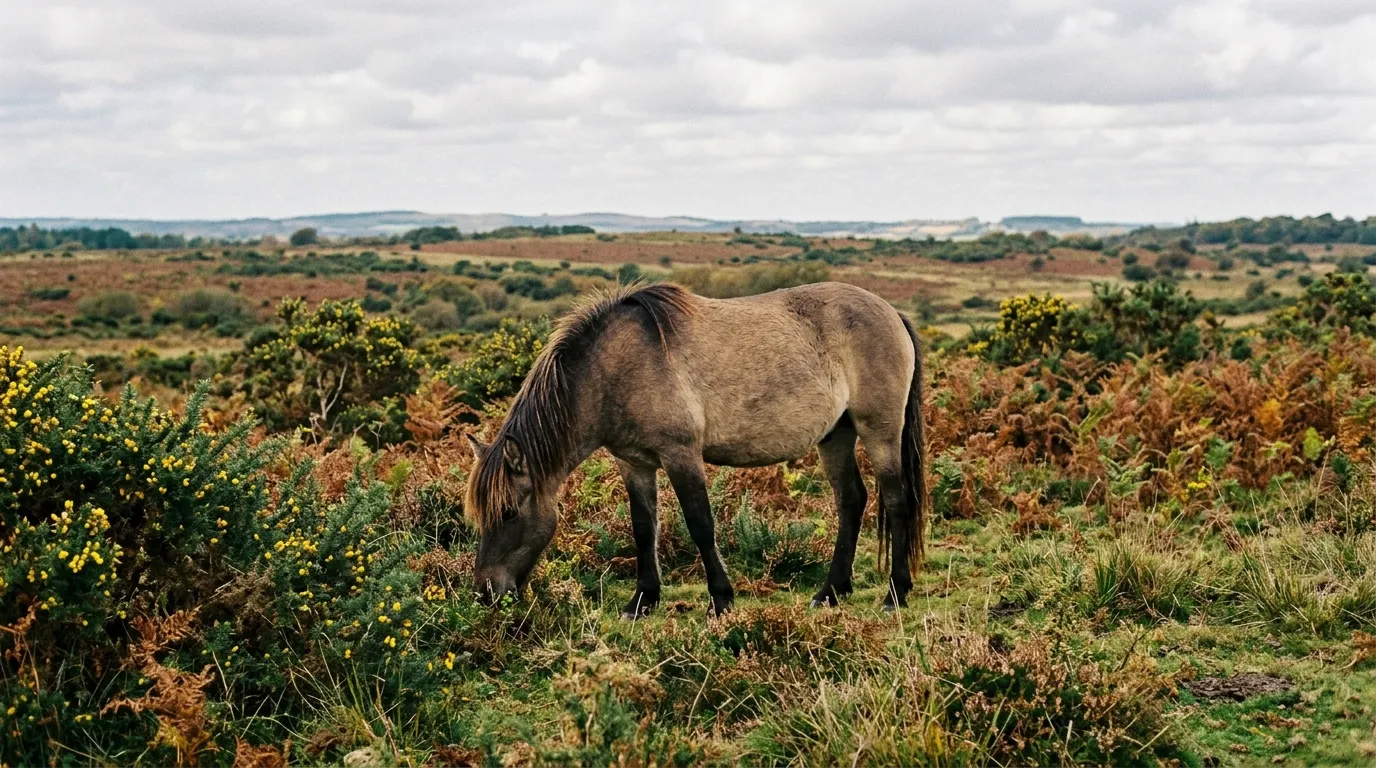
Connemara pony
Ireland's native pony: limestone-bred, often grey, often the family's eventer.
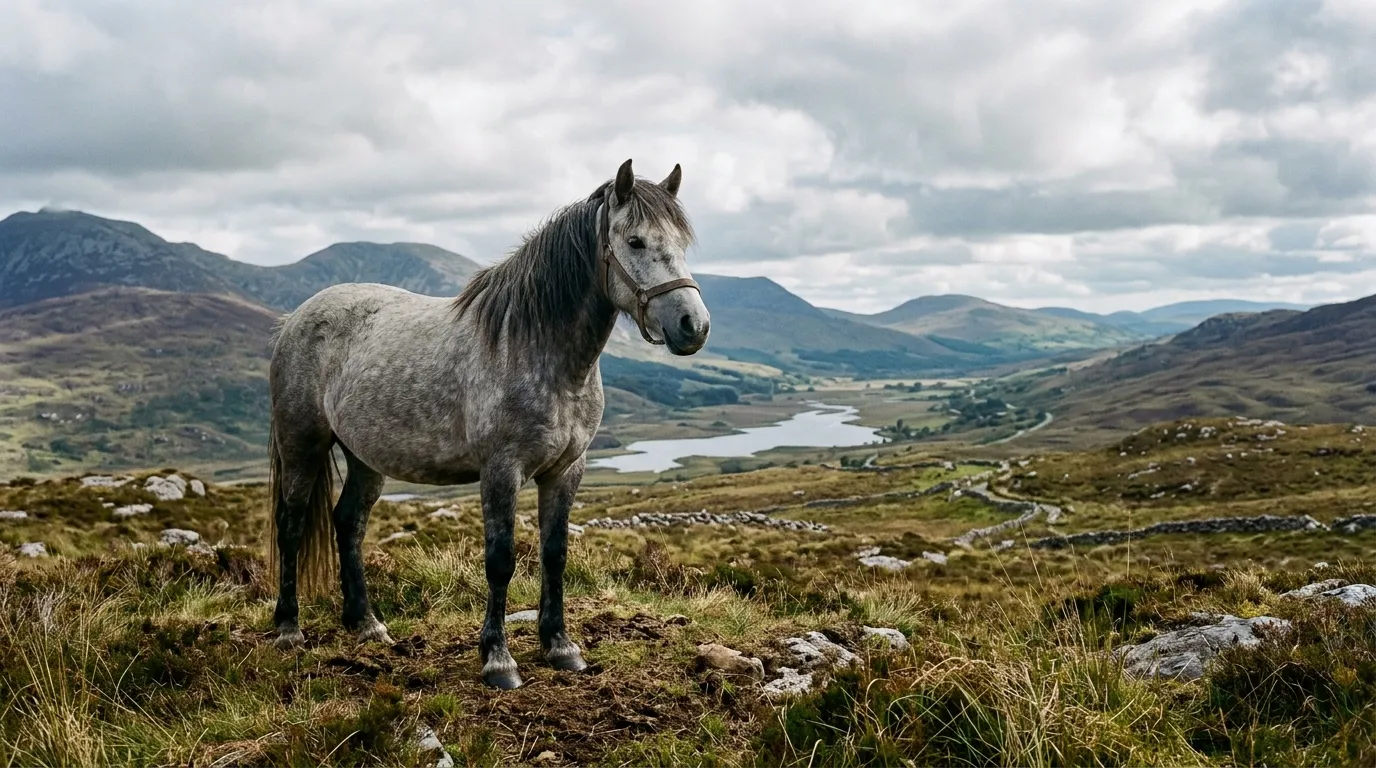
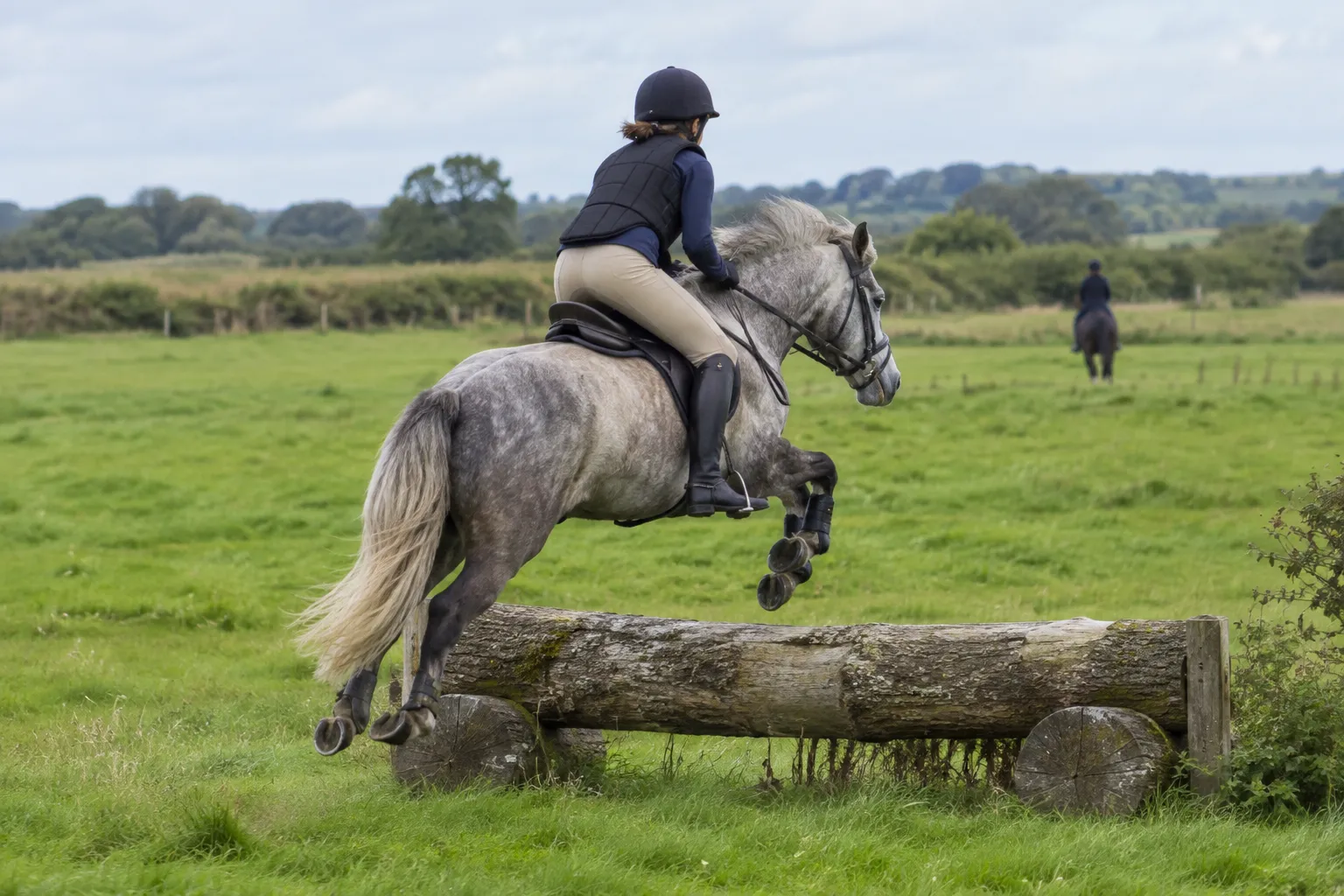
The Connemara is Ireland's only native pony breed: sure-footed, intelligent, athletic, capable of carrying an adult eventer or jumping a metre-twenty out of trot. Bred on the limestone karst of County Galway's Connemara region for centuries, the modern Connemara is one of the most successful all-rounders in pony showing, Pony Club, and pony classes at affiliated eventing.
| At a glance | Connemara pony |
|---|---|
| Height | 128cm to 148cm (12.2hh to 14.2hh) |
| Colours | Mostly grey; also dun, bay, brown, black, roan, chestnut, palomino and cream; no piebald or skewbald |
| Known for | Pony Club, eventing, showjumping, carrying adults |
| Origin | Connemara, County Galway, Ireland |
| Breed society | Connemara Pony Breeders' Society (1923); British Connemara Pony Society |
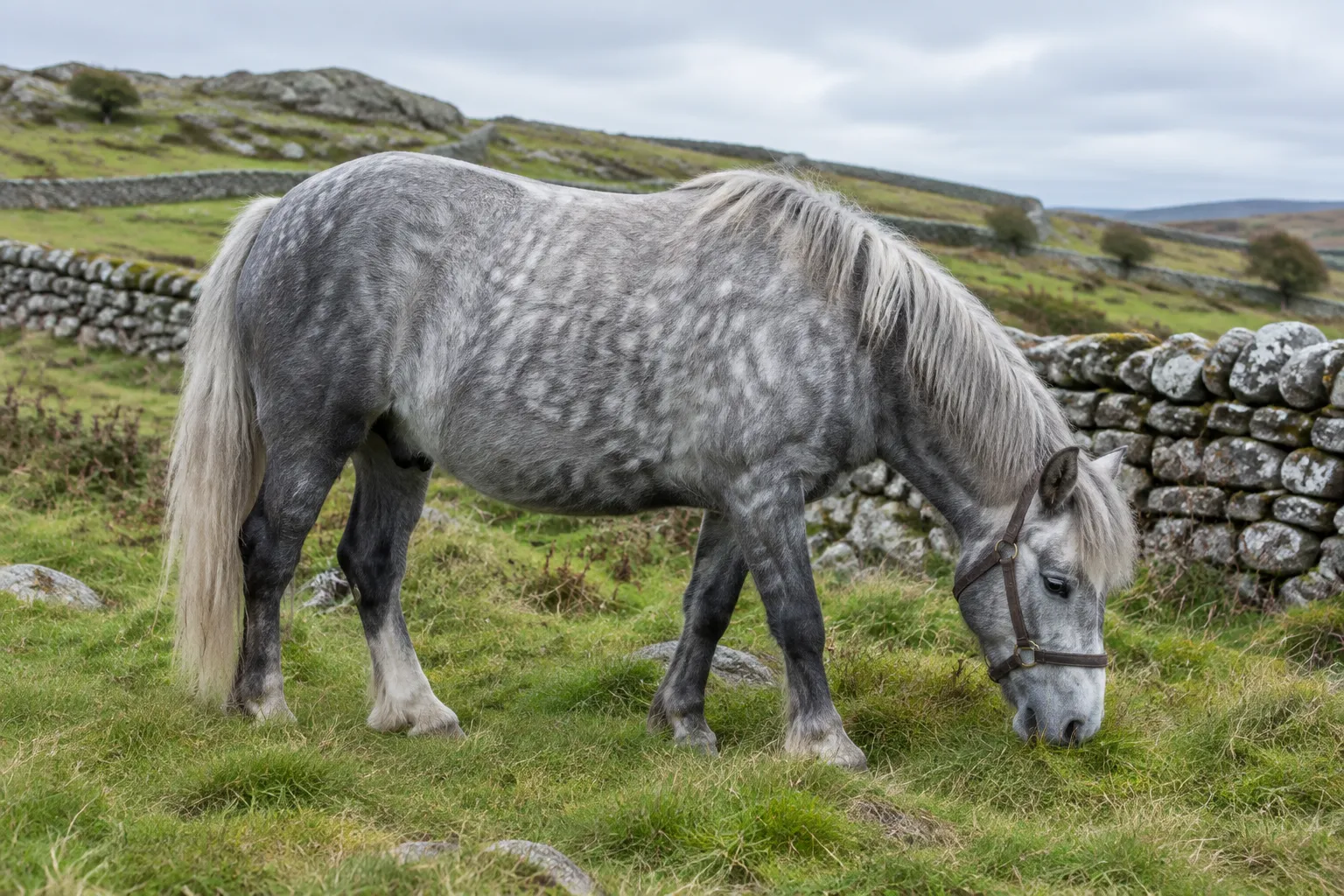
The grey colour story is genetic: many Connemaras are born dark bay or black and grey out steadily, reaching silver by their early teens. Bay, dun, and palomino are the other recognised colours. The British Connemara Pony Society represents the breed in Britain; the Connemara Pony Breeders’ Society, founded in Ireland in 1923, is the parent body.
Further reading · British Connemara Pony Society · British Horse Society
Connemara owners often have the pony for a lifetime: they outlast warmbloods comfortably. A name print marks the relationship.
Picking a Connemara gift
Because the pony is often kept for life, a name print tends to mark a moment more than a purchase. A grey Connemara also photographs well, so the portrait is worth considering while the coat is still changing. Both are priced on the personalised gifts page.
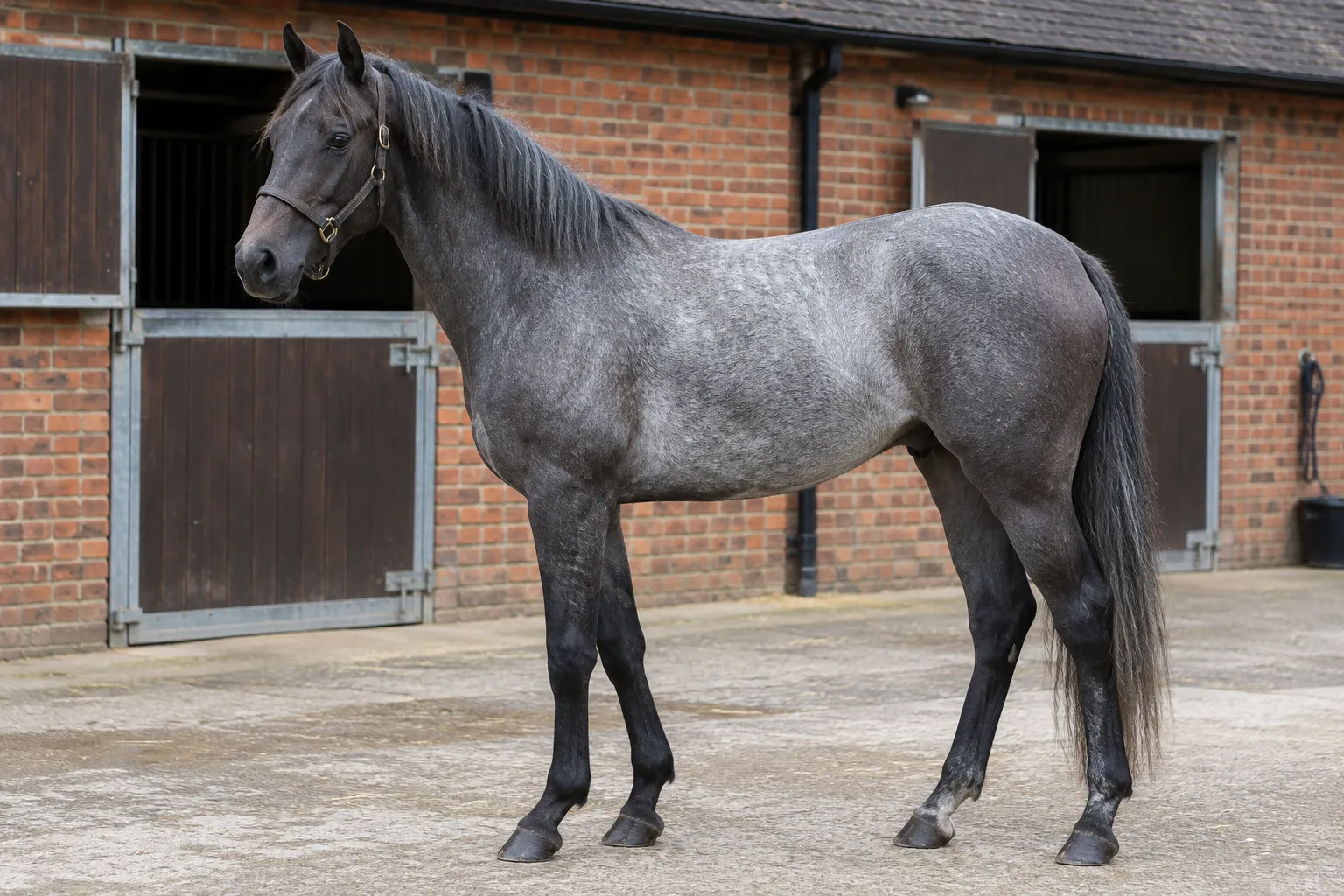
The grey colour story: why most Connemaras end up silver
Most Connemaras are born dark, black, dark bay, brown: and then grey out steadily across the first ten years of life through the dominant grey gene (G), which is common in the breed. The progression typically goes black foal → dappled grey by four → light grey by seven → near-white by ten. Owners often have foal photos showing the pony pitch-black and current photos showing the same pony almost white, which is one reason the breed gets photographed and portraitised so often: the change is part of the story.
Bay, brown, dun, palomino, cream, and roan are the other recognised colours, with cream and palomino being notably less common. The British Connemara Pony Society studbook publishes the recognised colour list; pinto patterns are not recognised in the Irish or UK studbooks.
The Irish parent body and studbook inspection
The Connemara studbook is maintained by the Connemara Pony Breeders Society in Ireland, founded in 1923. The British Connemara Pony Society has promoted the breed in Britain since 1947. Ponies are inspected before entry to the studbook, and one that fails inspection keeps its papers but is not entered for breeding.
Many Connemaras in Britain are at the showing or Pony Club end of the population, and there's a steady seam of riding-club and one-day-eventing Connemaras at UK competition centres. A surprising number of senior eventers (4-star and above riders) keep a Connemara at home for hacking and as an alternative competition mount when their main horse is rested.
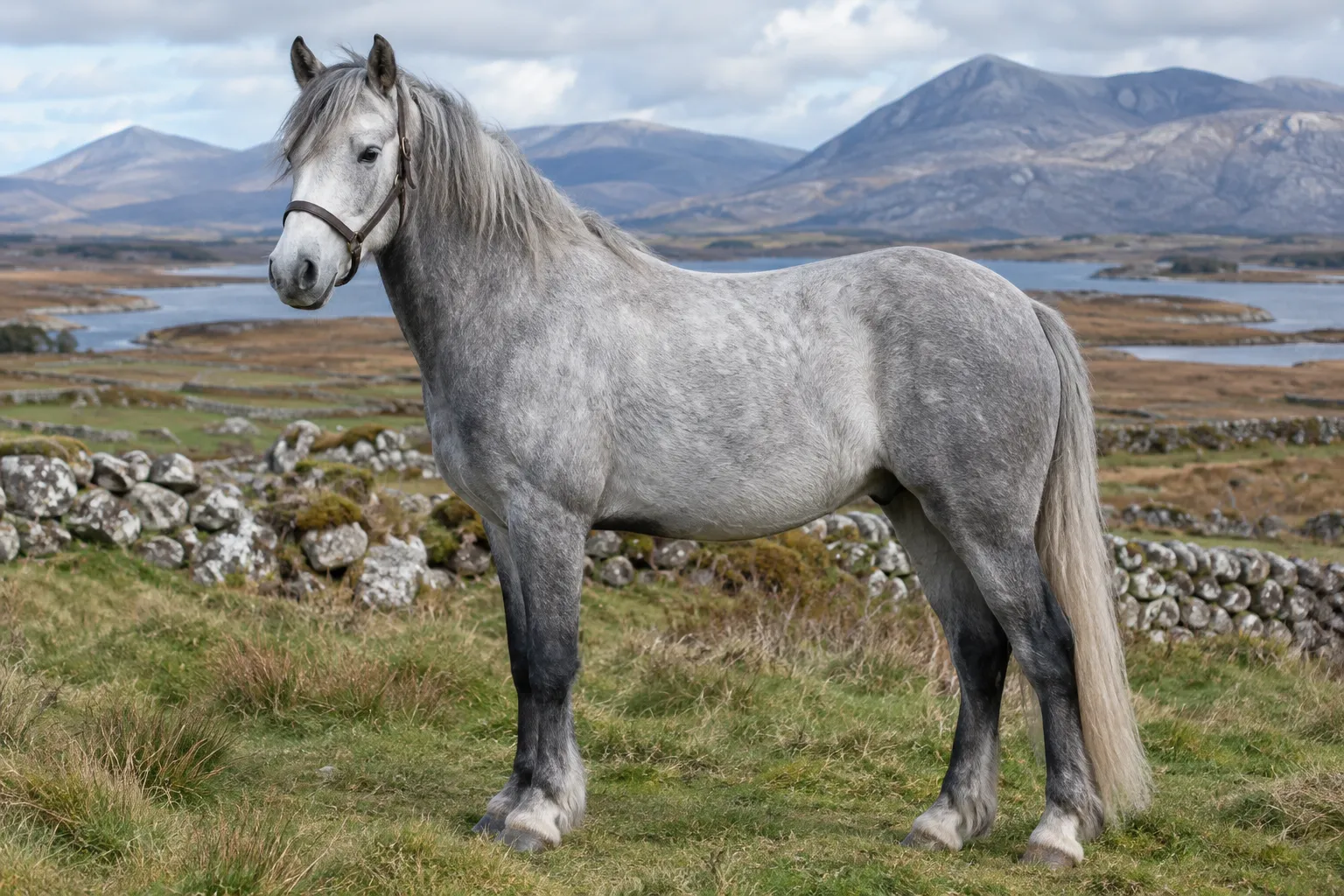
Why owners describe Connemaras as the lifetime pony
Connemaras live longer than most sport horses: a 25-year-old Connemara mare or gelding still in light work isn't unusual, and 30-year-olds in retirement field are common. The breed's general soundness, hard feet, and easy keepers reputation mean owners often have the same pony from primary-school riding lessons through to teaching their own children to ride. This longevity changes how owners choose gifts: a print or canvas often spans three generations of riders.
Famous Connemara performance ponies that owners reference: Stroller (the 14.2hh Connemara cross who jumped at the 1968 Olympics for Marion Coakes, winning individual silver), and the consistent Connemara presence in the British Eventing pony championships at every level. Mentioning these in conversation with a Connemara owner usually identifies you as someone who knows the breed.
Choosing a Connemara gift
A Connemara gift usually marks a specific transition: foaling, sale within the family, retirement after a long Pony Club career, or a memorial. The canvas portrait suits ponies that are greying out: the visual story of a pony moving from dark foal to silver elder is what owners want preserved.
A name print for a Connemara can carry the pony's name, a line such as "Connemara · Grey · Co. Galway", and a date or yard line. Welsh-style stud prefixes are less common in Connemara naming than in Welsh, but particular Irish studs (Glencarrig, Castle, Inveran) do appear and are worth using when the owner provides them. Birthdays are a natural occasion, often marking the year a child started riding the pony. Irish-themed presents, such as a horseshoe or a Connemara marble charm, are easy to find, but they are about Ireland. A canvas or name print with this pony's details is about the pony.
The pony that grows up grey
Connemaras tend to arrive in the world dark and leave it pale. The dominant grey gene runs through most of the breed, so a foal born jet black or dark bay greys out steadily: dappled by four, light by seven, near-white by its teens. Owners often keep a foal photo of a coal-black pony beside a current photo of an almost-white one and treat the pair as a single story. That visible decade of change is part of why the breed gets photographed and painted so much: the horse you order a portrait of is, in a literal sense, a horse that no longer exists in that colour.
Underneath the colour is a hardy, level-headed working pony bred on the limestone of County Galway. Sure feet, real bone, a genuine jump, and the sense to think a question through instead of spooking at it. A good Connemara will carry a child round Pony Club and an adult round a one-day event without changing character, and it will do it for thirty years. That combination (athletic but unflappable, small but up to weight) is why so many serious riders keep one at home alongside the competition string.
Personalising a Connemara gift well
- Decide which colour to capture. A portrait canvas often deliberately records the greying-out stage; ask the owner whether they want the dark foal, the dapple, or the silver elder.
- Longevity reframes the occasion. A Connemara can span three generations of riders, so the gift frequently marks a handover between children, not a single competition season.
- Irish studs do exist: use them when given. Glencarrig, Inveran, Castle and others appear in formal names; include the prefix if the owner provides it, but don't invent one.
- Skip the shamrock shortcut. Generic Irish-themed novelties miss the point, owners want the specific pony named, not a county-Galway cliché. A name print with the pony's own details lands far better.
- Note it's a pony with adult-horse credentials. Wording that treats a Connemara as a serious mount, not a "cute pony", respects an owner who may event it at height.
Most Connemara gifts are bought by parents, and the birthday range fits that first-proper-pony moment precisely. For the rest of the family, the guide to horse gifts for women is the better starting point. The Welsh Pony is the obvious native-breed comparison.