The daily round
The parts that never make the photos: feed, rugs, the muck heap, and four hooves that need doing whatever the weather is.
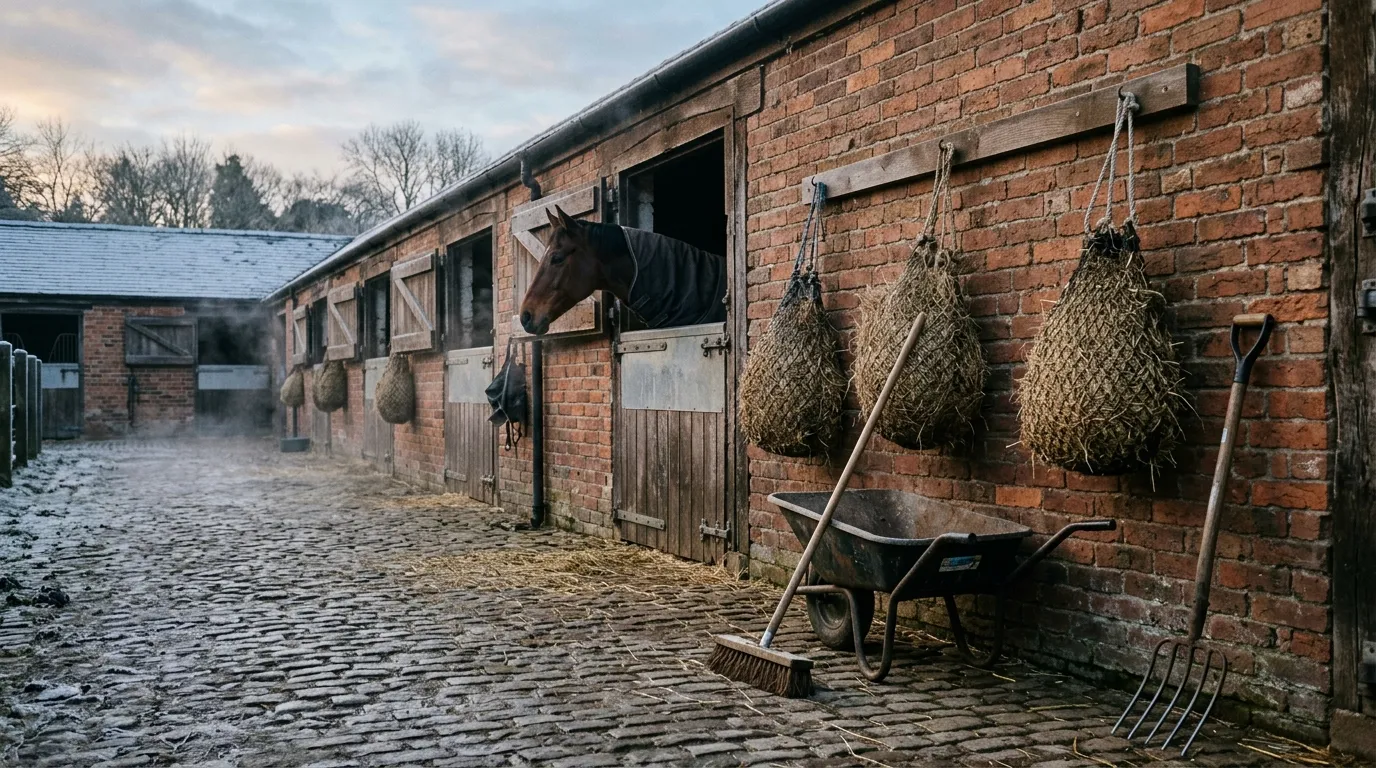
Owning a horse is mostly this. Not the rosettes and not the arena. It is the hay net, the rug change at dusk, the barrow. It is also where much of the money and time goes, so it is worth knowing before you sign anything.
A day on the yard
Most horses in Britain live on a livery yard, at home on a few acres, or on a mix of field and stable that changes with the season. Whichever it is, the day has the same bones: check the horse over first thing, feed, turn out or muck out, check the water, pick out the feet, and do much of it again in the evening with rugs changed for the night. On full livery the yard does most of it. On DIY livery you do it all, before and after work.
Forage first
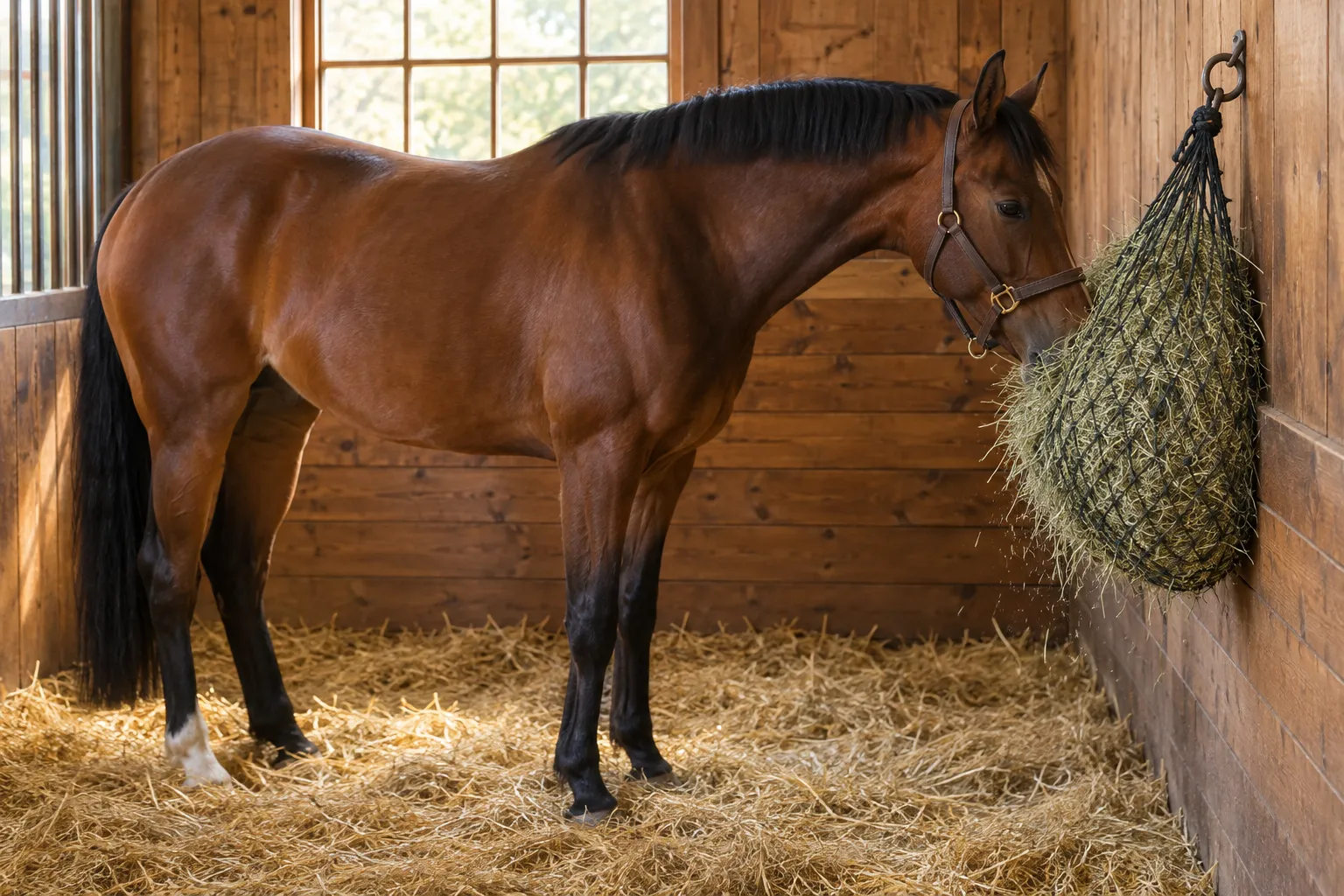
Feed is mostly forage. A horse needs grass, hay or haylage in front of it for most of the day to keep its gut working, and the hard feed in the bucket is a small top-up for horses in work or struggling to hold weight. Too much rich grass or hard feed is a known trigger for laminitis, and sudden changes of diet for colic. What horses eat sets out the amounts, with the sources.
Rugs, beds and feet
Rugs are the job people most often get wrong, usually by putting too much on; the rug guide explains when a horse needs one and how to check. Mucking out takes anything from twenty minutes to an hour depending on the bed, and straw, shavings and rubber matting each have their own routine. Feet need picking out at least once a day, and the farrier comes every six to eight weeks whether the horse is shod or barefoot.
Livery, explained
Full livery means the yard does everything and you ride. Part livery splits the jobs, often with the yard doing weekday mornings. DIY livery means you rent the stable and the field and do the rest yourself, and grass livery is a field with no stable at all, which suits hardy natives and retired horses. Prices vary with the region and the facilities, so compare what is included as well as the monthly figure.
What it costs in time
Plan on a couple of hours a day for a horse on DIY livery, longer in winter and at weekends. It is the cost first-time owners underestimate more than the money, and the reason so many choose part livery for the working week.
What to read first
Six pages that cover most of a day on the yard, from the rug decision at dusk to the hoof pick in the morning, with what horses eat and how to muck out between.
Further on
When you have got this far, what comes next is the partnership: schooling, the arena, and the long years together: what the two of you become, and how it's marked.