How do you pick out a horse's hoof?
Picking out a hoof means using a hoof pick to clear stones, mud, and dirt from the sole and frog.
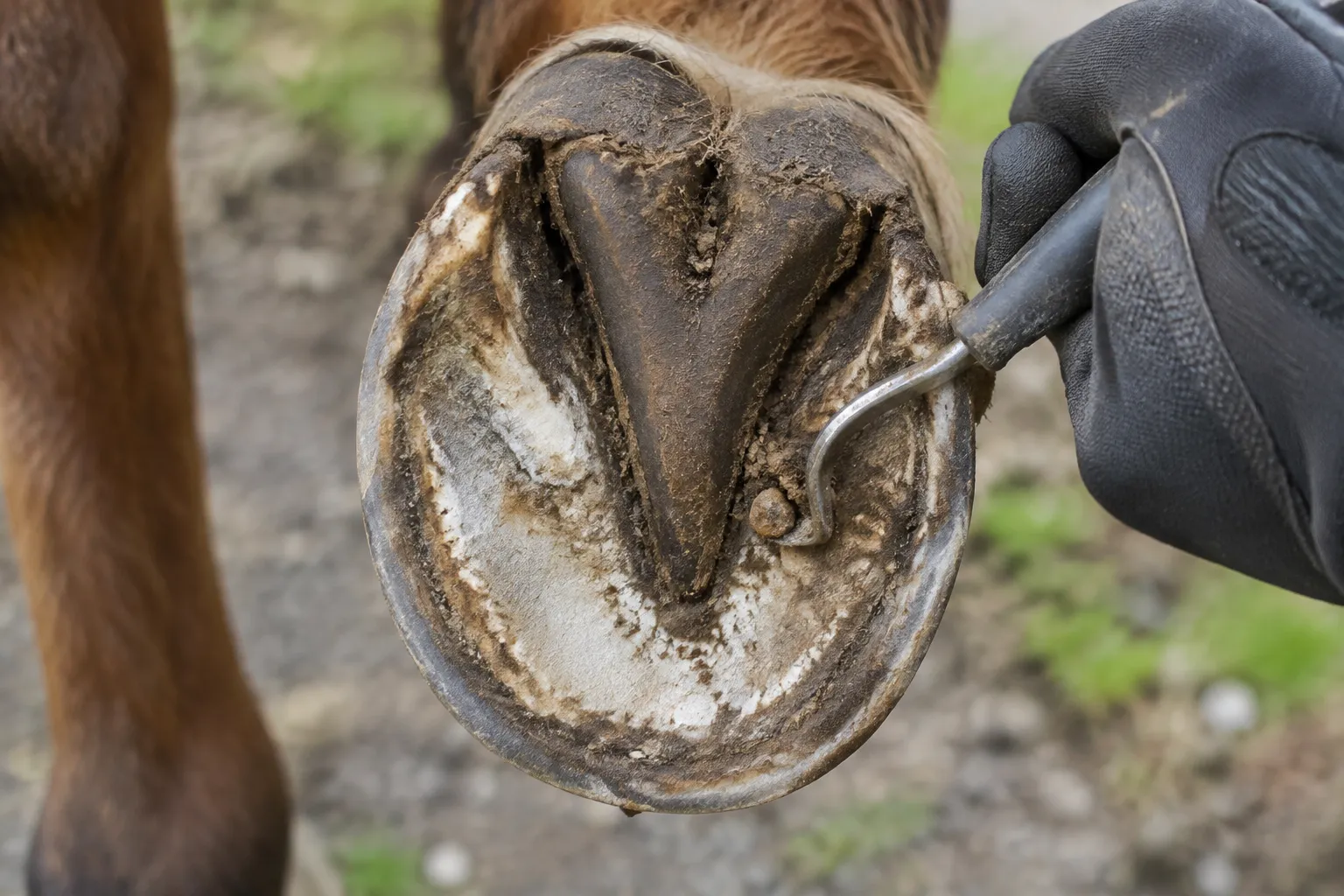
Picking out means working a hoof pick from heel to toe across the sole, clearing packed mud, stones, and bedding away from the sensitive frog: the V-shaped structure that helps absorb shock with every step. The British Horse Society puts the frequency plainly: “Pick out your horse’s feet at least once a day to check for stones, debris, cracks, splits, thrush, and where applicable, loose or worn shoes.” Most people do it before and after riding as well, whether or not the horse has worked.
How to pick out a hoof, step by step
- Tie the horse up or have someone hold it. Stand beside the shoulder, facing the tail.
- Run your hand down the back of the leg and ask for the foot, with a word if the horse is used to one. Most horses lift when you lean gently on the shoulder.
- Support the hoof in your hand, not on your knee, so you can let go quickly.
- Work the pick from the heel towards the toe, clearing the grooves either side of the frog first, then the rest of the sole. Never dig into the frog itself.
- Look and smell as you go: stones, bruising, a loose shoe or a risen nail, and the black, foul-smelling discharge of thrush in the grooves.
- Put the foot down gently, not dropped, and work round all four in the same order every day.
Why it matters
Left unchecked, trapped stones and dirt can bruise the sole, and wet, dirty conditions in the hoof can encourage thrush and other infections, so this small daily habit does a lot of preventative work.
Teaching a horse to lift its feet
Young horses, and some that have changed hands, haven't learned to hand over a foot. Start with the front feet, keep sessions short, and reward the horse as soon as the foot lifts, even for a moment. Hold it briefly, put it down before the horse snatches it back, and build up a little each day, using the same word and the same order of feet every time. A horse that kicks or won't settle needs help from someone experienced, and your farrier will thank you for the groundwork.
What a healthy foot looks like
A clean sole should be firm and evenly coloured, the frog rubbery and free of smell, and the wall smooth, without deep cracks running up from the ground. Heat in the foot, a stronger pulse at the back of the fetlock, or a sudden reluctance to put weight on it are reasons to call the vet the same day.
The farrier
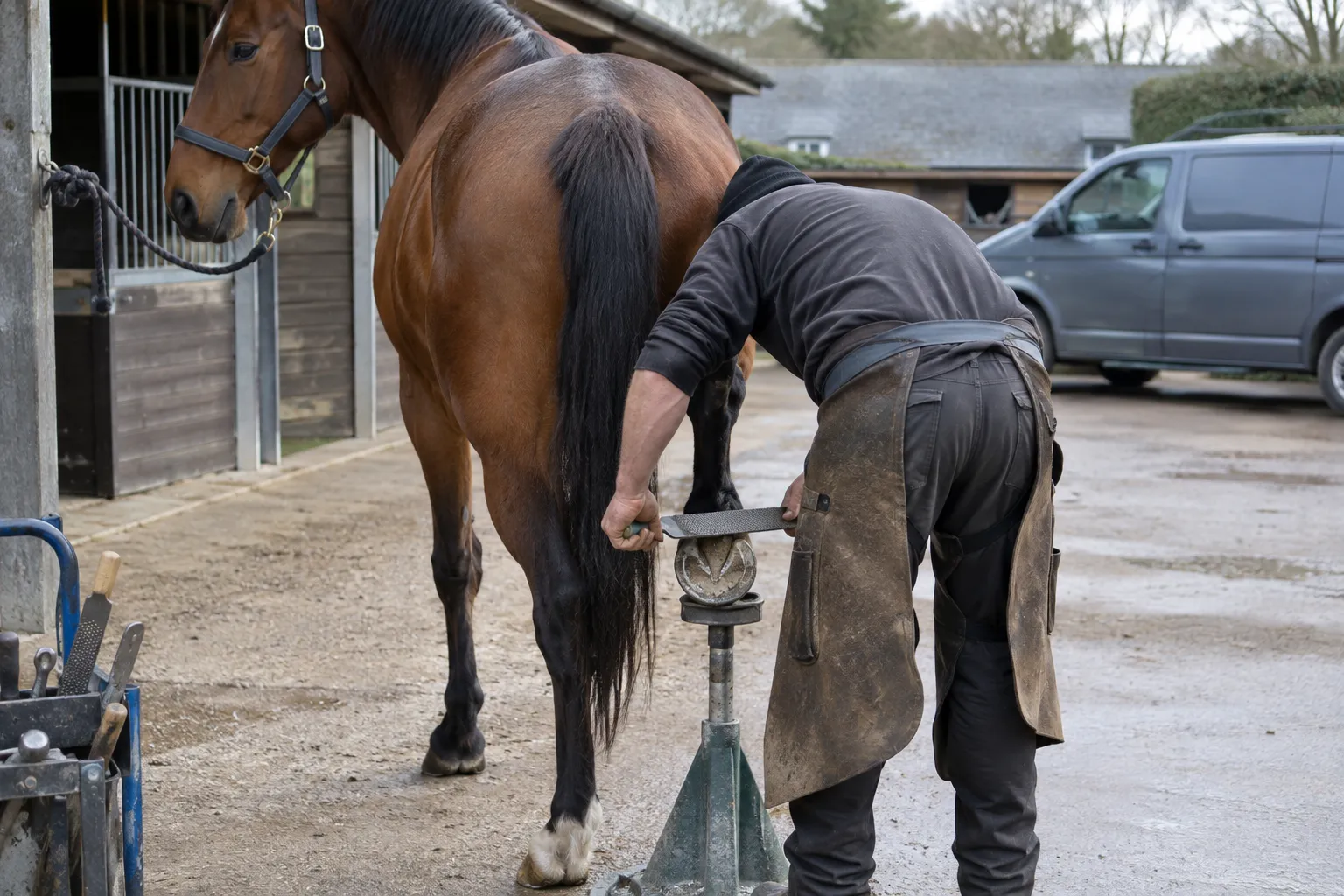
The other half of hoof care is the farrier, and the BHS gives the interval as “usually every four to six weeks for shod horses, and sometimes longer for barefoot horses”. Farriery is a regulated profession in Britain, not a trade anyone may practise: registered farriers are regulated by the Farriers Registration Council. Like mucking out, picking out happens whether or not the horse is ridden that day, and it sits alongside rugging as one of the basic jobs of ownership; horse rugs sets out when a horse needs one. For the person who never misses a day of it, see our gifts for horse riders.