How do you muck out a stable?
Mucking out means clearing droppings and wet, soiled bedding from a stable and keeping clean, dry bedding down.
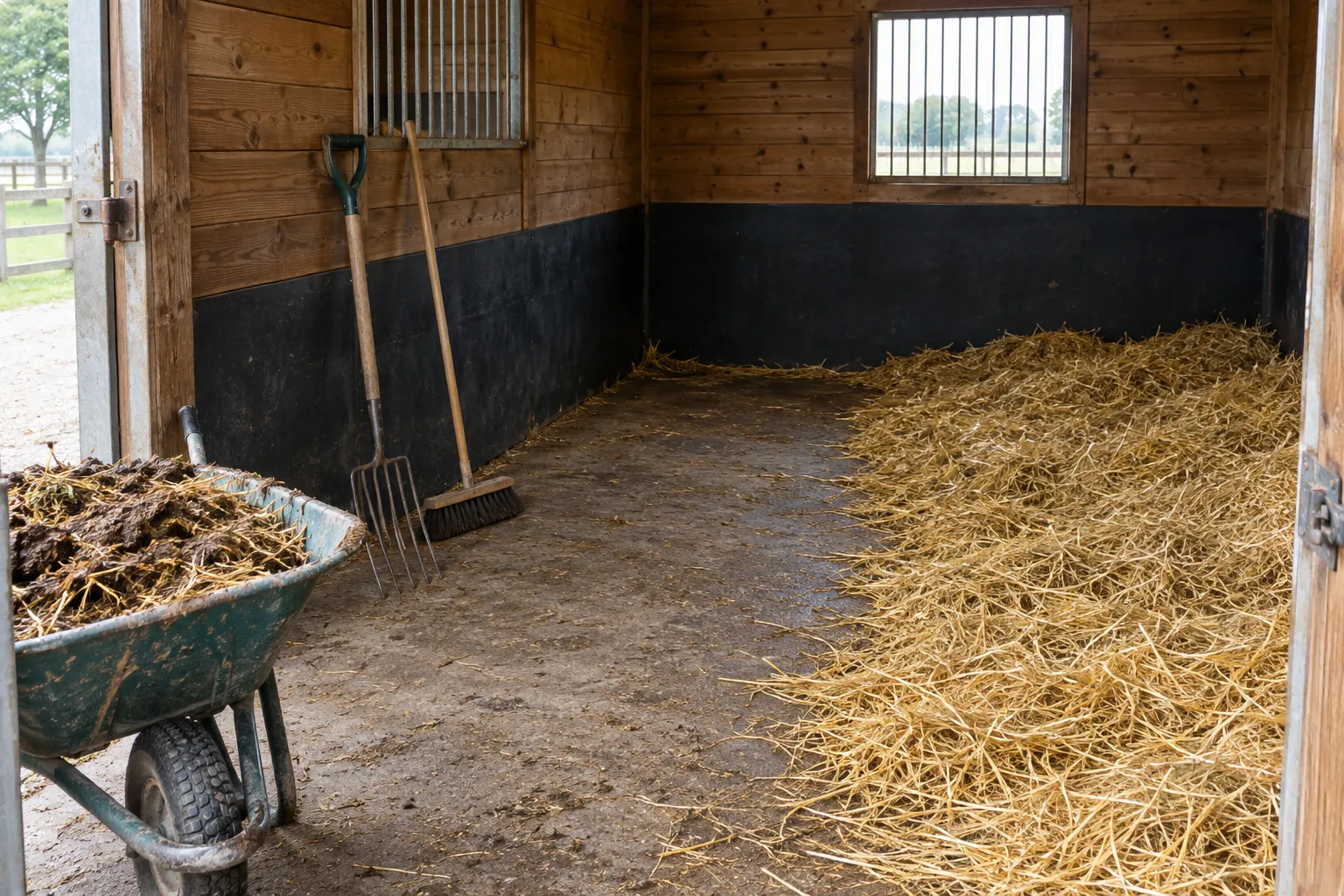
At its simplest, mucking out means removing droppings and any wet or soiled bedding, then setting the remaining clean bedding back down so the horse has a dry, comfortable bed. Most yards do a full muck-out each morning, with a quick skip-out (clearing the obvious droppings) later in the day to keep the bed fresh.
It's one of those jobs that looks simple from the outside and is anything but glamorous, yet it's done every single day, in all weathers, by owners and yard staff alike. It's the kind of unseen, unending work that keeps a stable running, alongside getting feeding right. If you're buying for someone who does this daily, see our gifts for stable managers and yard owners.
A full muck-out, step by step
- Take the horse out, or tie it up safely at the side.
- Lift the droppings into the barrow first.
- Fork the clean bedding to the sides and banks, and lift out the wet patches.
- Sweep the bare floor and leave it to air while you do the next job.
- Lay the clean bedding back, add fresh on top, and build the banks up the walls.
- Refill water and the hay net before the horse comes back in.
How the bedding changes the job
Which bedding you use changes how long the job takes, because it changes how much clean bedding leaves the stable with the dirty. Pelleted beddings let you lift the soiled patch and top up; straw and shavings tend to come out by the barrowful whether soiled or not. Most of what is written about this online is published by companies selling one bedding or another, so it is worth being careful with the claims.
| Bedding | How it is mucked out |
|---|---|
| Straw | Lift droppings and wet straw; a lot of clean straw leaves too |
| Wood shavings | Sift droppings with a shavings fork; lift the wet patch |
| Pellets | Lift the soiled patch and top up; pellets break down to a soft bed |
| Rubber matting with a thin bed | Quick to clear, but needs good drainage beneath |
What the research measured
What has been measured is the horse, not the barrow. A crossover study of 32 healthy horses in Ypäjä, Finland over the winter of 2018 to 2019 compared two peat beddings, wood pellet and straw pellet, and concluded that "baled peat bedding was associated with a smaller neutrophil percentage in the lower airway of healthy horses compared to straw pellets and loosely stored peat", and straw pellet came out worst of the four. The authors note the respirable dust fraction itself was not measured, so treat it as evidence that bedding choice reaches the horse’s airway, not as a league table.
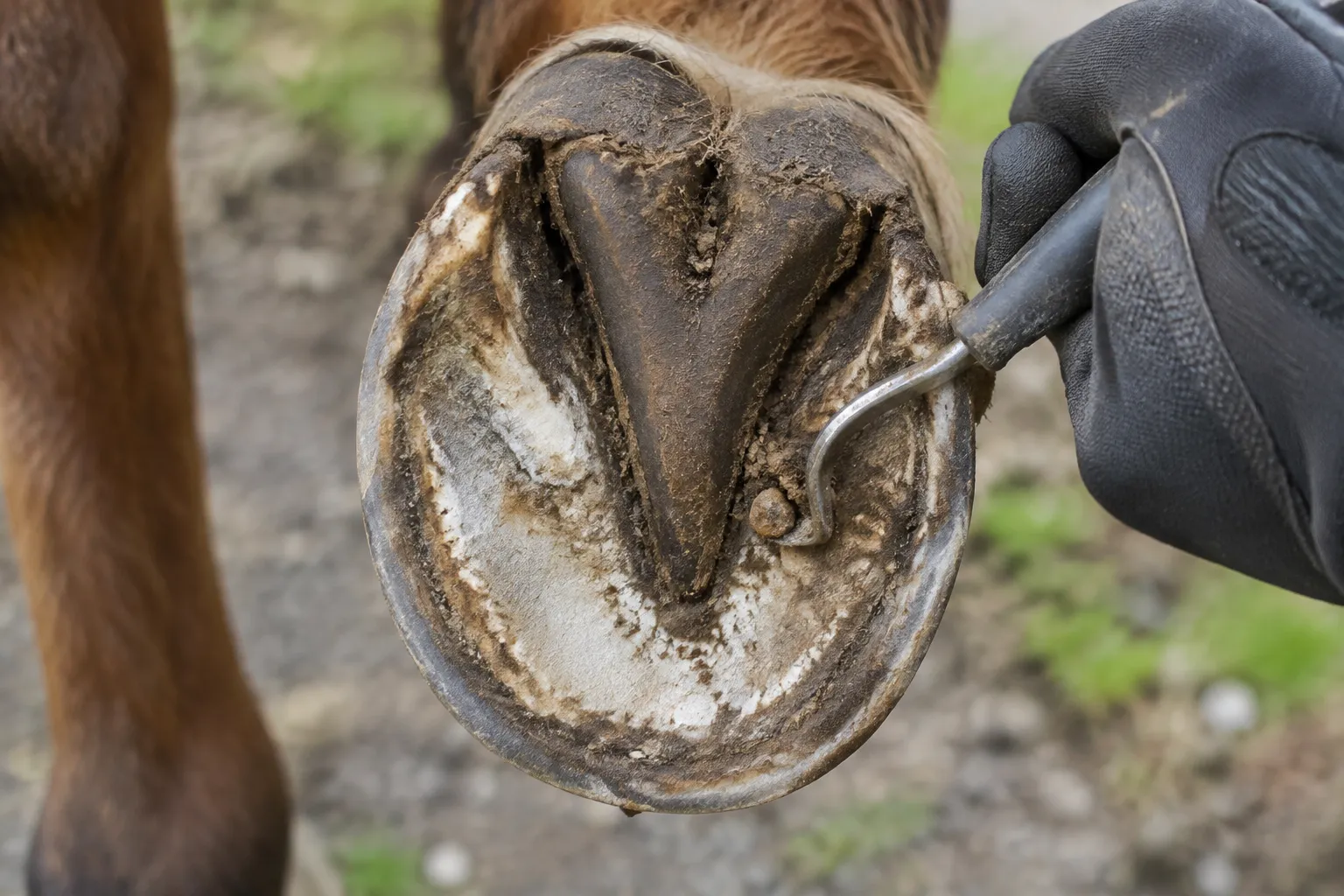
The other job that happens every day whatever the bedding is picking out the feet.