What do horses eat?
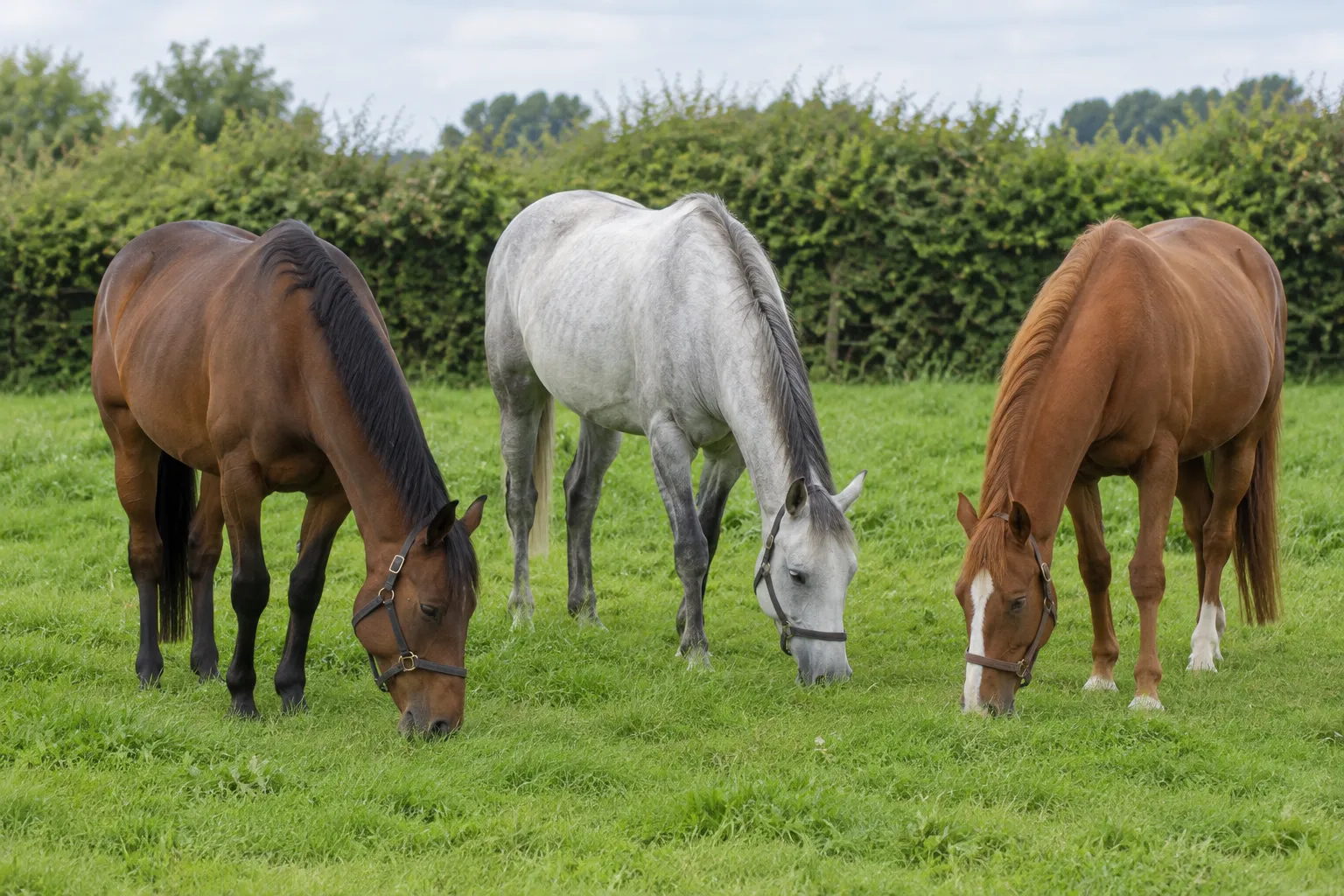
Horses are built to eat forage first (grass, hay or haylage) with hard feed added only as needed.
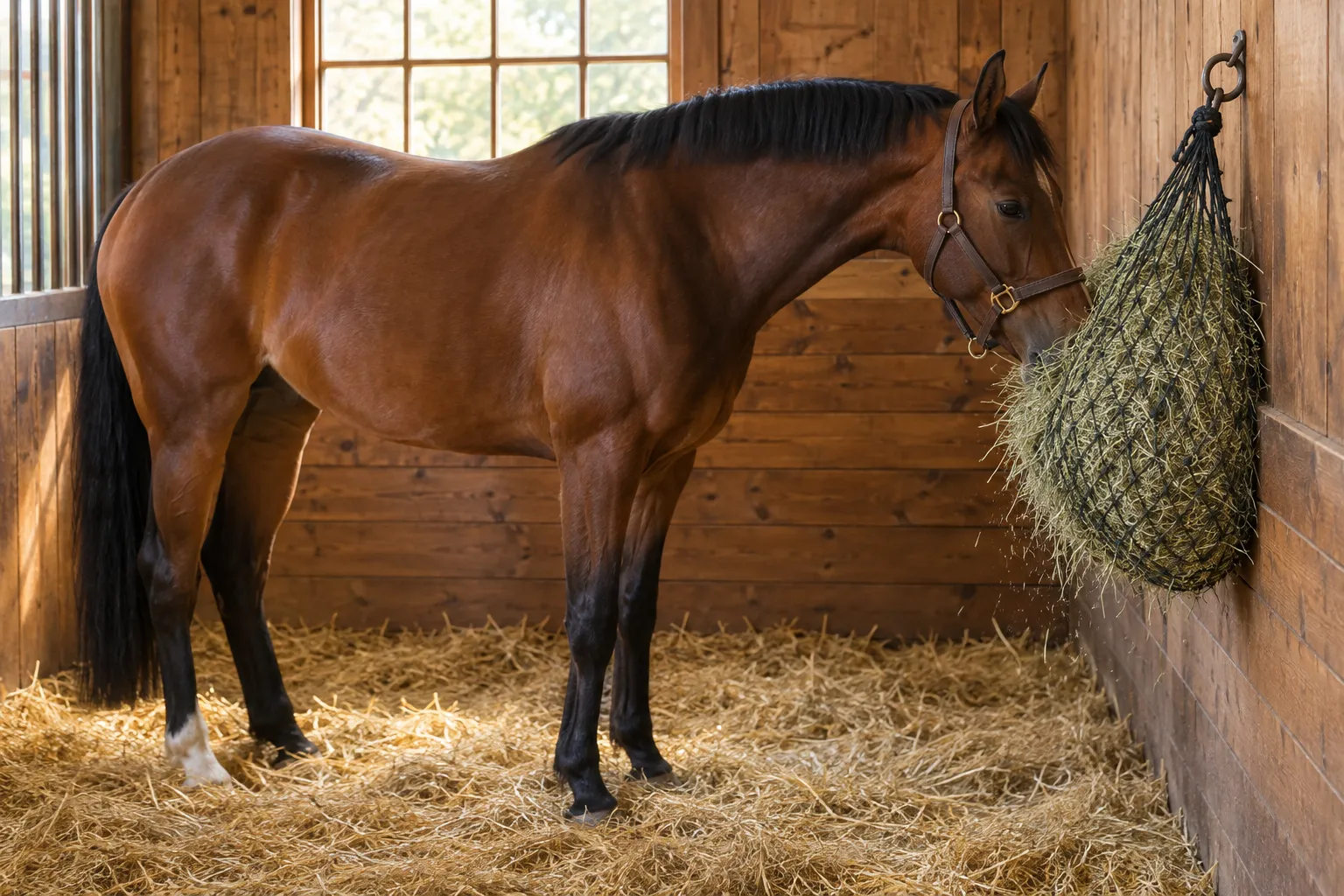
A horse’s diet starts with forage: grass at pasture, or hay and haylage when grazing isn’t enough. Their digestive systems are designed for near-constant, small-and-often grazing, which is why free access to forage matters more than any single feed. The British Horse Society puts a number on it: a horse should eat roughly 2% to 2.5% of its bodyweight in forage every 24 hours, and a daily ration should never fall below 1.5% of bodyweight, the floor used when a horse is being slimmed down under advice (BHS feeding guidance, read 9 September 2026). For a 500kg horse that is about 10 to 12.5kg of hay a day.
What goes into a horse’s diet
| Feed | What it is | When it is used |
|---|---|---|
| Grass | Grazing at pasture | Most of the year; rationed for good-doers in spring |
| Hay | Grass cut and dried in the field | Stabled horses, and winter when grass runs short |
| Haylage | Grass baled wetter and wrapped | Horses that need dust-free forage |
| Chaff | Chopped hay or straw | Bulk mixed in with hard feed, to slow eating |
| Hard feed | Cubes, coarse mix or a balancer | Only where work, age or condition calls for it |
Hard feed (cereal-based mixes, cubes, or balancers) is added on top only where a horse’s workload, age, or condition calls for extra calories or specific nutrients. A balancer adds vitamins and minerals with very little energy, which suits a horse that keeps its weight on forage alone.
The old rules of feeding
The rules taught at Pony Club for generations still hold. Feed little and often. Base the diet on forage. Make any change gradually, over a week or two, so the gut can adjust. Feed according to the work the horse is actually doing, not the work you plan. Keep to a routine, and don’t ride hard straight after a big feed.
Water, salt and treats
Fresh, clean water needs to be available at all times, alongside free access to salt or a mineral lick. A horse drinks a lot more in hot weather, in hard work and on a hay diet than at grass, so check troughs and buckets more than once a day in summer and break the ice in winter. Treats like carrots and apples are fine in moderation, cut lengthways so they cannot lodge in the throat, but the daily diet is built on forage, not variety.
What horses should not eat
Some common British plants are poisonous to horses. Ragwort is the best known, and is most dangerous dried in hay. Sycamore seeds and seedlings blown into autumn fields are linked to atypical myopathy, and acorns, yew and foxglove are all hazards. Walk the field and the hedges regularly, and ask your vet if a horse may have eaten any of them.
Getting it right is a basic part of yard life, alongside the daily jobs covered in how to muck out a stable and horse rugs. If you’re buying for the person who manages all of it, see our gifts for stable managers and yard owners.