What are the types of horse rugs?
Horse rugs fall into a few main types (turnout, stable, cooler, and fly) each suited to a different job.
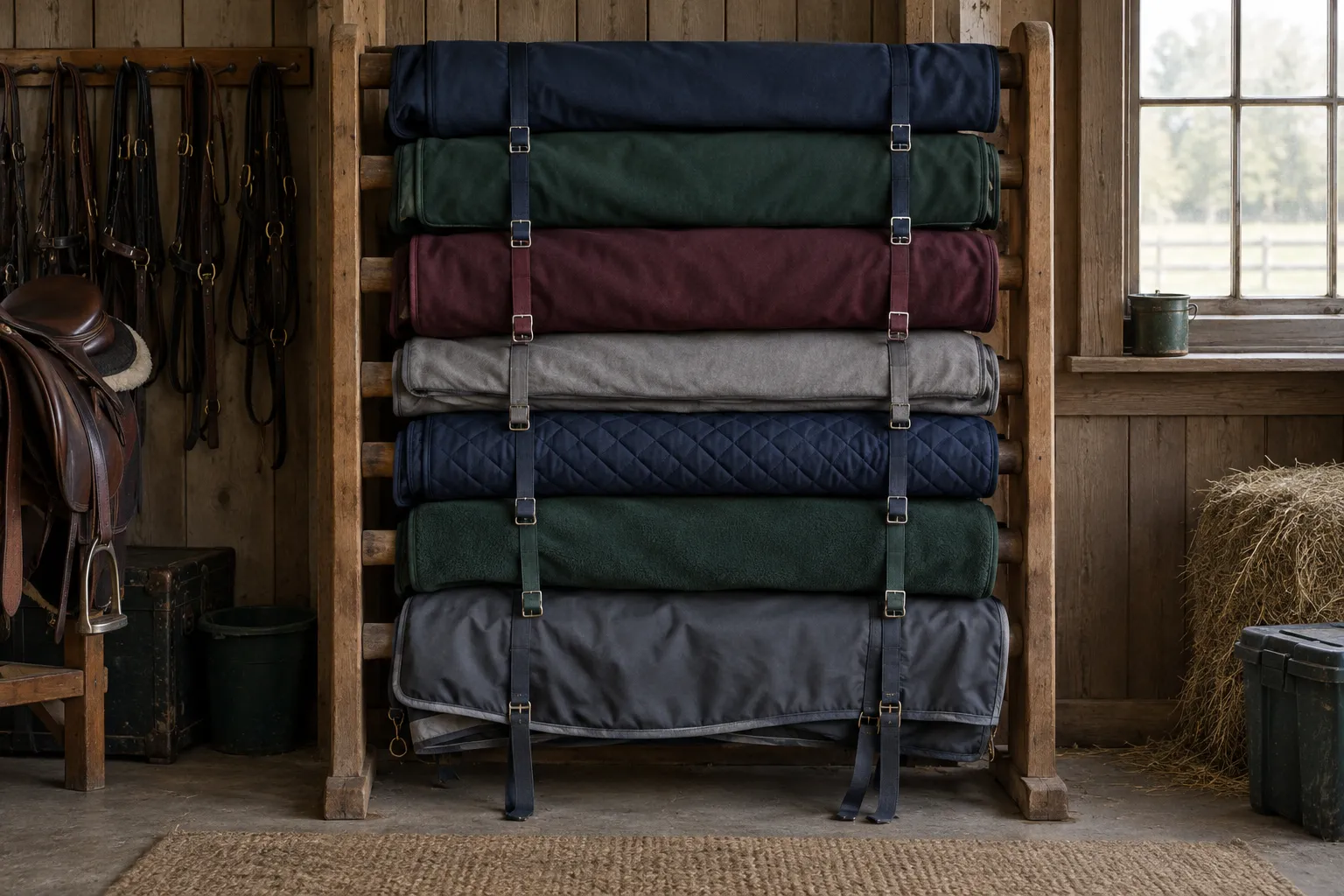
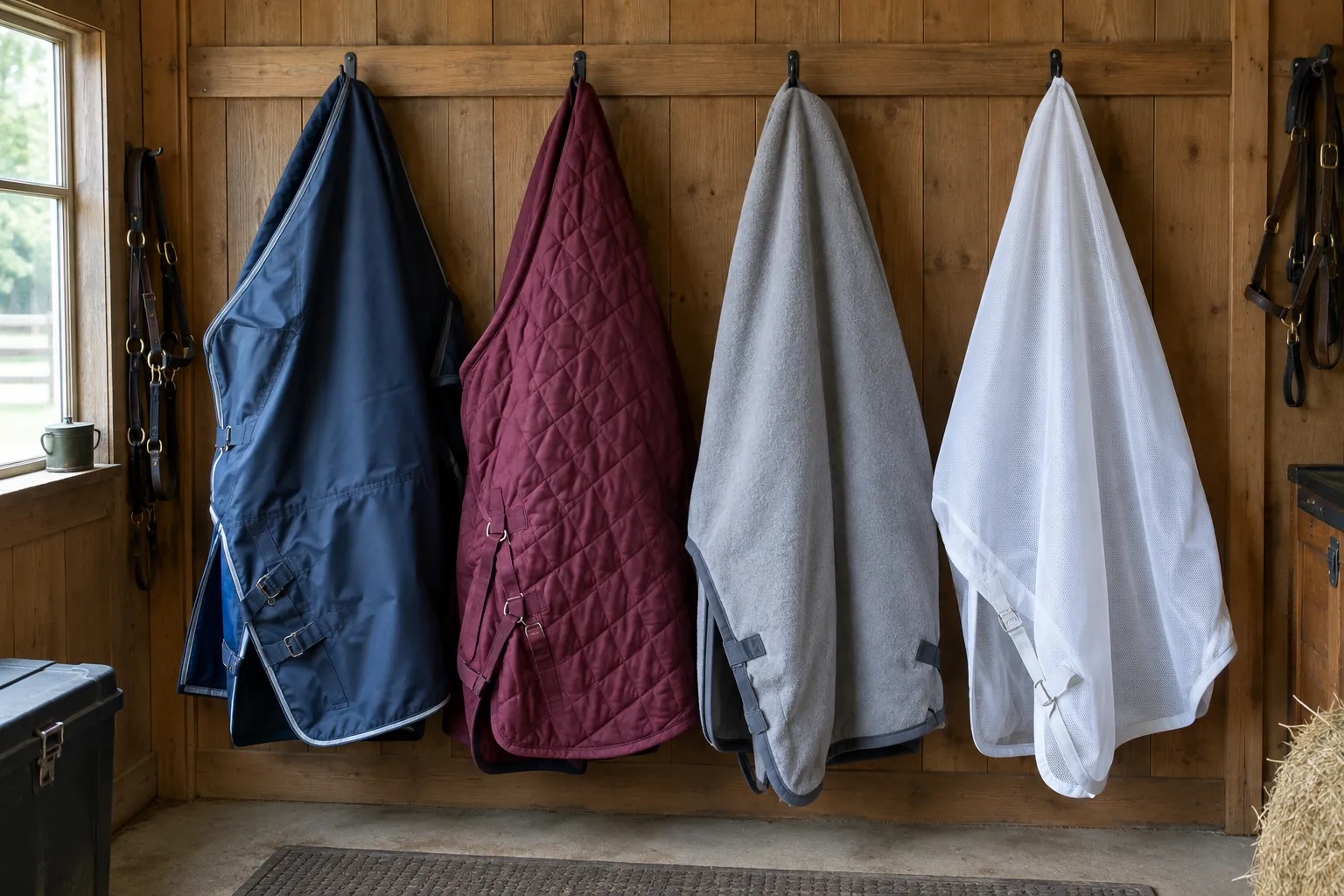
A turnout rug is worn outside in the field, waterproof and built to handle weather; a stable rug is the indoor equivalent, providing warmth without the waterproofing a turnout needs. A cooler goes on after exercise or a wash, wicking away moisture so a horse doesn't chill while drying off, and a fly rug is a lightweight mesh layer that keeps insects off in summer.
Most owners keep a small wardrobe of rugs and change them as the weather and season shift: a lighter turnout for autumn, a heavier one with more fill for deep winter. Getting the right rug on at the right time is as much a part of ownership as any other daily task. For the person who manages that wardrobe, see our gifts for horse owners, and for the daily jobs alongside it, read how to pick out a hoof.
Whether to rug at all
The harder question is not which rug exists but whether to put one on at all. The British Horse Society puts the threshold plainly: most horses are fine in their own coat until it gets colder than 5°C, and below that they spend energy keeping warm.
What the fill weights mean
Rug warmth is sold by the weight of its filling, and the BHS bands them as light weight 0g to 100g, medium weight 150g to 300g, and heavy weight 350g and above. Clipping changes the sum: a fully clipped horse has lost its own insulation, while a lightly clipped one (a bib or a trace) can often manage unrugged. Over-rugging is a real risk, not a cautious one, and the BHS warns that a rug flattens the coat so it becomes "less efficient at trapping heat", that it "prevents sunlight reaching your horse’s skin, limiting the production of vitamin D", and that piling on rugs while also overfeeding raises the odds of weight gain and laminitis.
Looking after the rugs
Rugs last longer with a little care. Check the waterproofing on turnout rugs each autumn, because a rug that lets the rain through can leave a horse colder than no rug at all. Brush off dried mud before storing, wash rugs at a rug-cleaning service or in a machine meant for them, and reproof turnouts after washing. Check the straps and stitching before the season starts: a broken leg strap or surcingle is how rugs slip and horses get tangled.
Store clean, dry rugs folded in a breathable bag, out of reach of mice, and mark them with the horse's name if they live on a shared yard.
The seasonal decision itself, month by month and clip by clip, is set out in when a horse needs a rug.