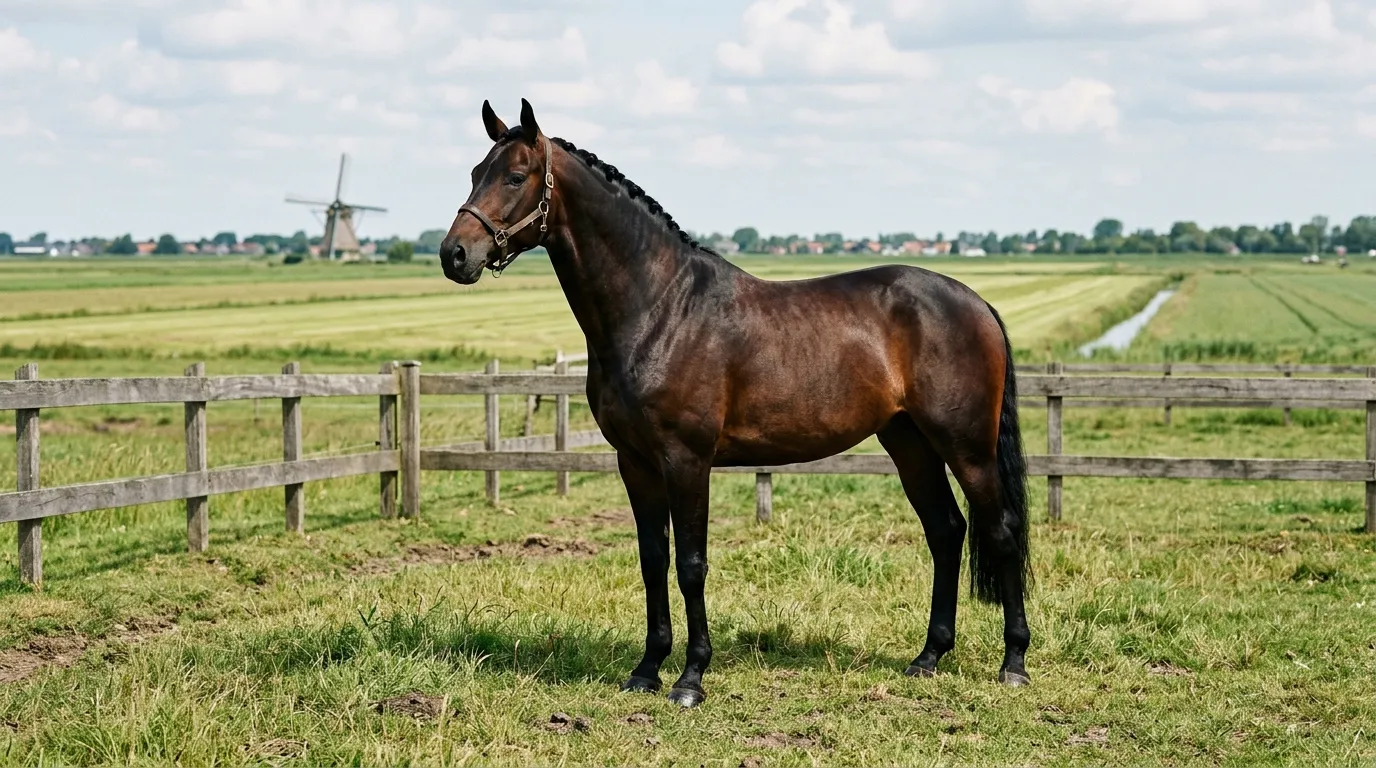
Hanoverian
The branded H, the German register that has produced Olympic medallists for two centuries.
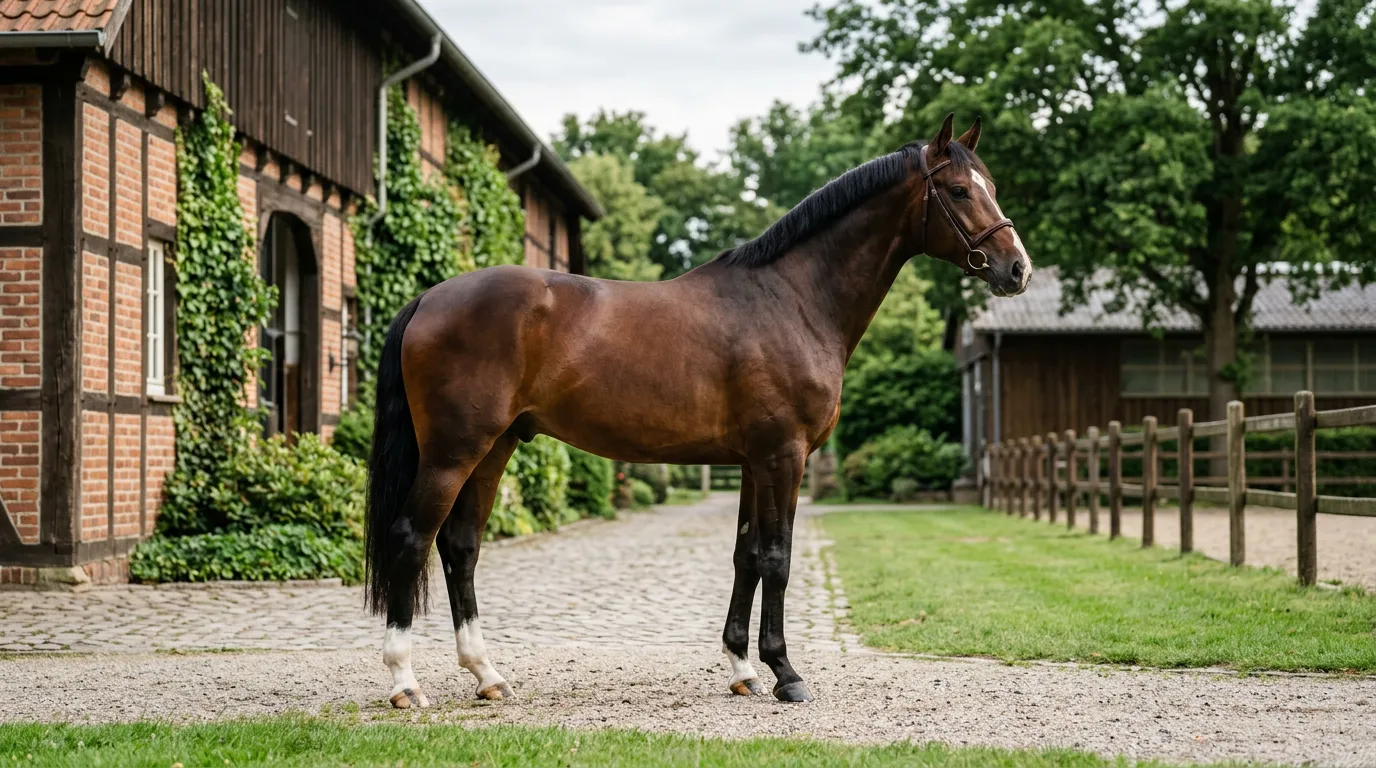
Hanoverian breeding traces to the State Stud at Celle, founded in 1735 by Elector George II of Hanover, who was also King of Great Britain; the Hannoveraner Verband that runs the studbook today was founded later. The Hanoverian brand is a stylised H applied to registered horses, and the breed has produced a notable share of Olympic dressage and showjumping medallists in the modern era.
| At a glance | Hanoverian |
|---|---|
| Height | 16hh to 17hh (163 to 173cm) |
| Colours | Chestnut, bay, black and grey; the studbook admits all colours |
| Known for | Dressage, showjumping, eventing |
| Origin | Lower Saxony, Germany; State Stud at Celle, 1735 |
| Breed society | Hannoveraner Verband; British Hanoverian Horse Society |
British Hanoverians compete heavily in BD-affiliated dressage and BS showjumping; The British Hanoverian Horse Society, a full daughter society of the German Verband Hannoverscher Warmblutzüchter, runs UK studbook inspections and mare performance tests for registration. Owners often track sire-lines carefully; names like Don Schufro, Sandro Hit, Florencio I, and De Niro carry weight among German warmblood dressage breeding circles. All coat colours are admitted to the Hannoveraner Verband's breeding programme, including pinto, palomino, cremello, smoky black and buckskin alongside bay, chestnut, black and grey, because the studbook selects on performance, not colour.
Further reading · The British Hanoverian Horse Society · British Horse Society
A Hanoverian owner is usually competing seriously. The framed canvas portrait belongs in the kitchen at home, not the tack room: it's the trophy piece for the off-yard moments.
Where a Hanoverian gift ends up
Competing owners already have rosettes on the tack-room wall, so a framed portrait canvas gets bought for the house instead. It's the off-season piece, and our guide to horse portraits from photos explains why a clear head-and-shoulders photo works better than an action shot. A name print using the studbook abbreviation properly is the cheaper way to the same recognition. Sizes and prices are on the personalised gifts page.
The H brand and the bloodline obsession
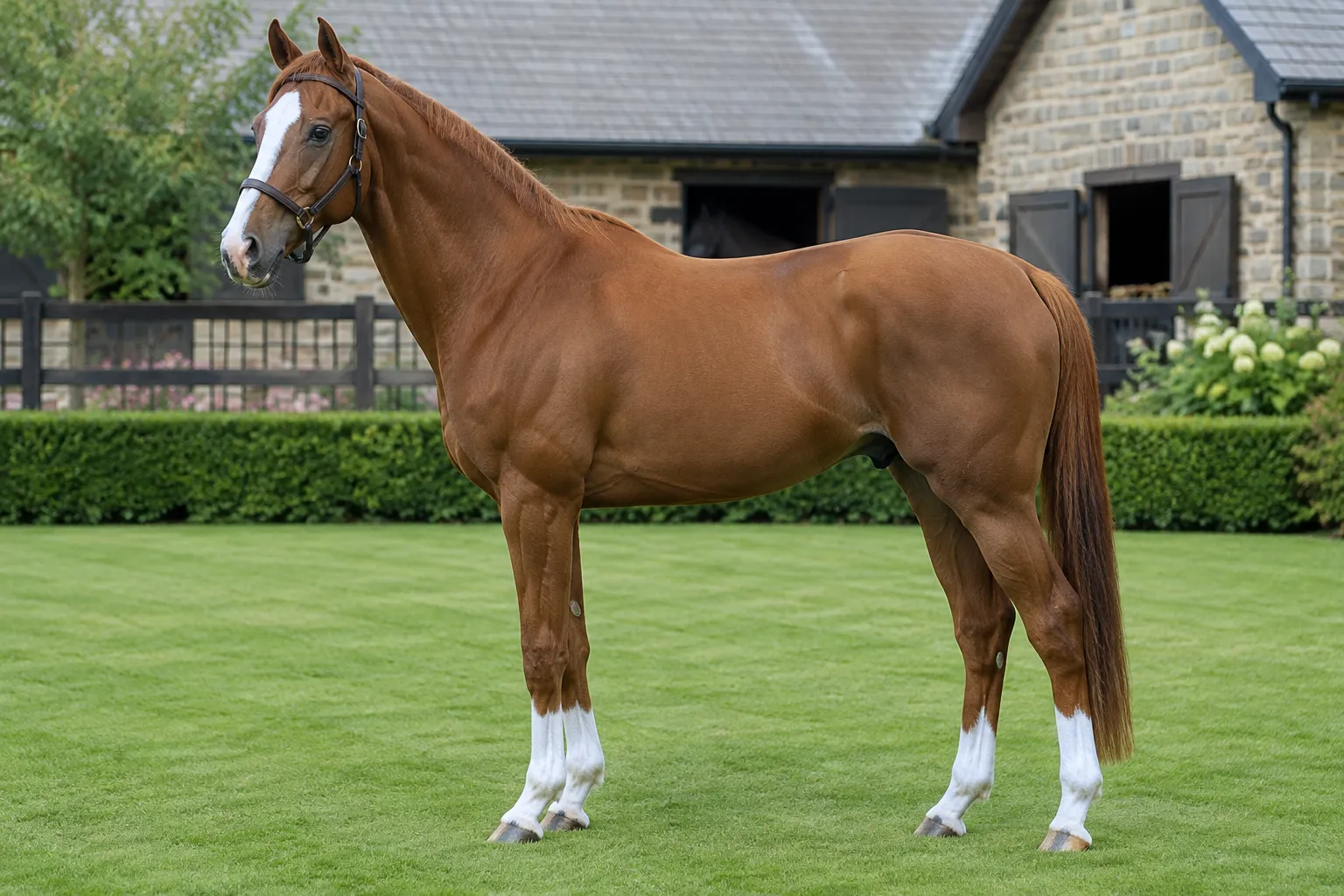
The Hanoverian is one of the great sport-horse studbooks, run from the State Stud at Celle since 1735, and the H brand is among the most recognised marks in the discipline. It is bred relentlessly for performance (dressage above all, with a strong showjumping branch) and the modern register has produced a disproportionate share of Olympic medallists. Physically you're looking at a big, powerful frame, a long well-set neck, a deep sloping shoulder, and the hindquarter that drives the elevated, expressive movement dressage judges reward. None of it is accidental; the Verband grades hard and culls the breeding population to type.
What sets these owners apart is the depth of their bloodline knowledge. Sire-lines like Don Schufro, Sandro Hit, De Niro and Florencio are tracked the way racing people track Thoroughbred sires, and an owner can usually recite their horse's first three generations. That matters for a gift because the identity that travels with a competition horse is the pedigree, not the yard. A grassroots horse might be "named for the yard"; an advanced one is named for its sire-line, and the personalisation should follow.

Getting a Hanoverian gift right
- Bloodline over yard at the top. For a seriously competing horse, the sire-line is the identity worth recording on a name print; reserve the yard for grassroots horses.
- Keep the brand in the typography, not the picture. Rendered brands on a portrait go wrong; the H belongs as a clean detail line, not on the horse's thigh in the art.
- The canvas is the home piece. A serious competitor's framed canvas often hangs in the kitchen as the trophy for off-yard moments, not on the manège wall.
- Mark the level, not the sentiment. A first medal at a level or a regional title is what owners want recorded: concrete achievement over a soft caption.
Competition records date better than sentiment, and the year-end season is when the Christmas picks take the framed canvas. For the professional around the horse, the equestrian's list skips the novelties entirely. The other continental studbook British competitors buy from is the KWPN, and the two grade their horses on different systems worth knowing apart.