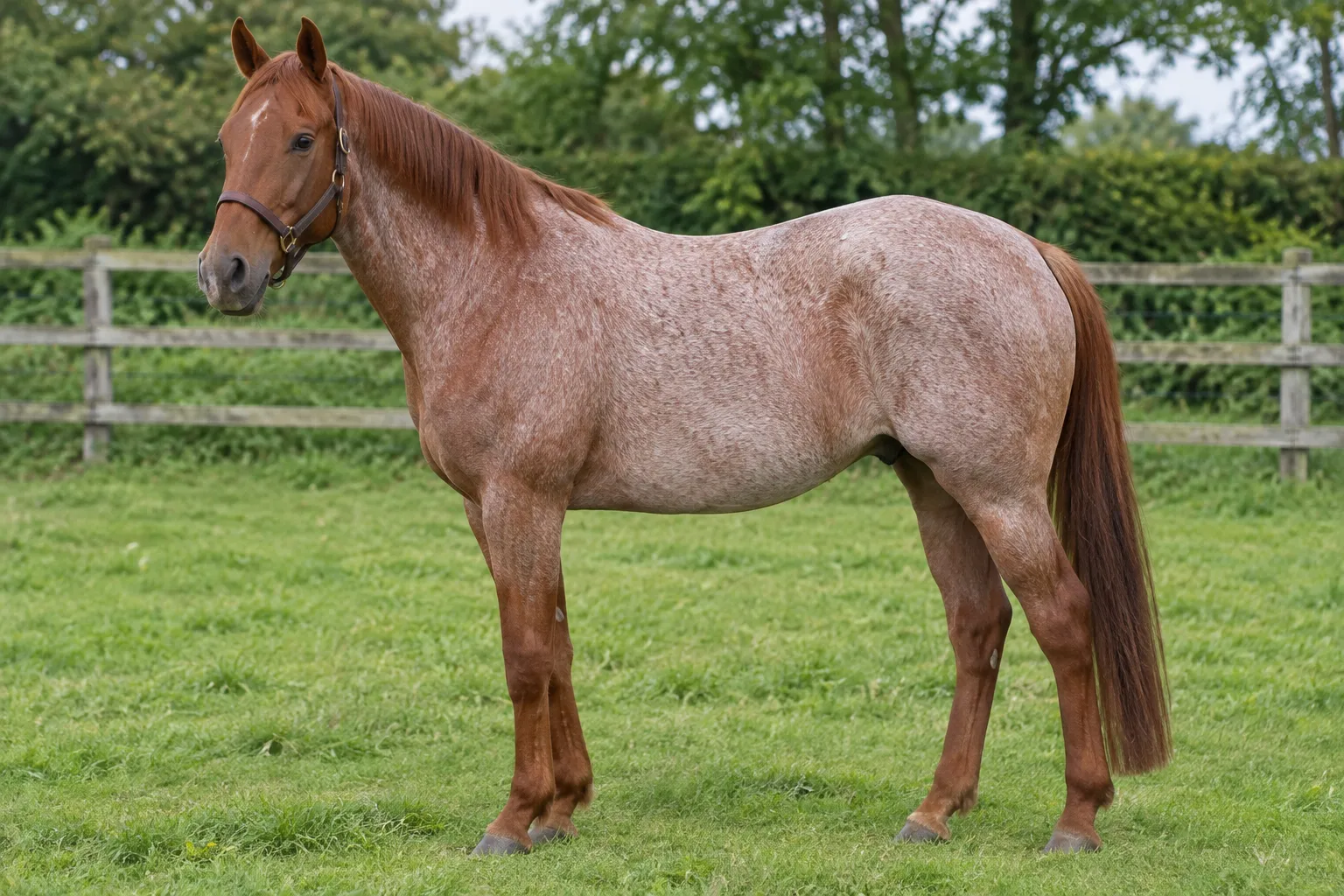
What is a palomino horse?
A gold coat with a white or pale cream mane and tail. It's a colour, not a breed, made by one copy of the cream gene on a chestnut horse.
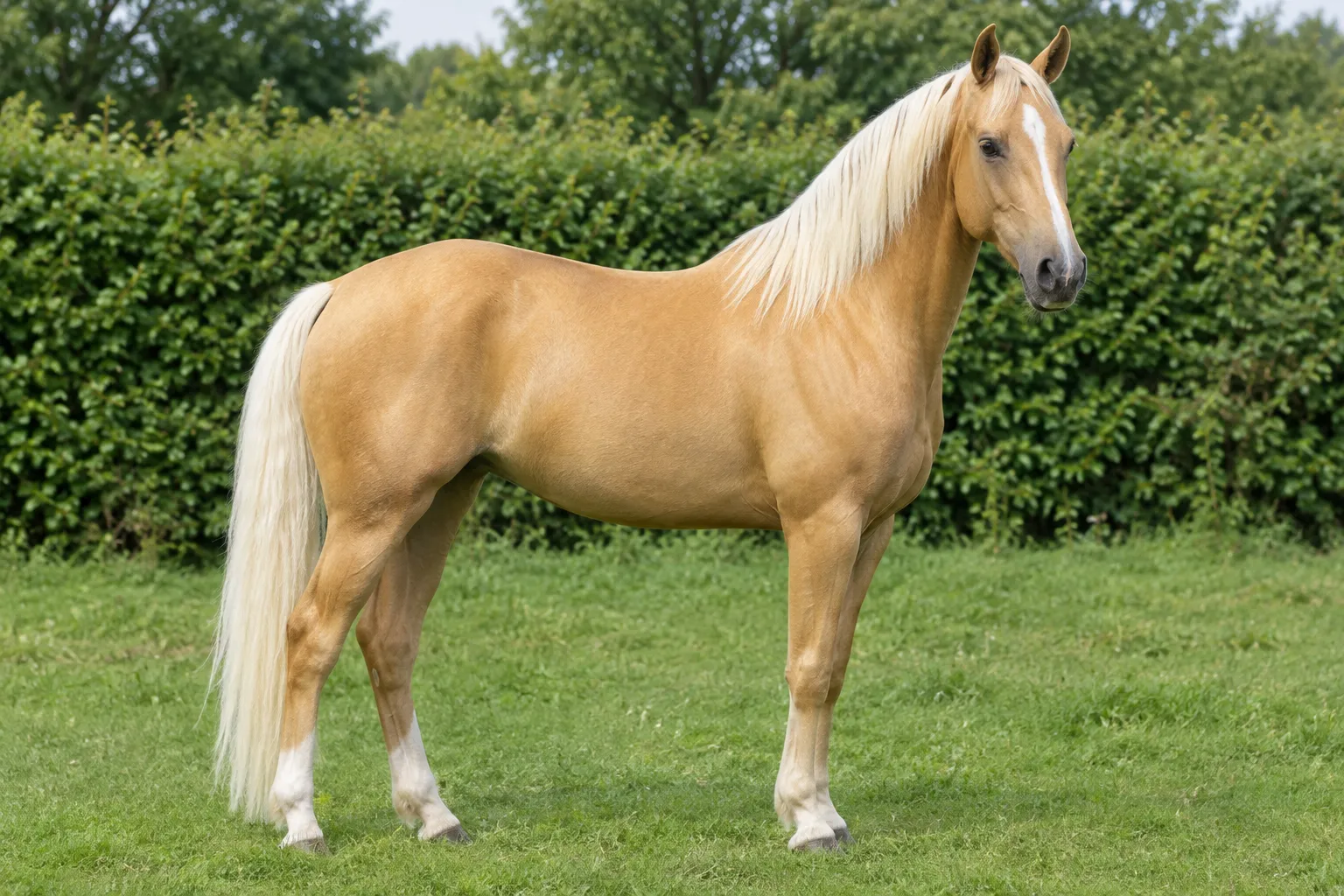
Short answer: a palomino is a chestnut horse carrying one copy of the cream gene. The UC Davis Veterinary Genetics Laboratory puts it plainly: a horse with a chestnut base and one cream allele, written Cr/N, will be palomino. Cream turns the red pigment of a chestnut to yellow, which is why the body comes out gold and the mane and tail go white or cream.
The colour
The ideal is usually described as the colour of a newly minted gold coin, with a mane and tail as near white as possible. Real palominos run from a pale cream shade, sometimes called isabelline, through gold to a dark shade with a flaxen mane that some people call chocolate palomino. Their eyes are often light brown, and their skin can be a little lighter than a chestnut's.
A colour, not a breed
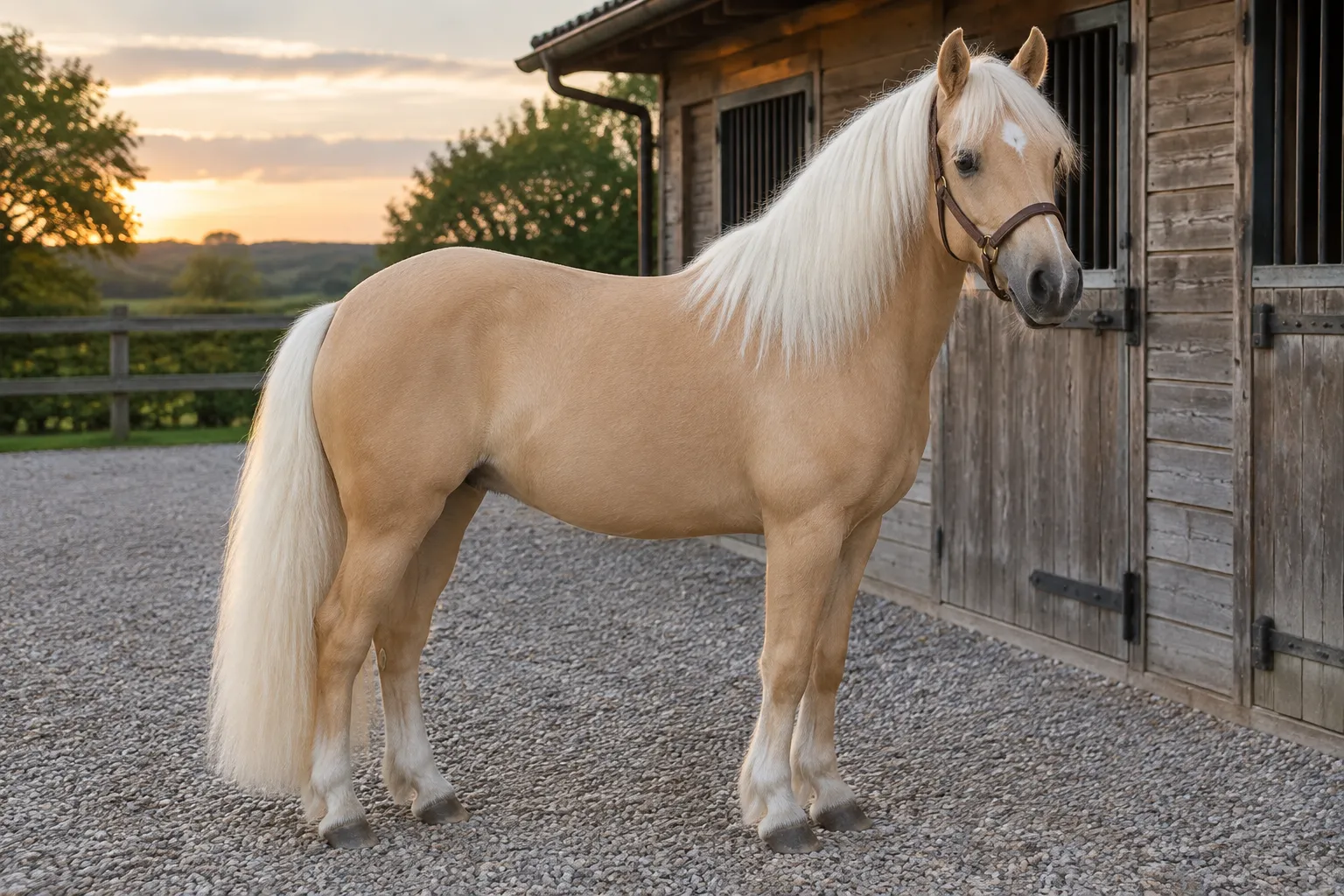
Palomino turns up wherever the cream gene does: in Welsh ponies and cobs, Connemaras and Quarter Horses among others, and in plenty of ponies with no papers at all. There are colour societies that register horses on colour alone, but there's no palomino breed with a type of its own. Some breeds can't be palomino at all. A Haflinger is chestnut with a flaxen mane, which looks similar from a distance but carries no cream, and the Friesian and Cleveland Bay studbooks register black and bay only.
Breeding a palomino
Cream is incompletely dominant: one copy dilutes the coat, and two copies dilute it much further. That makes palomino hard to breed true. Two palominos can produce a chestnut, a palomino or a cremello, roughly one, two and one in every four foals. The reliable route runs through the double-cream horse: the VGL notes that a horse with two copies of cream bred to one with none gives “cream offspring 100% of the time”, so a cremello crossed with a chestnut gives a palomino every time.
Cremello: two copies of cream
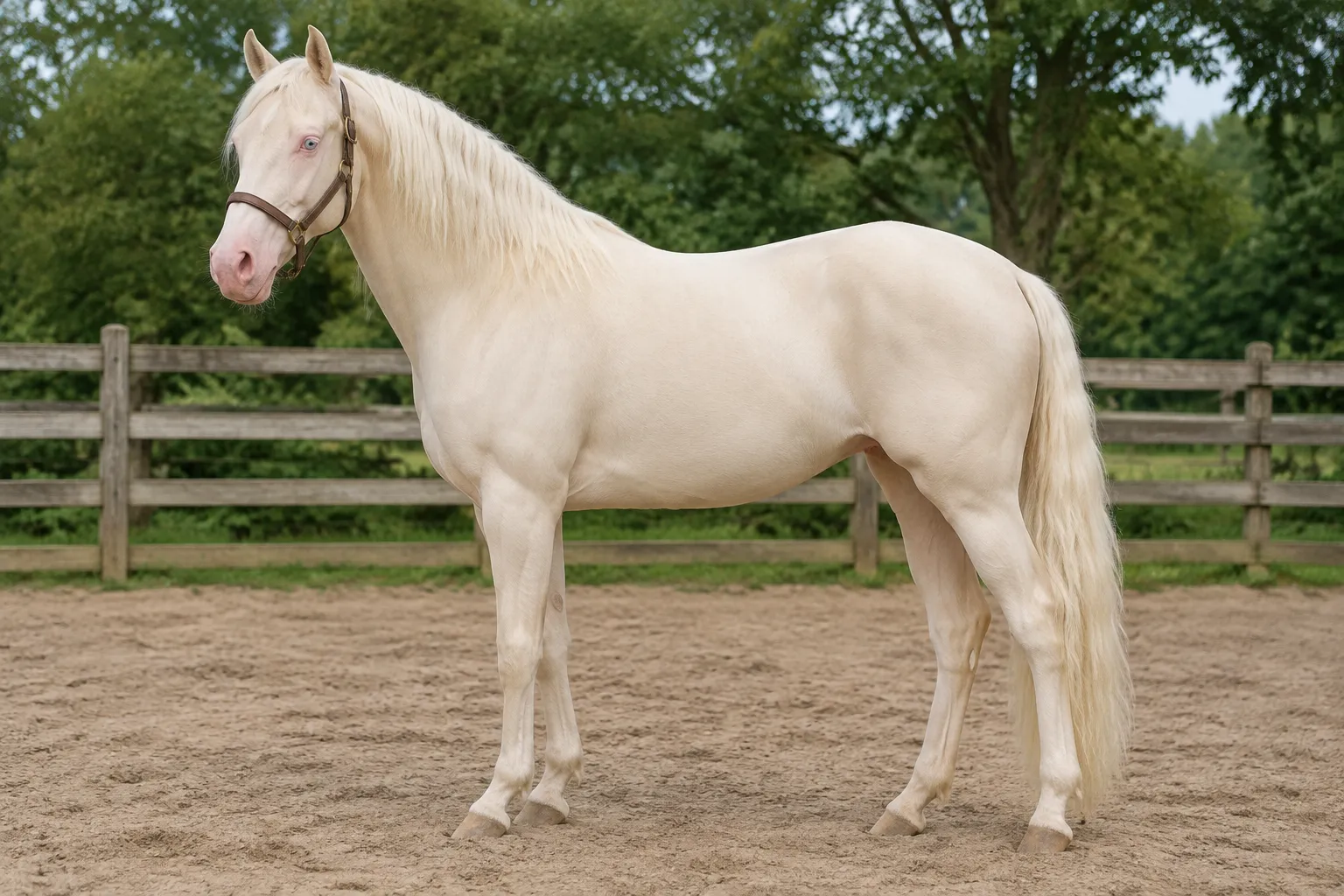
A chestnut with two copies of cream is a cremello: a cream body, a cream or white mane and tail, rosy-pink skin and pale blue eyes. Two copies on a bay give a perlino, and two on a black give a smoky cream. They're often mistaken for white or grey horses, but a cremello is born cream and stays that way, where a grey is born dark and lightens over the years.
The rest of the cream family
One copy of cream on a bay gives a buckskin, a gold or tan body with black points. On a black it gives a smoky black, which can be hard to tell from a plain black without a colour test. The dun or buckskin page shows how to tell a buckskin from a dun, and the horse colours guide sets every colour side by side.
Photographing a palomino
Gold coats wash out easily in a camera. Soft morning or late-afternoon light keeps the colour warm, and a darker background stops a pale mane disappearing into the sky. If you're having a portrait made, pick a photo where the coat looks the colour you see in the field.