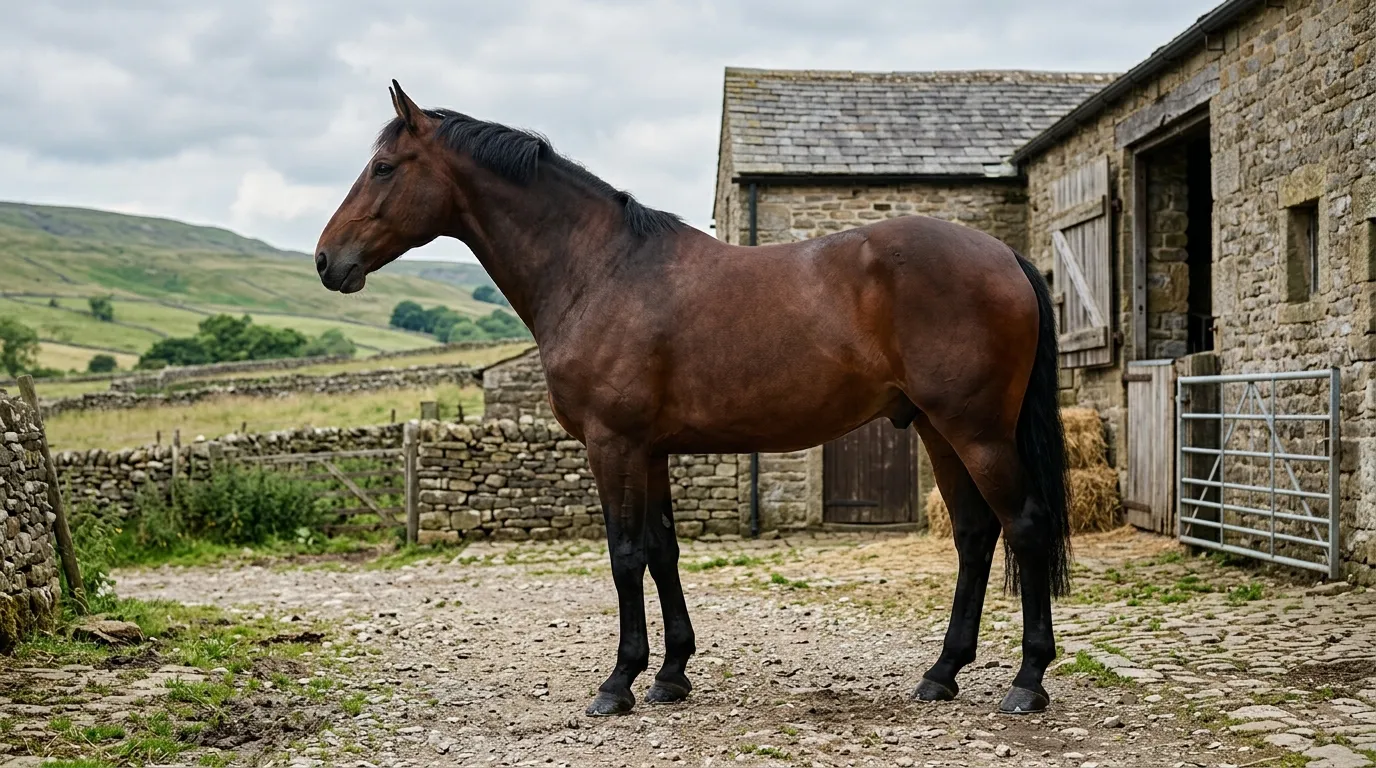
Friesian horse portraits and prints
Pure black, abundant feathering, long mane: the dramatic Dutch breed.
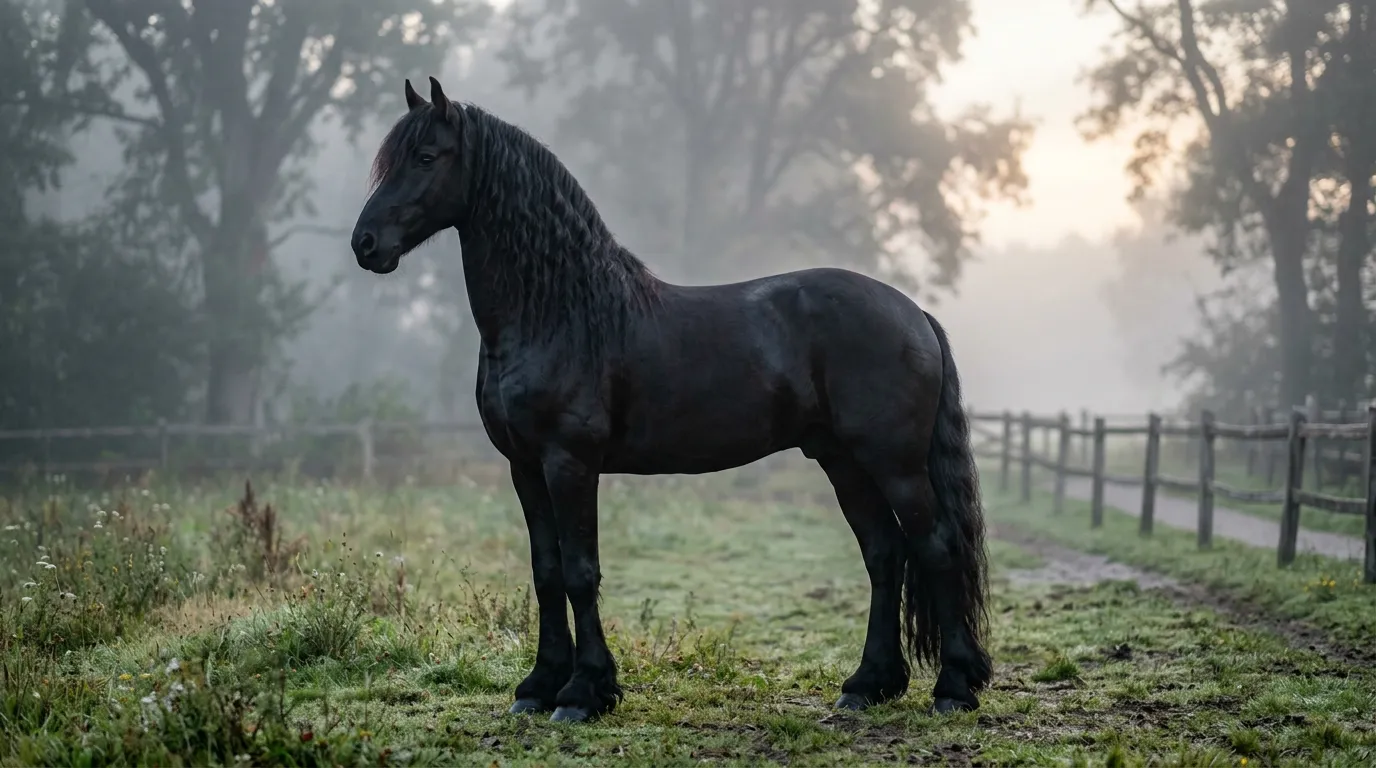
The Friesian is the dramatic black breed from Friesland in the Netherlands: pure black coat, abundant feathered legs, long flowing mane and tail, high knee action. The KFPS (Koninklijk Friesch Paarden-Stamboek) studbook is the authoritative register, with grading inspections held annually in the UK by visiting Dutch judges.
| At a glance | Friesian |
|---|---|
| Height | 15.2hh to 17hh (157 to 173cm) |
| Colour | Black; no white beyond a small star |
| Known for | Carriage driving, dressage, display and film work |
| Origin | Friesland, northern Netherlands |
| Breed society | KFPS (Royal Friesian Studbook), with inspections held in the UK |
Three coat-colour facts matter to owners. First: KFPS only registers true black, the rare chestnut "fox" foal that occasionally appears cannot be registered. Second: the standard permits only a small white star on the head. Third: KFPS registration is restricted to fully black horses with only a small permitted white head star, so piebald, skewbald or grey animals cannot be studbook-registered as Friesians; coloured horses with feathering are usually Gypsy Cobs, not Friesians.
Further reading · KFPS (Royal Friesian Studbook) · British Horse Society
Friesian owners chose the breed substantially for the visual drama. The framed canvas portrait belongs on a wall, not in a drawer.
Format, for a Friesian
Friesian owners chose the breed partly for how it looks, and a framed portrait canvas is the format that admits it. A print left in a drawer isn't the gift here. Where the photograph doesn't exist yet, a name print holds the place until it does. See the personalised gifts page for what each size costs.
KFPS keuring: what UK Friesian owners track
Most British Friesian owners attend or follow the annual UK keuring, the in-hand grading inspection run by visiting Dutch judges from KFPS Holland, usually held mid-summer at one of two or three regional venues. Foals receive a premie ranking (1st, 2nd, 3rd, or no-premie); three-year-old mares enter the studbook proper after a movement and conformation assessment; stallions face a far longer multi-stage approval that fewer than a dozen pass each year worldwide.
A name print produced for a Friesian after a successful keuring often pairs the horse's name with the year and grading achieved: "Tjebbe · 2024 · Stb Ster" reads as a private record of the day, not a generic gift. Owners who personalise this way are usually KFPS-registered keepers.
Why a printed canvas works better than a print for Friesians
Friesian owners photograph the breed more than most. Black coat against any pale background, abundant feather, the long flowing mane and forelock: the breed is photogenic in a way that warmbloods are not, and most owners have hundreds of phone photos. The portrait canvas product takes a strong daylight head-and-shoulders photo and turns it into wall-quality art at canvas scale; the editorial-typography print misses what a Friesian owner wants captured, which is the horse, not the typography.
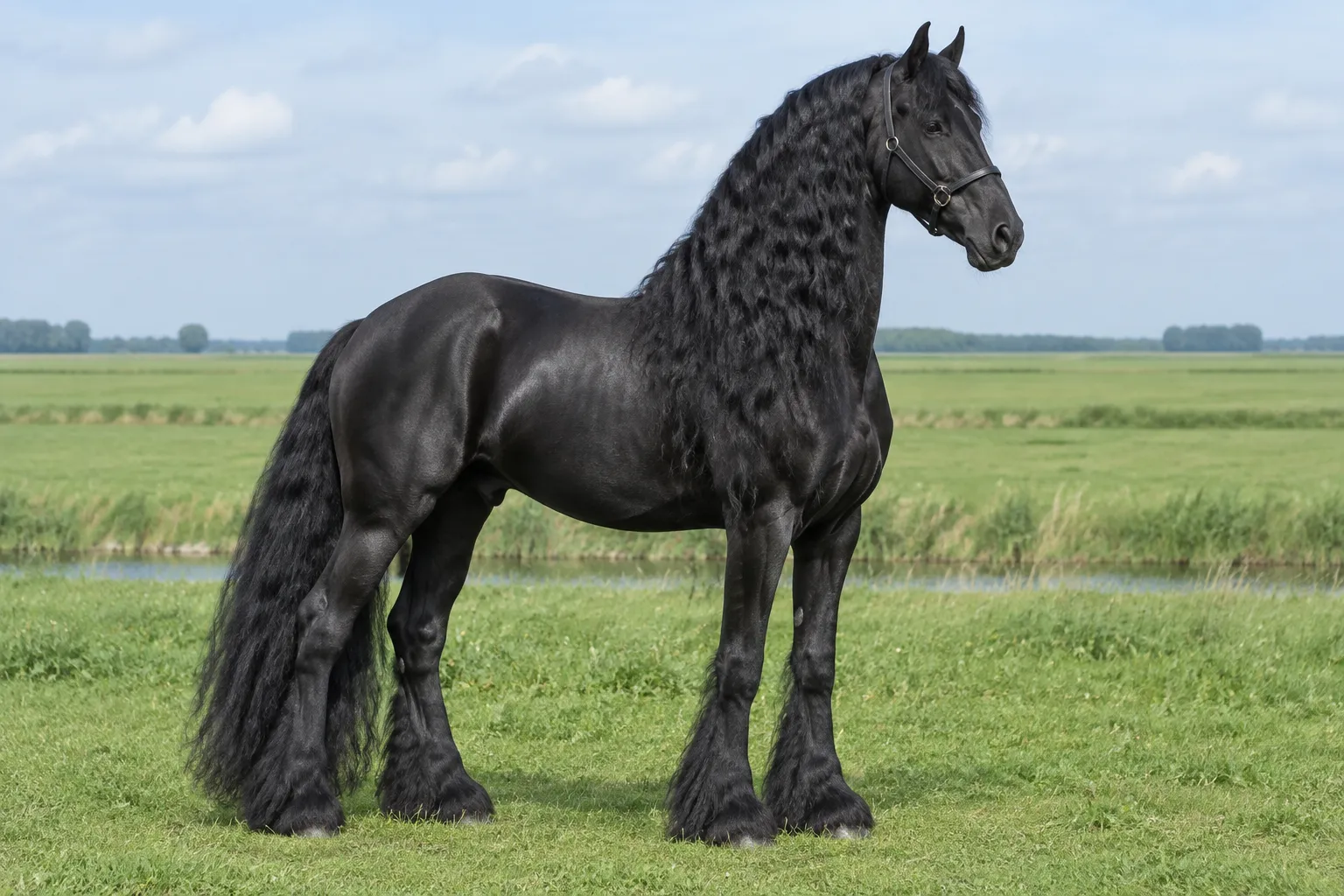
Practical photo guidance for a Friesian portrait: outdoor shoot, overcast or shaded daylight (direct sun blows out detail in pure-black coat), three-quarter angle, no bridle (redrawn tack often goes wrong on portrait pieces).
Coat and conformation facts owners ask us about
- Pure black only: KFPS does not register the rare chestnut "fox" Friesian foal, caused by a recessive gene at the extension locus, not technically a fault but excluded from the studbook.
- Star markings: KFPS standard permits a small white star, nothing more. Larger stars, snips, or socks disqualify from foal-book entry.
- "Coloured Friesian" is usually not a Friesian: Piebald or skewbald horses with feathering are typically Gypsy Cobs or Friesian-cross sport horses; for those, see the cob.
- Genetic screening: KFPS now requires testing for dwarfism (ACAN gene) and hydrocephalus (B3GALNT2) on registered breeding stock. Most UK keuring foals carry test results in their papers.
Friesian x cob: what the cross can be registered as
A Friesian x cob is a Friesian crossed with a cob, and horses are advertised for sale in Britain under that name. The studbook does not count the cross as a Friesian. The KFPS registration rules define a Friesian as a horse that meets the breed description and whose parents are both registered in the main section of the KFPS studbook. The same rules call the studbook closed: a horse can only be entered in the main section if both its parents are registered there. (That is our translation; KFPS says its Dutch text is the binding one.) So a Friesian x cob cannot be registered with KFPS as a Friesian, whichever parent was the Friesian.
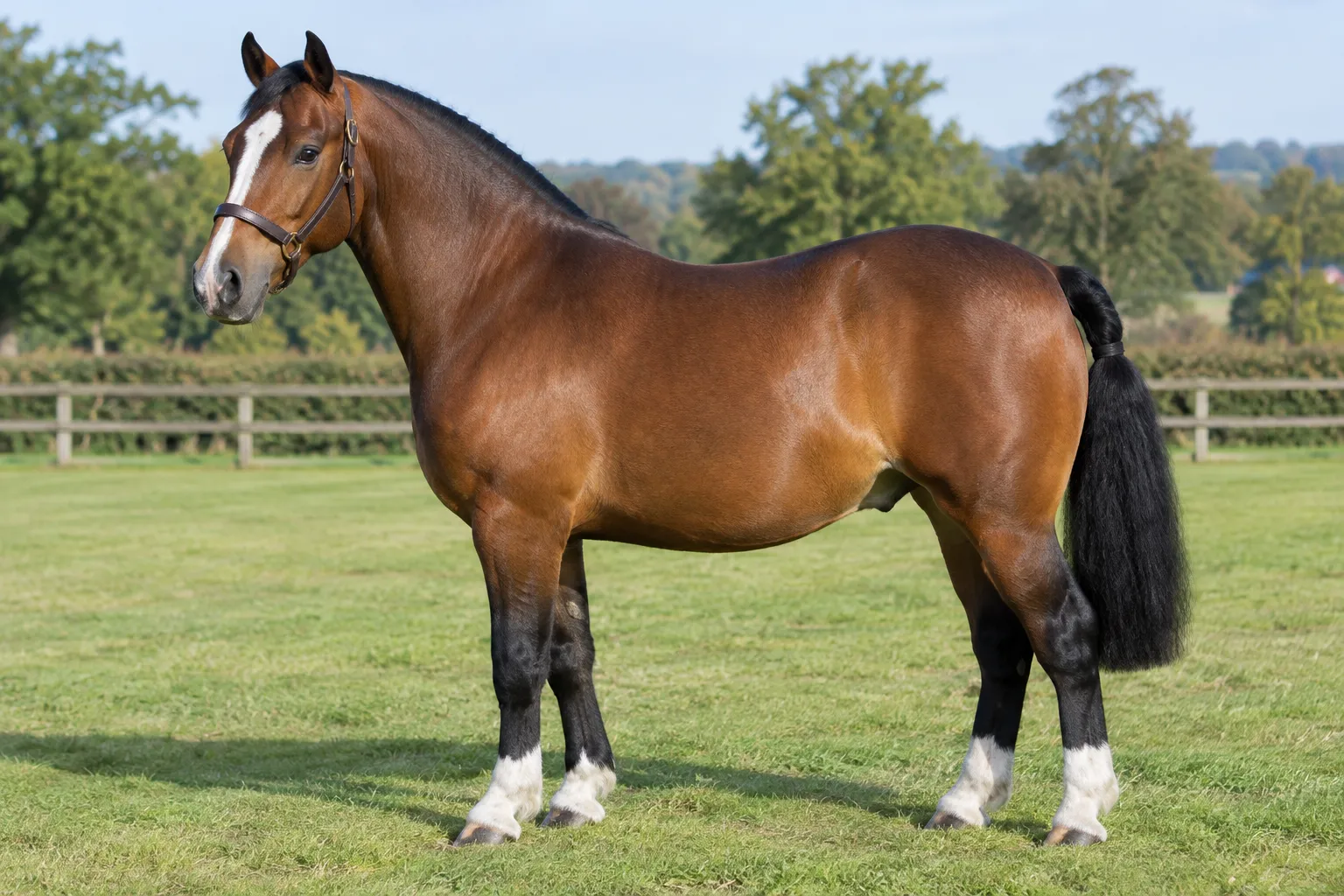
Registers for part-breds do exist. The Friesian Horse Society, a registry for the United States and Canada, registers “Part-Bred Friesians (with proof of heritage) that are at least 50% Friesian”, with microchipping and DNA required for every horse it registers. If you are buying a Friesian x cob, ask the seller which register its papers come from, if any. Sources: KFPS registration rules (Dutch), Friesian Horse Society, Part-Bred Friesians.
Which format suits a Friesian
The breed's looks push most owners towards the framed portrait canvas over a typographic print. The framed canvas portrait is the landmark end of the range, and the piece to choose for a big birthday or a Christmas centrepiece. The unframed canvas carries the same picture for less; its sides carry a soft, blurred band taken from the picture's colours.
Black, feathered, and strictly registered
The Friesian is one of the few breeds people choose substantially for how it looks: a pure black coat, abundant feather, a long flowing mane and forelock, and a high, showy knee action. The KFPS studbook in the Netherlands keeps the type tight, and British owners follow the Dutch system closely: the annual UK keuring, judged by visiting KFPS inspectors, is the event the breed's calendar turns on. Foals are ranked, mares enter the studbook after a movement and conformation assessment, and stallion approval is a multi-year gauntlet that almost none pass.
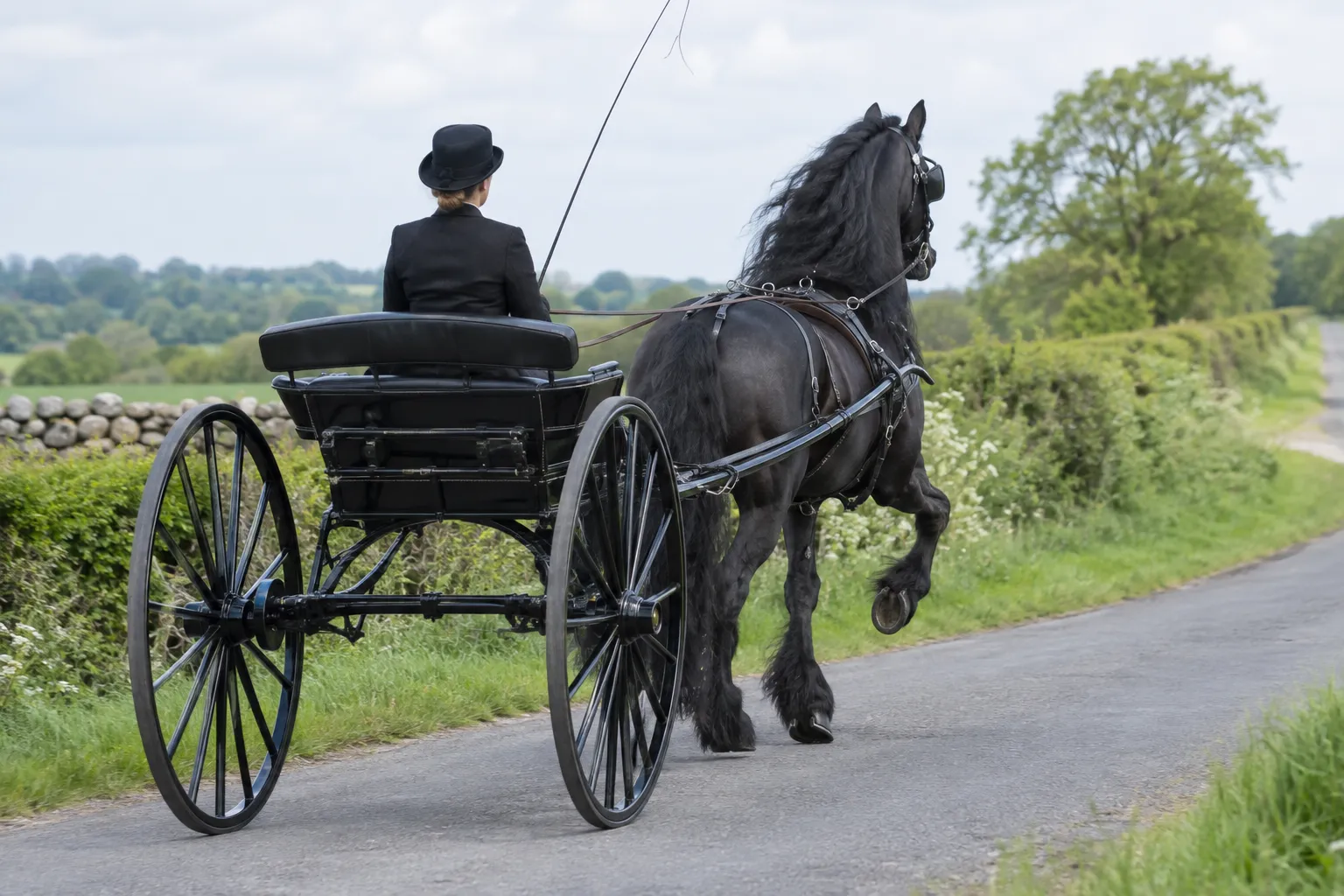
Two things owners want outsiders to understand. First, the registry only recognises true black: the occasional recessive chestnut "fox" foal can't be registered, and there is no such thing as a grey or piebald Friesian, so a coloured, feathered horse is almost always a Gypsy Cob, not a Friesian. Second, the breed needs careful management: it carries known genetic risks (dwarfism, hydrocephalus) that responsible breeders test for, and the heavy feather wants attention to stay clean and sound. Owners are, in practice, attentive keepers as much as admirers.
What makes a Friesian gift land
- Photograph in soft daylight. Direct sun blows out detail in a pure-black coat; an overcast or shaded shot keeps the feather and the sheen readable on a portrait canvas.
- The canvas beats the typographic print here. Owners chose the breed for its drama: they want the horse on the wall, not a name in a clean font.
- Lose the tack for portraits. Rendered bridles often go wrong on black; a clean head-and-shoulders with the forelock and mane is what the breed is photographed for.
- Keuring results read as private records. Pairing the name with the grading and year (Ster, Kroon and the like) on a name print means something specific to a KFPS keeper.
The breed suits scale, and the large-format end is where a Friesian portrait earns its wall. For the rider who has wanted one since childhood, begin at the gifts for her list.