Dun or buckskin: what is the difference?
They look alike and they are not the same thing: dun and buckskin come from two different genes.
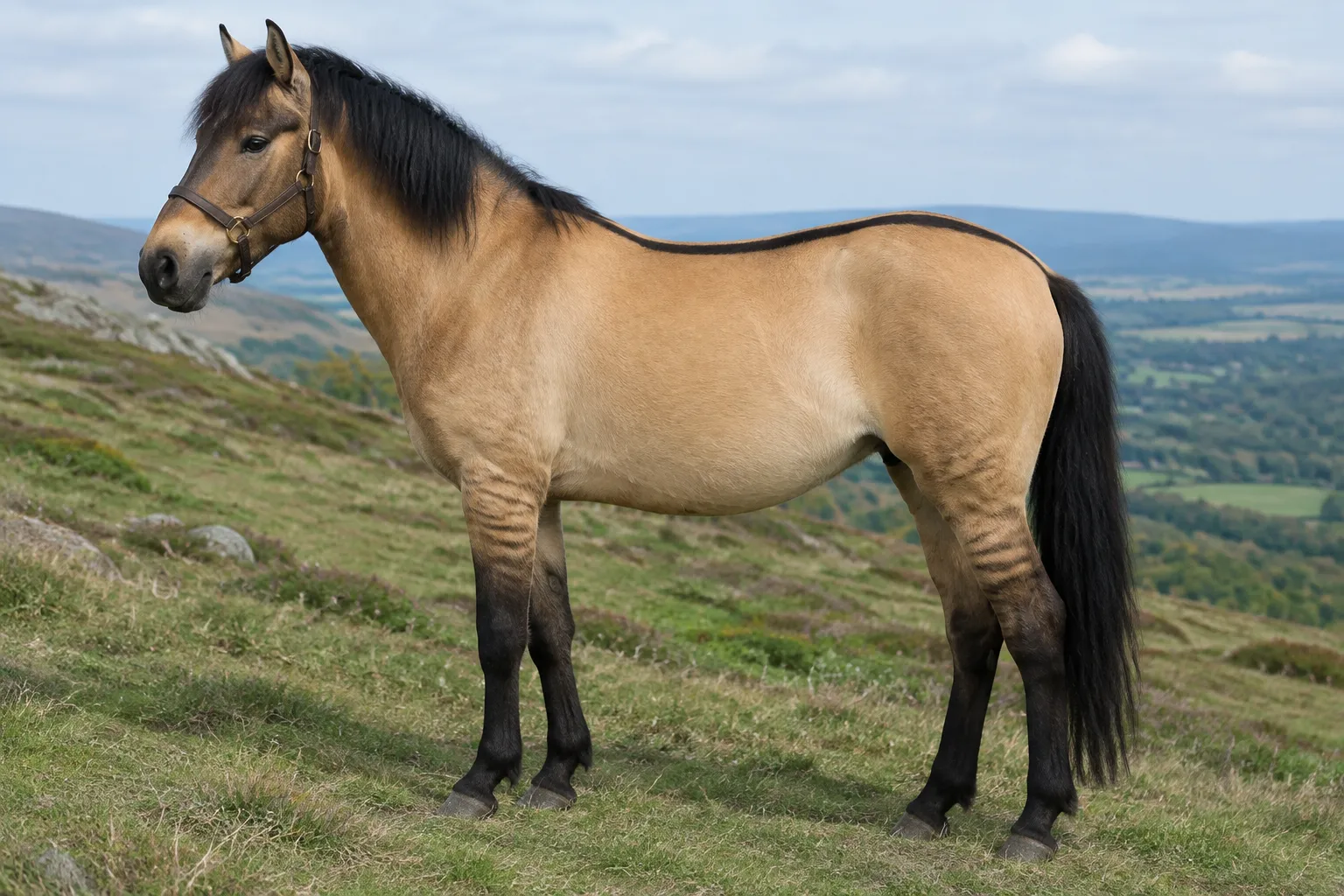
They look alike and they aren’t the same thing. Dun and buckskin come from two different genes, and the giveaway is the primitive markings.
What is a dun horse?
Dun is its own dilution. UC Davis’s Veterinary Genetics Laboratory describes the dominant allele as one that lightens the body coat and “dilutes both red and black pigment, leaving the head, lower legs, mane, and tail undiluted, and also produces primitive markings”. Those markings are the dorsal stripe down the back, and often barring on the legs. On a bay base the result is a yellow or bay dun; on a chestnut, a red dun; on a black, the mouse-grey horse called a grullo or blue dun.
What is a buckskin horse?
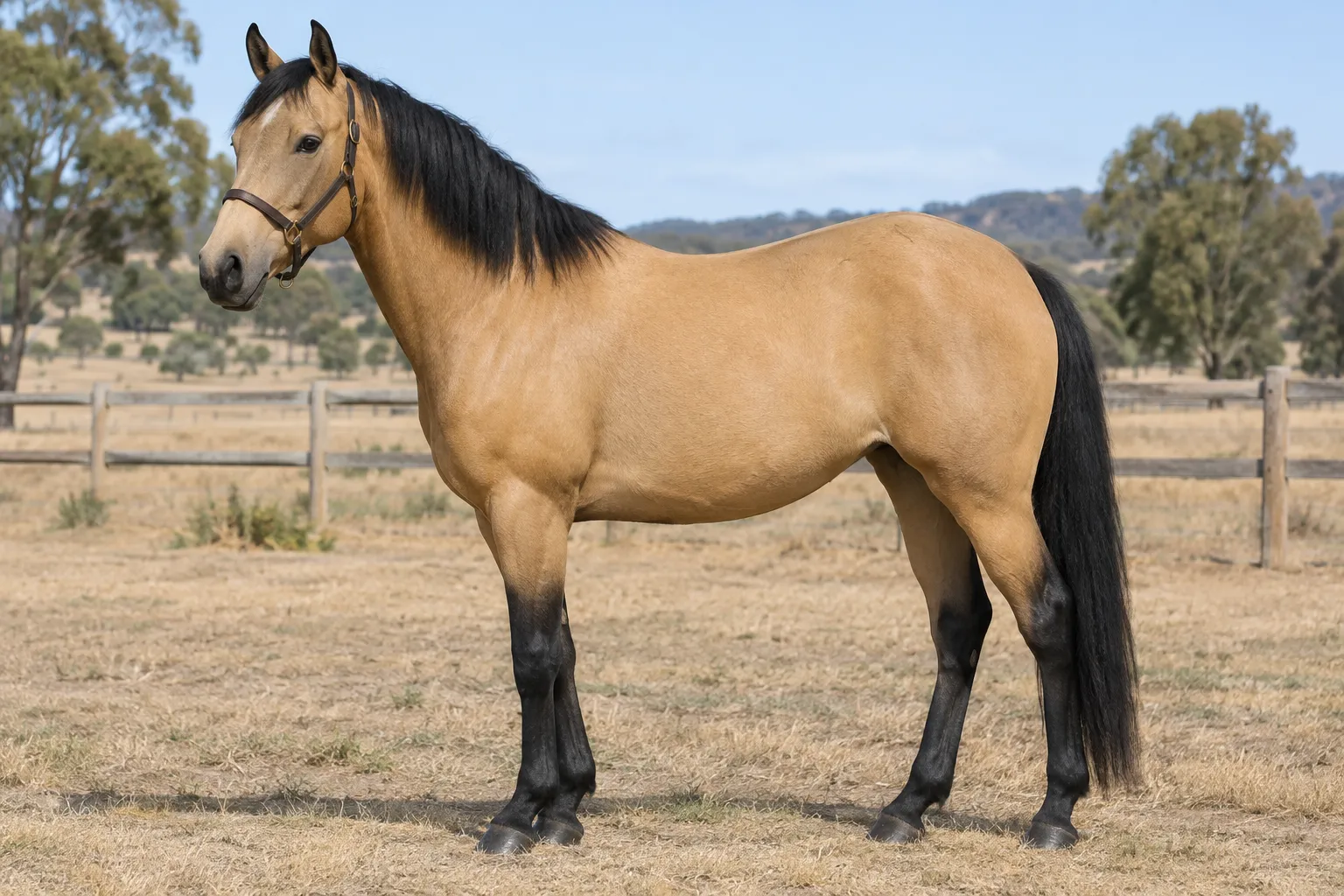
Buckskin is the cream gene instead. The VGL puts it plainly: a single copy of cream “produces palominos on a chestnut background and buckskin on a bay background”. No dorsal stripe comes with it. So a golden horse with black points and a stripe down its spine is a dun; the same horse without the stripe is a buckskin.
Dun or buckskin at a glance
| Dun | Buckskin | |
|---|---|---|
| Gene | Dun | One copy of cream on a bay |
| Stripe along the back | Yes, always | No |
| Bars on the legs | Often | No |
| Body | Sandy, often slightly dull | Golden, often glossy |
| Mane, tail, lower legs | Black on a bay dun | Black |
When it is hard to tell
Buckskin is cream acting on a bay base, so what makes a horse bay sits underneath this question. A horse can carry both, which is where the confusion starts, and appearance alone doesn’t always settle it: the VGL notes that genetic testing exists precisely for phenotypes that are visually ambiguous. A faint line along the back of a buckskin, sometimes called countershading, can pass for a stripe in a photo; a true dun stripe runs cleanly from the mane to the tail.
Other coats that pass for dun or buckskin
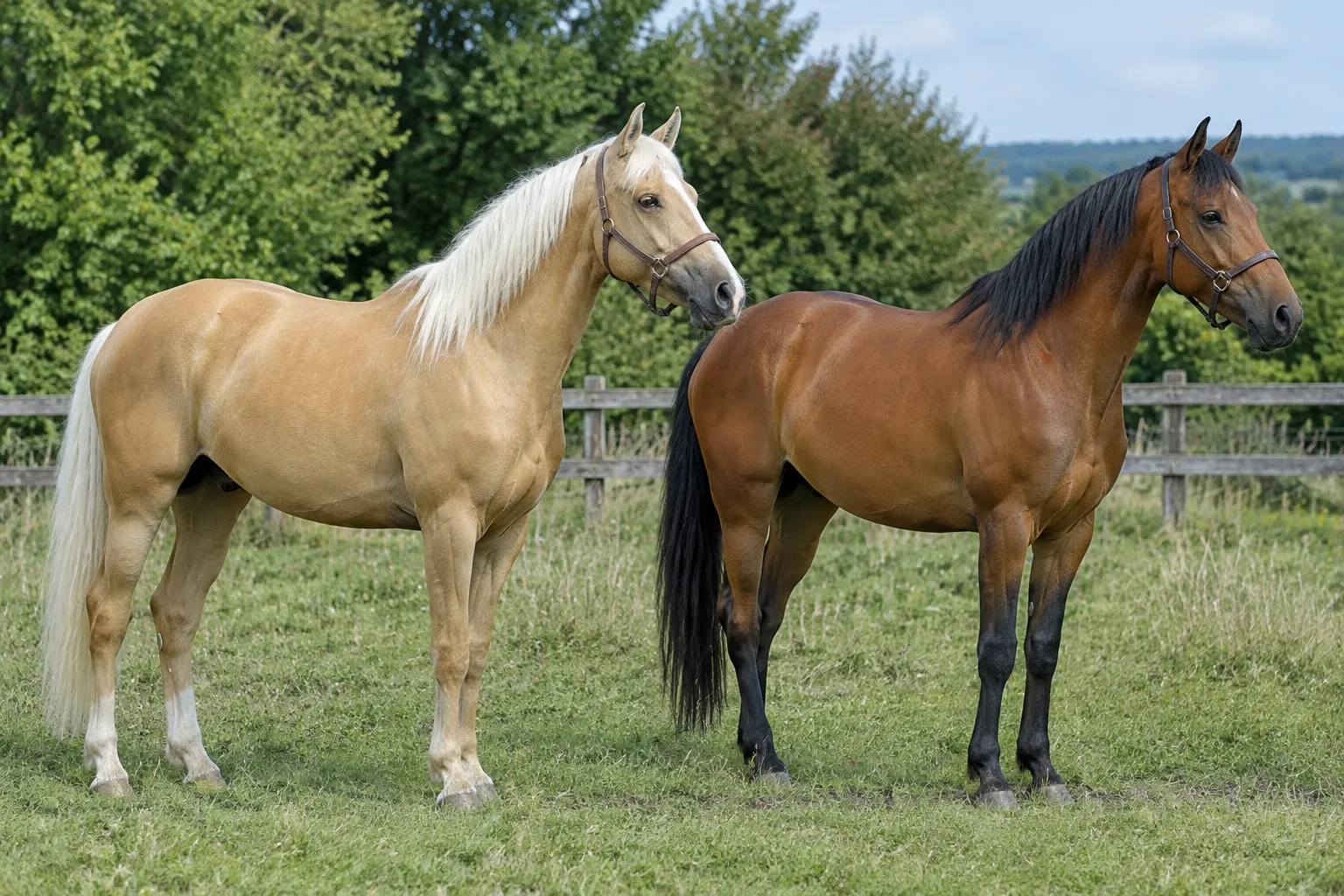
Two more coats get mixed up with these. A palomino is the cream gene on a chestnut, so it has a gold body like a buckskin but a white or cream mane and tail, with no black anywhere. A light bay can pass for a buckskin in summer, until you notice the body is red-brown, not gold. And a dun can carry cream as well, which is where the names start to run out: a buckskin with a dun stripe is sometimes called a dunskin.
Photographs make it harder. A stripe can vanish in flat light and show in low sun, so look along the spine from above the withers, on a dull day, before you decide.
Dun is the traditional colour of several northern breeds: Highland ponies come in many shades of dun, and the Norwegian Fjord is almost always dun. Coat colour runs through the breed guides, and a portrait is made from your own photograph, stripe and all.