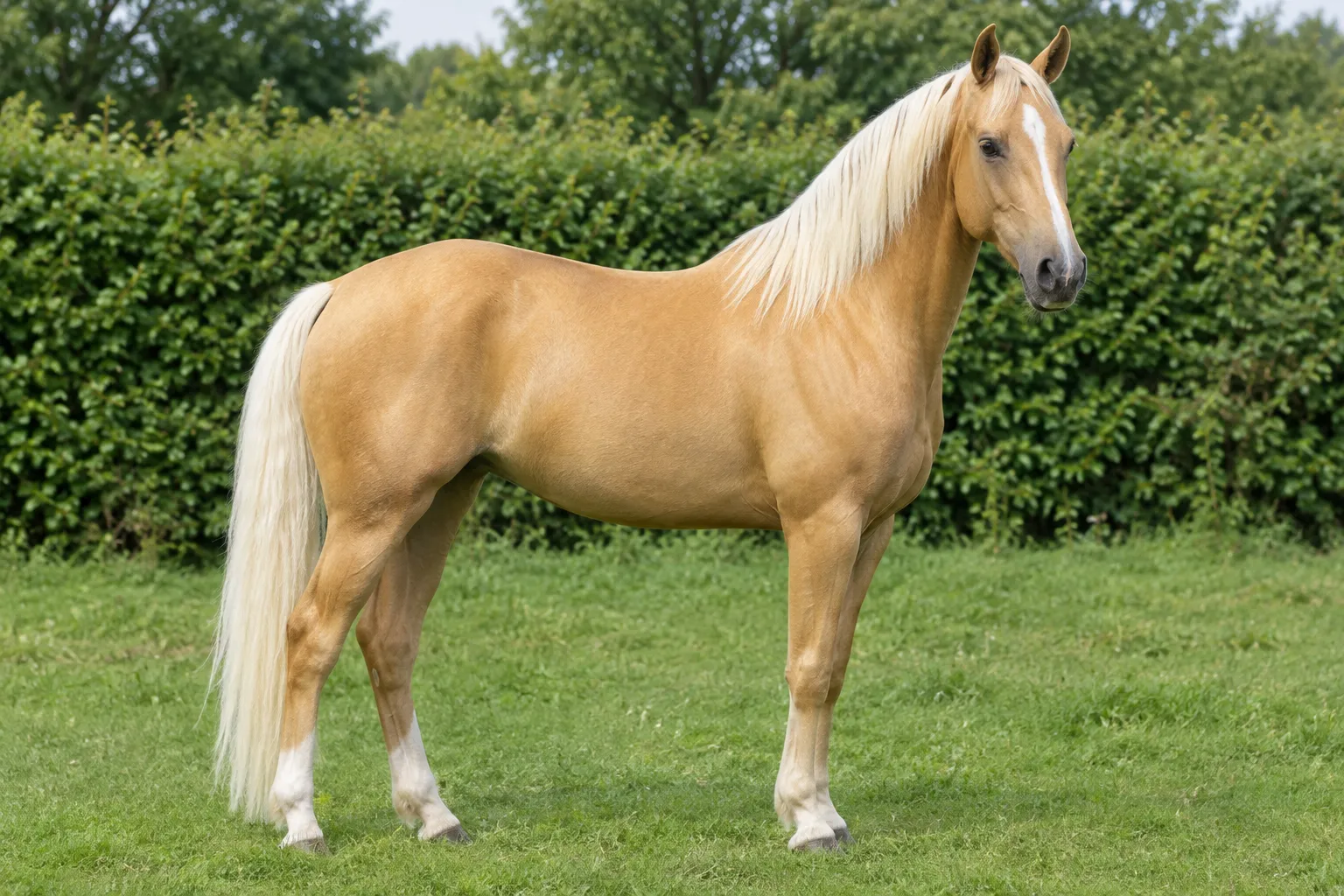
What is a grey horse?
A horse born bay, black or chestnut that whitens over the years because of a single dominant gene. In Britain, a white-looking horse is a grey.
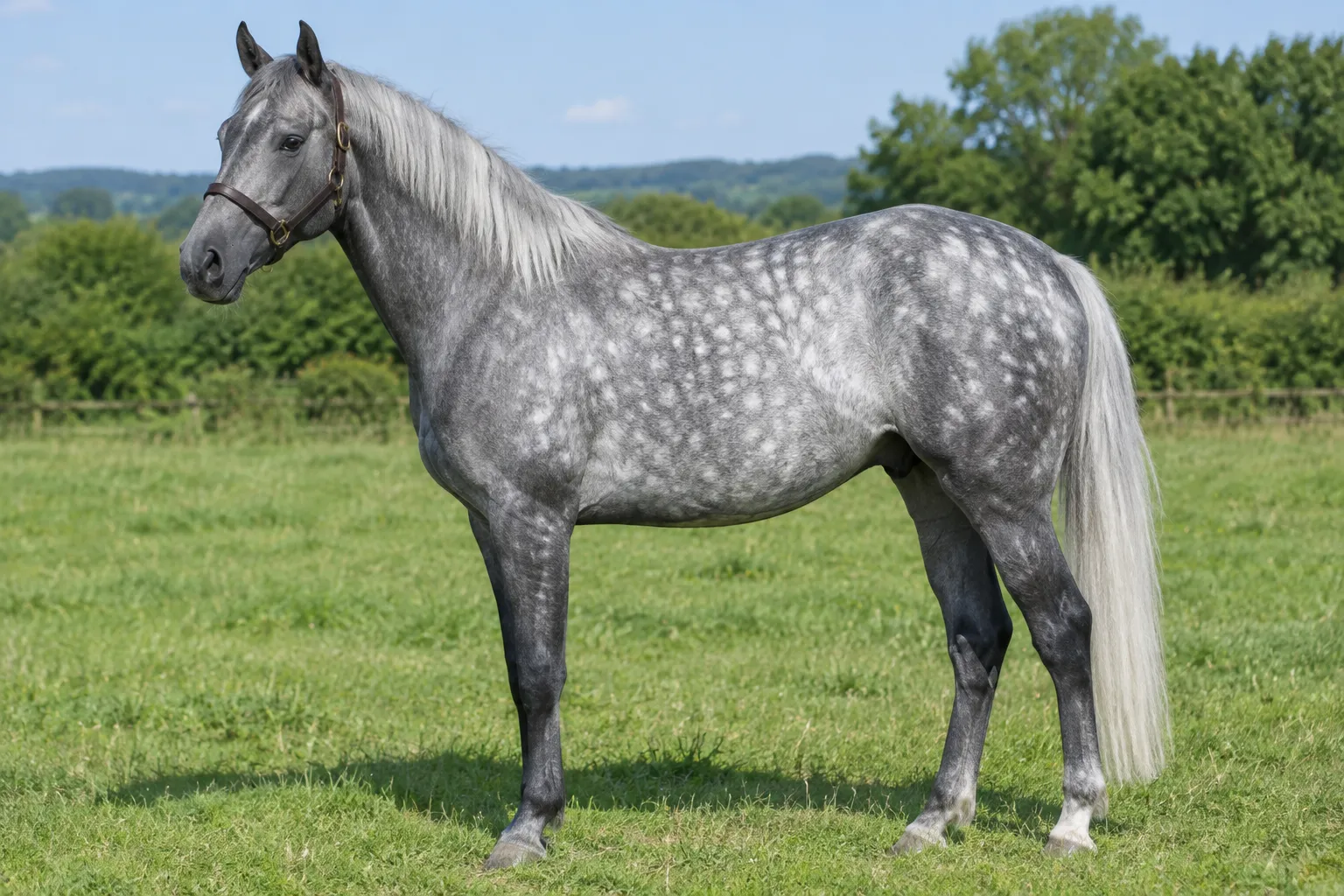
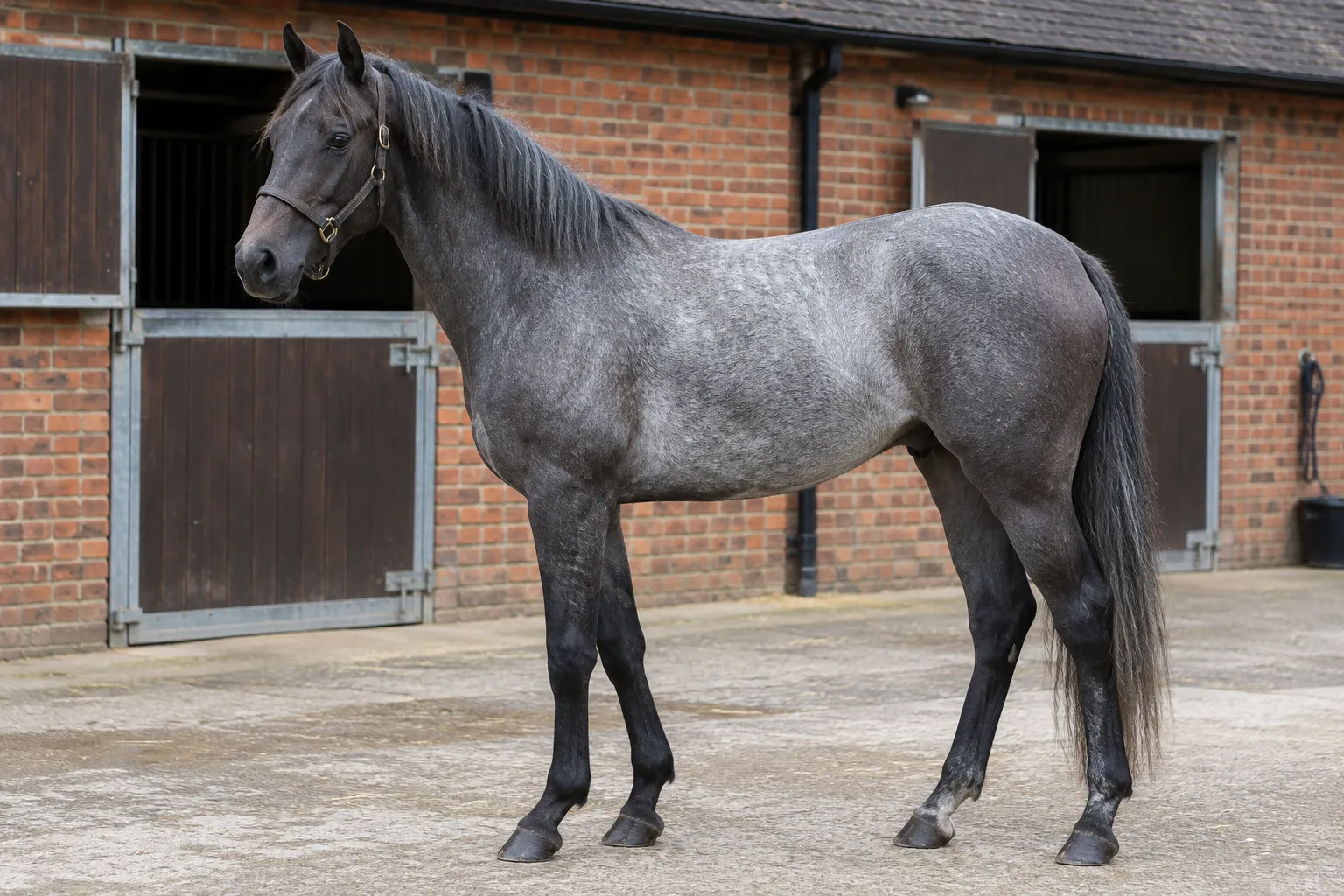
Short answer: grey is a process, not a birth colour. The UC Davis Veterinary Genetics Laboratory says “the gray gene causes a progressive depigmentation of the hair”, and that horses carrying it can be born any colour. A grey foal is usually born bay, black or chestnut and loses colour year by year, and most greys are completely or almost completely white by somewhere between six and twelve.
One copy is enough
Grey is dominant: in the VGL's words, “a single copy of the gray allele will cause a horse to turn gray”. So every grey foal has at least one grey parent, and two horses that aren't grey can't produce one. A horse with two copies passes grey to every foal it has. Researchers traced the cause in 2008 to a duplication in a gene called STX17.
The stages of grey
The words British owners use describe where a horse is on the road to white.
- Iron or steel grey: a young horse with white hairs mixed evenly through a dark coat, sometimes called salt and pepper.
- Rose grey: the same stage on a horse born chestnut or bright bay, which gives a reddish tinge.
- Dapple grey: rings of darker hair with lighter centres, usually through the middle years. Dapples fade as the horse whitens.
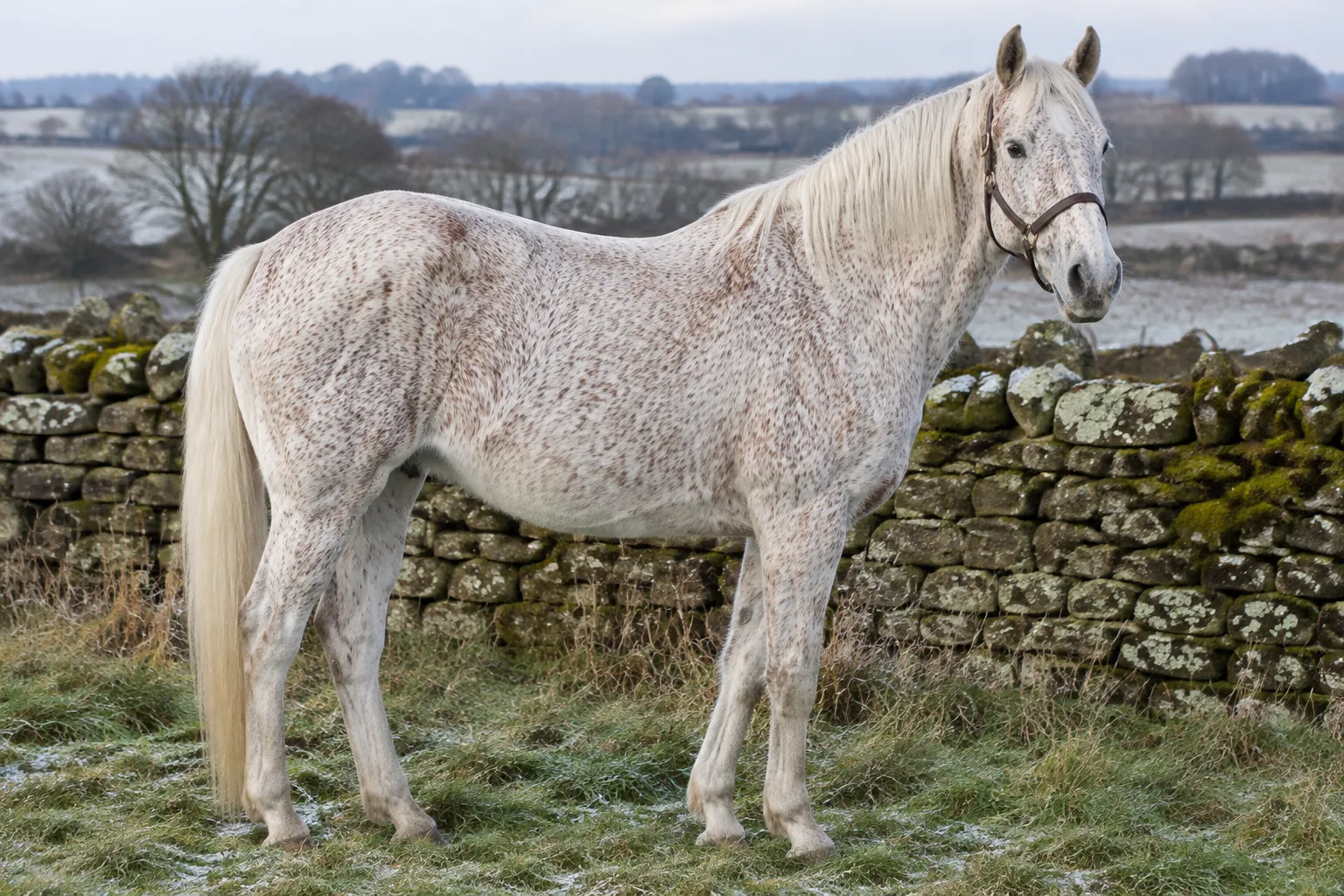
- Flea-bitten grey: a white coat covered in small flecks of colour, which tend to arrive once a horse has gone white and then stay.
White, but still grey
A grey that has turned completely white is still a grey. Most greys have black skin and dark eyes under the white coat, which is how you tell them from a cremello, with its pink skin and pale blue eyes, and from the rare true white horse, whose skin has no pigment at all. On a British yard the word for a white-looking horse is grey.
Melanoma, the one health point
Grey horses are prone to melanomas, dark lumps that most often appear under the tail and around the head. The VGL's figure is stark: “Over 70% of gray horses older than 15 years will develop melanoma.” Many grow slowly, but a vet will want to know about any new lump, or one that's getting bigger.
Keeping a grey clean
Greys show every stain. Grass, droppings and wet bedding leave yellow marks that a white coat can't hide, so grey owners get through a lot of shampoo and a lot of stain remover. A light rug and a clean bed help, and show greys are often washed the evening before a class and kept in overnight.
Greys in the breeds
Grey runs through several breeds. Most Andalusians and Connemaras end up grey, and it's common in Arabians, Welsh Section A ponies and many warmbloods. It isn't allowed in the Friesian or the Cleveland Bay, whose studbooks take black and bay only.
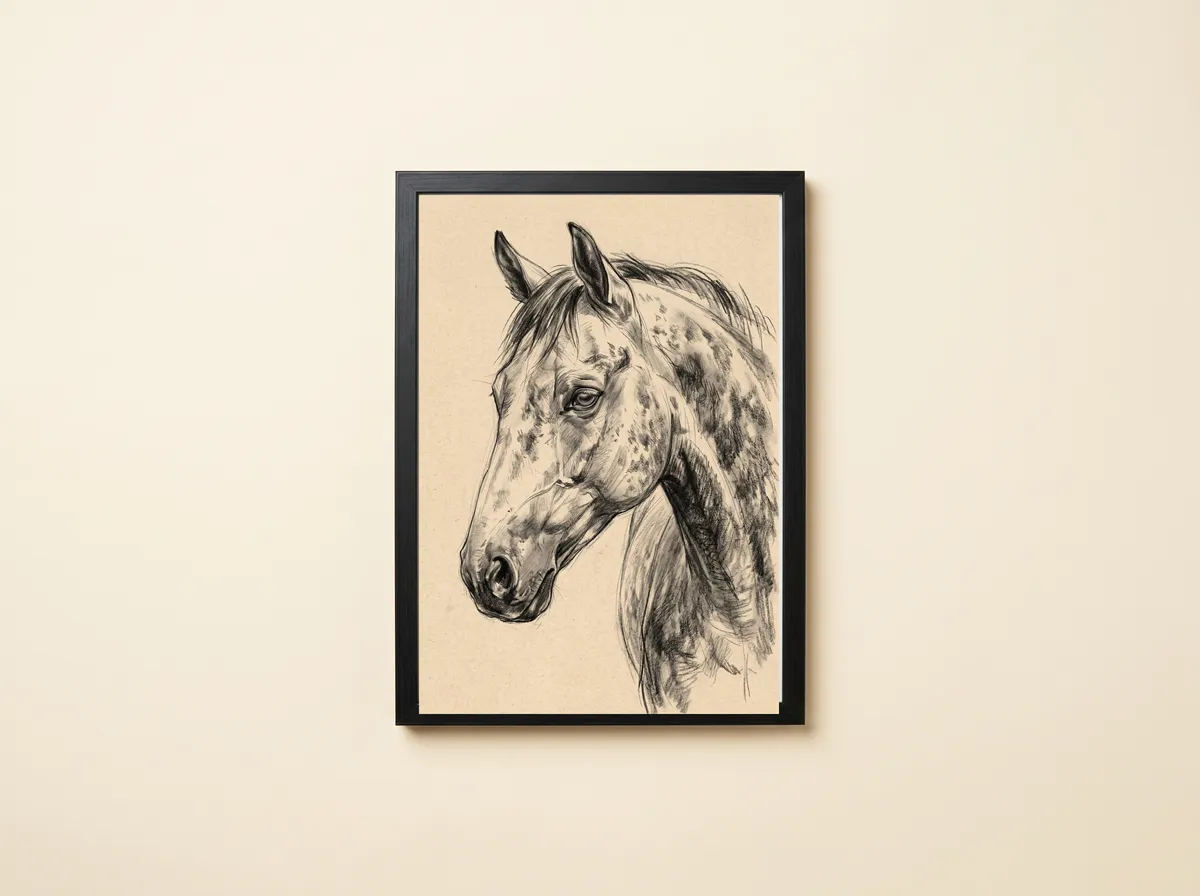
If the horse you're buying for is grey, The Grey Hunter is one of our own artworks. A portrait made from a recent photo records the exact shade the horse is now, which won't last.