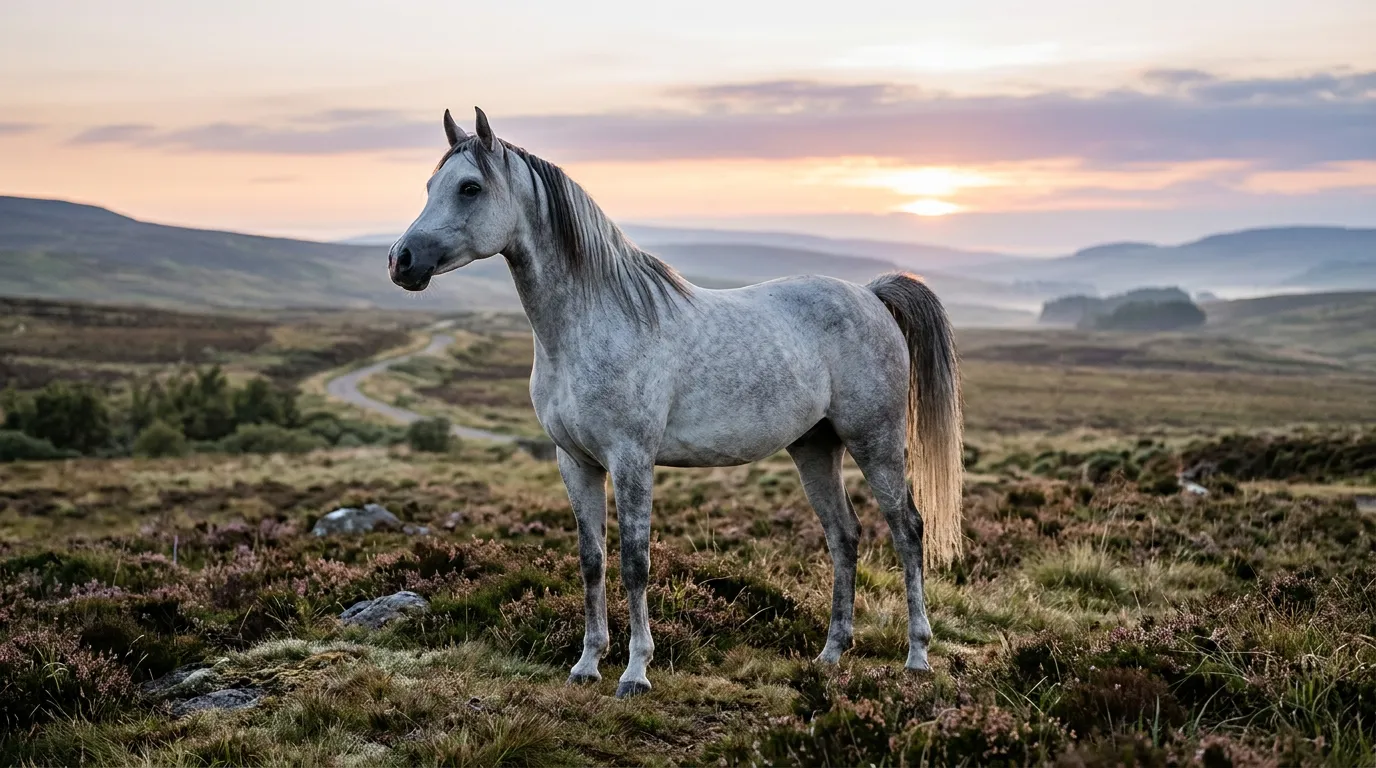
Andalusian horse
Spain's baroque horse: thick mane, arched neck, the breed that built the classical riding hall.
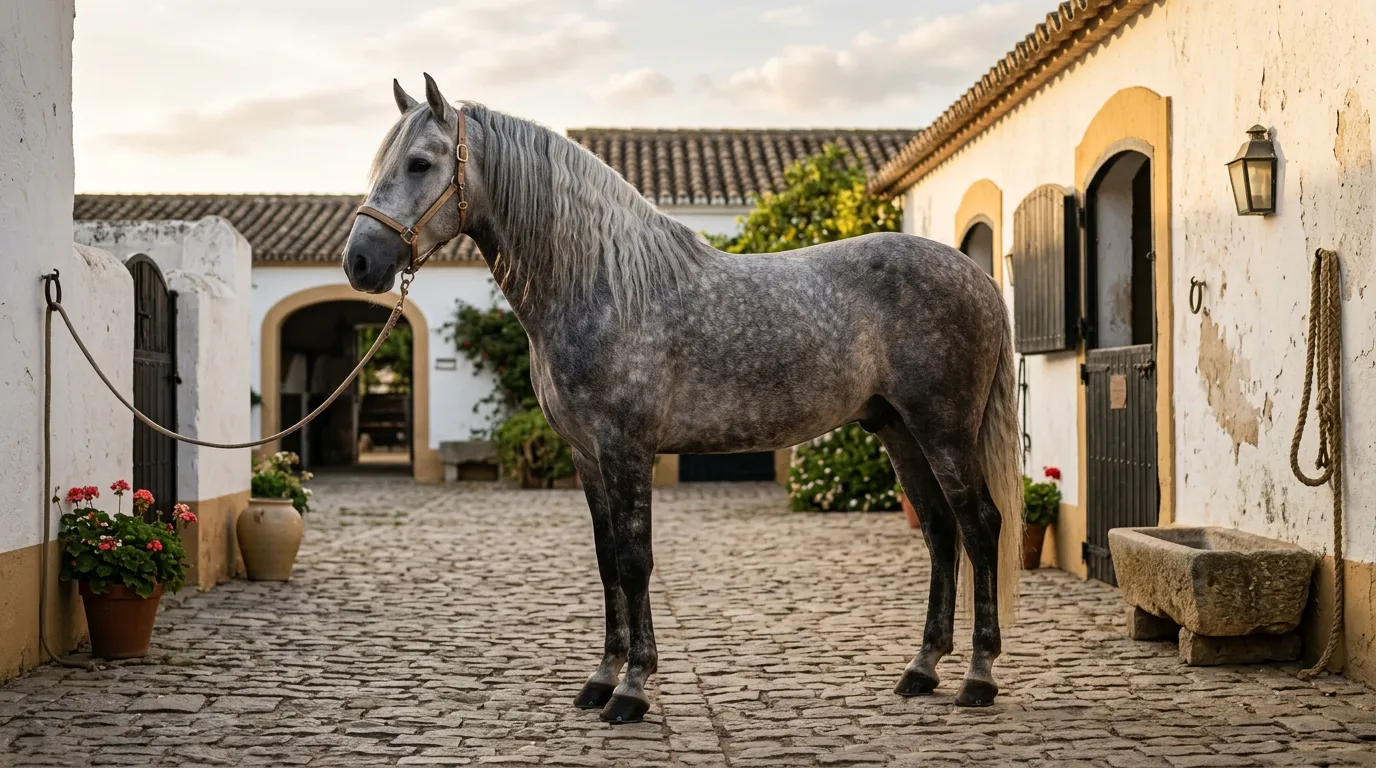
The Andalusian (properly Pura Raza Española, the PRE) is Spain's baroque horse, registered through ANCCE (Asociación Nacional de Criadores de Caballos de Pura Raza Española). Distinctive features: thick mane and tail, arched neck, elevated trot, the temperament that built the European riding-house tradition. Used historically for classical dressage, mounted bullfighting, and royal display; modern PREs go to dressage, working equitation, and increasingly British competitive dressage.
| At a glance | Andalusian (PRE) |
|---|---|
| Height | 15.2hh to 16.2hh (157 to 168cm) |
| Colours | Mostly grey, then bay and black; other colours are rare |
| Known for | Classical dressage, working equitation, display riding |
| Origin | Andalusia, southern Spain |
| Breed society | ANCCE in Spain; BAPSH in the UK |
In the UK, the British Association for the Purebred Spanish Horse (BAPSH) is the recognised affiliate of ANCCE-LGPRE, the Spanish mother studbook, and hosts PRE breeding-approval grading inspected by a visiting delegate from Spain. Grey dominates the visible population: most grey PREs are born their base colour and lose pigment progressively with age. Bay and black are the next most common. Owners often track the stud iron-brand and ANCCE genealogy; the breed's pedigree culture is closer to Thoroughbred than warmblood.
Further reading · British Association for the Pure Bred Spanish Horse · British Horse Society
PRE owners ride classical or working equitation, not English-style dressage.
What a PRE owner wants on the wall
The portrait canvas is the piece for this breed. The arched neck and the elevated trot are things a photograph holds, and typography can't reach them. Where the giver has no usable photograph, a name print carrying the PRE designation instead of the English label is the safer choice. Every size, material and price we offer is set out on the personalised gifts page.
The PRE and its classical world
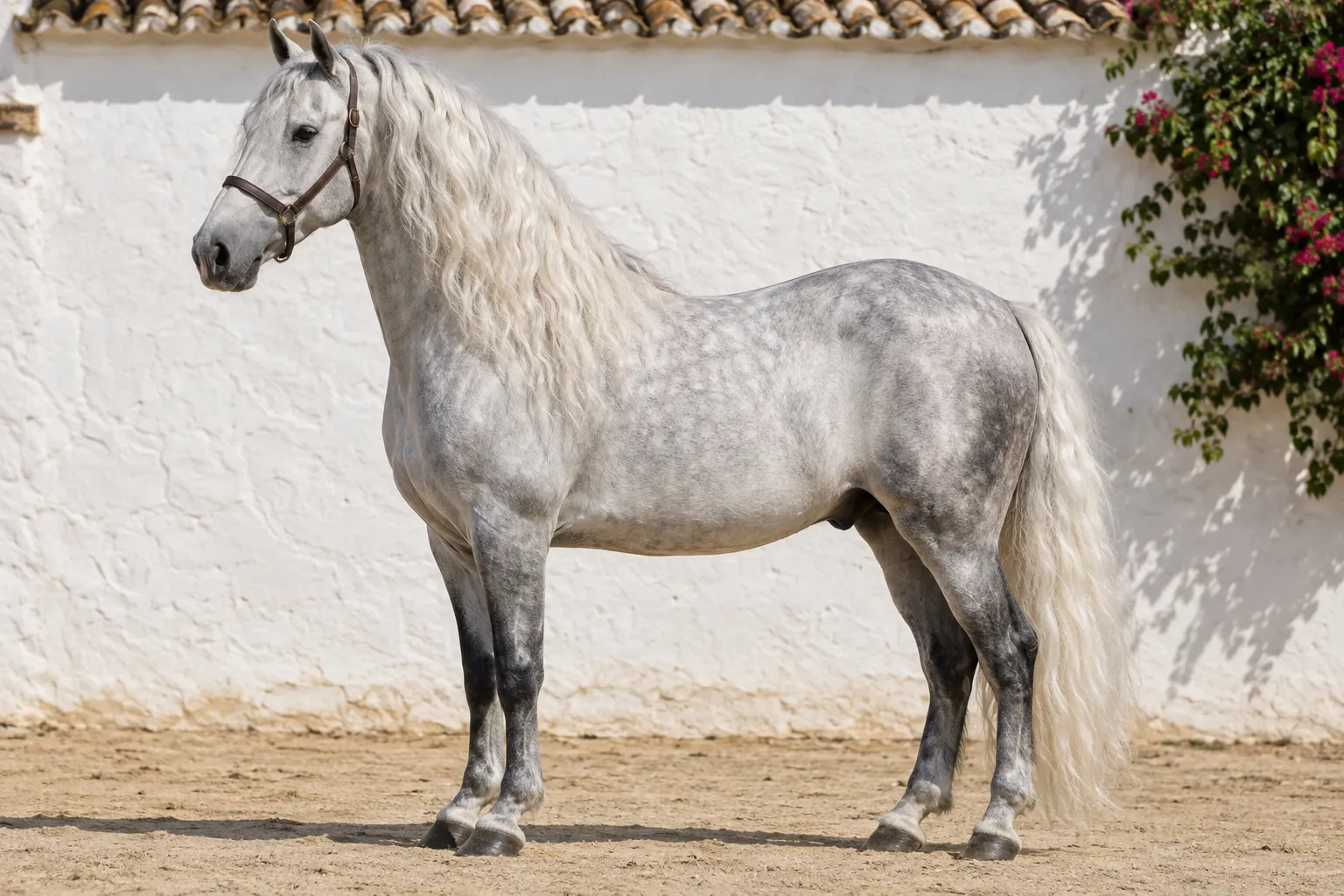
An Andalusian owner will usually correct you gently: the breed is the Pura Raza Española, the PRE, registered through ANCCE in Spain and carrying an approved breeder's iron brand. The Spanish word matters because the registry is strict: a horse is a PRE only with the papers and the brand, and owners take the distinction as seriously as a warmblood owner takes a studbook. The breed built the European riding-house tradition: the arched neck, the elevated, cadenced trot, the thick mane and tail, and a temperament steady enough to perform airs above the ground in a crowded hall.
That heritage puts PRE owners in a different riding culture from most British competitors. They tend towards classical dressage and working equitation (the discipline that grew from Iberian cattle work, with its garrocha pole and tight obstacle course), not English-style competitive dressage, though plenty now do both. The tack room reflects it: Spanish saddlery, a vaquero aesthetic, sometimes Doma Vaquera kit. A gift that sits well on that wall looks different from one pitched at a county-show hunter owner.
Getting a PRE gift right
- Use "PRE", not "Andalusian" alone. Where the owner is ANCCE-minded, the Spanish designation on a name print reads as informed; the English label alone can feel loose.
- Respect the iron brand and genealogy. Owners track the stud brand and ANCCE line: closer to Thoroughbred pedigree culture than warmblood, so the breeding line is worth including when given.
- Match the classical aesthetic. A framed canvas in richer, darker tones suits this look better than pale cream typography.
- Name the discipline correctly. Working equitation and Doma Vaquera are not English dressage, using the right discipline term shows you know the world the horse competes in.
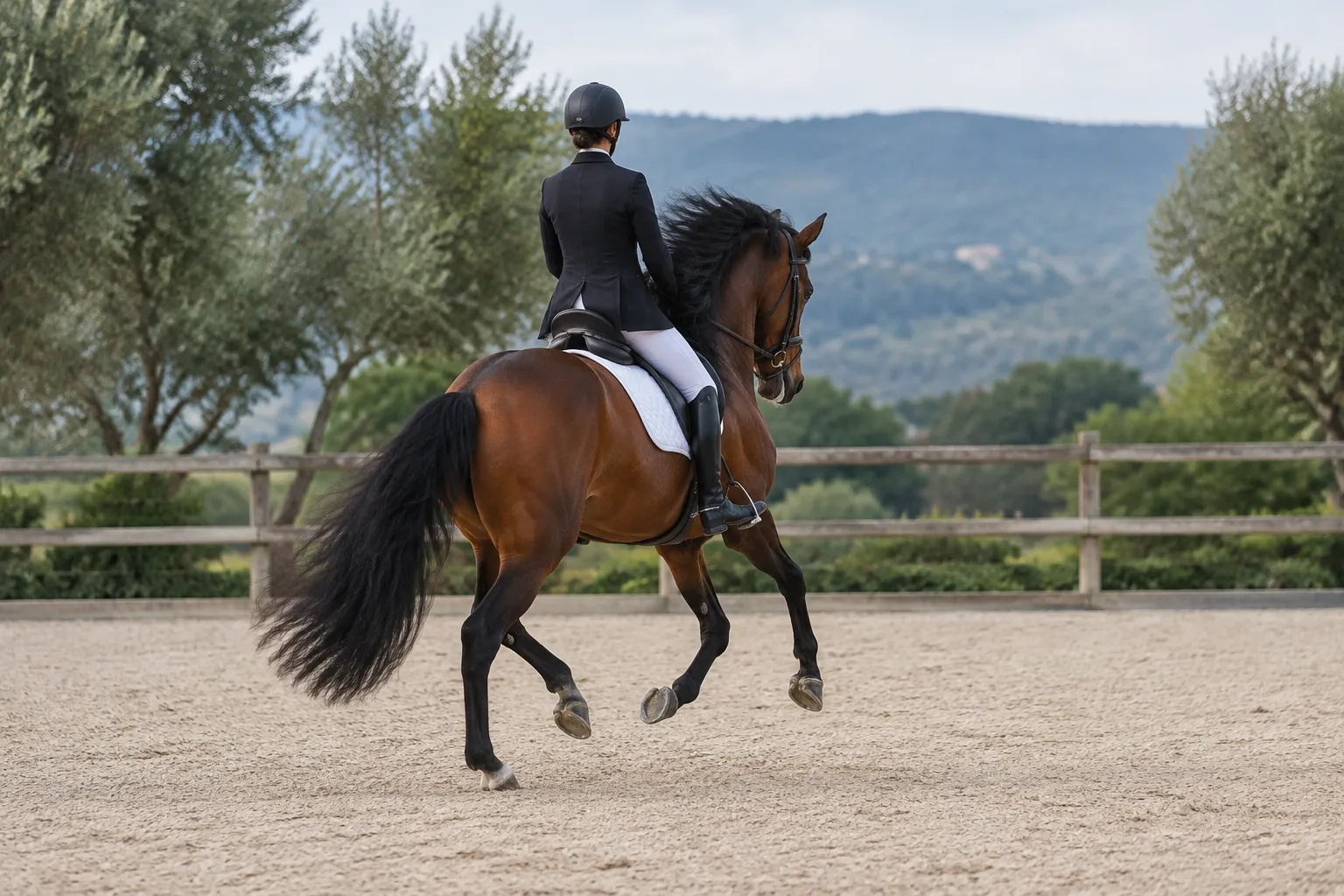
- Photograph the movement. The elevated forehand and arched neck are the breed signature; a shot mid-trot or in collection captures what makes a PRE a PRE.
Shopping for a PRE owner leans romantic or classical, rarely both at once. Portraits suit the rider who grew up wanting this breed; the working-equitation crowd would rather see the movement than the costume. The Friesian is the other breed here with that high, elevated action, and its studbook is as strict about colour as ANCCE is about papers.