Horse weight calculator
Measure round your horse's middle and along its side, and get a weight range in kilograms and pounds. The method is our own and we tell you exactly how it works.
460 to 490 kg
A horse with a 190 cm girth and a 165 cm body length comes out at about 475 kg (1,045 lb) on our method. The range is the same sum with each tape reading 2 cm shorter and 2 cm longer.
Our own estimate, not tested against weighed horses. For a dose or a diet change, use a weighbridge or ask your vet.
Got a horse worth framing? Turn a photo of them into a portrait, or put their name on a name print.
How to measure
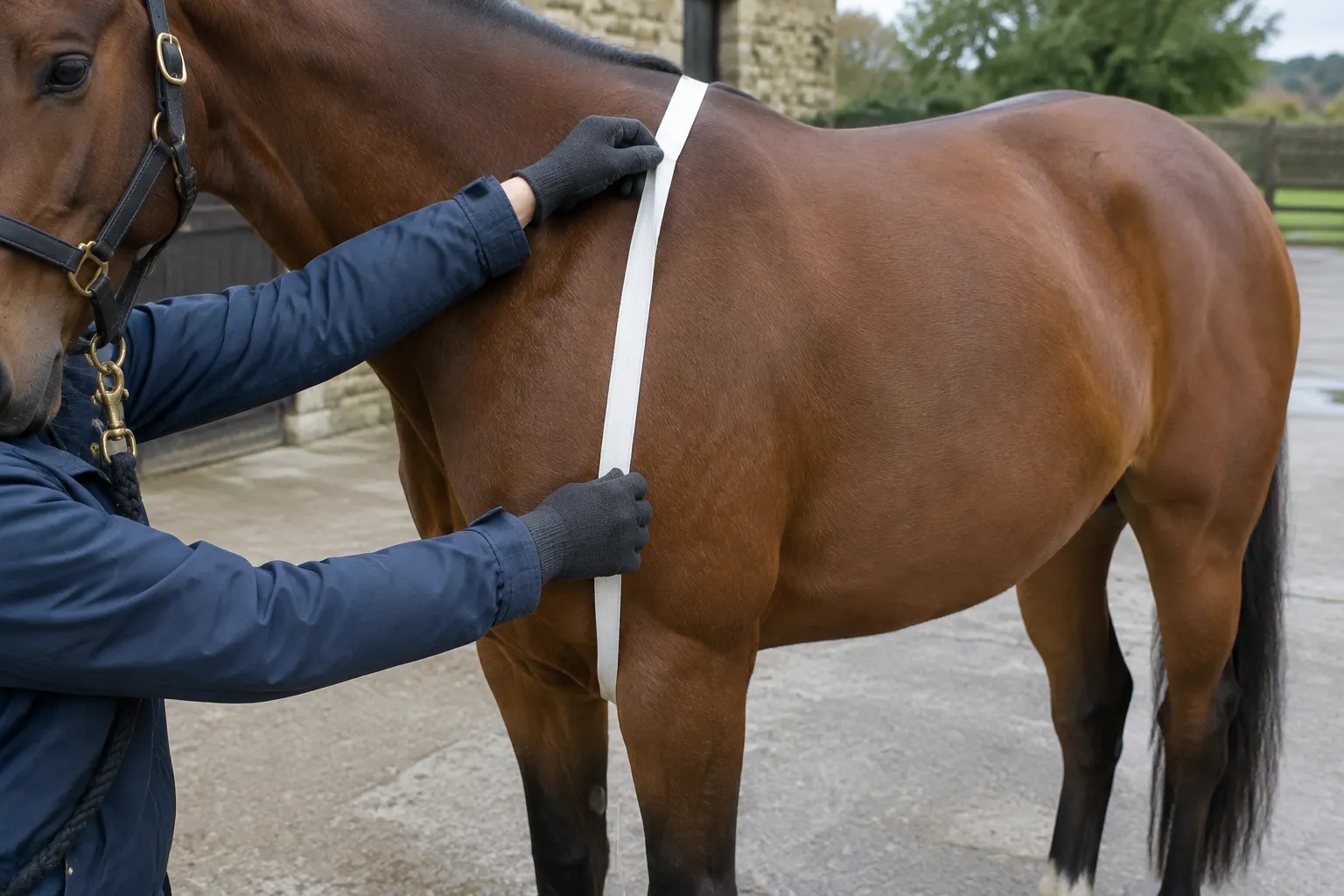
Stand your horse square on firm, level ground. For the heart girth, British Equestrian says the tape should go round on a slight angle, "so it runs from behind his withers to behind his elbows", and you read it "As he breathes out".
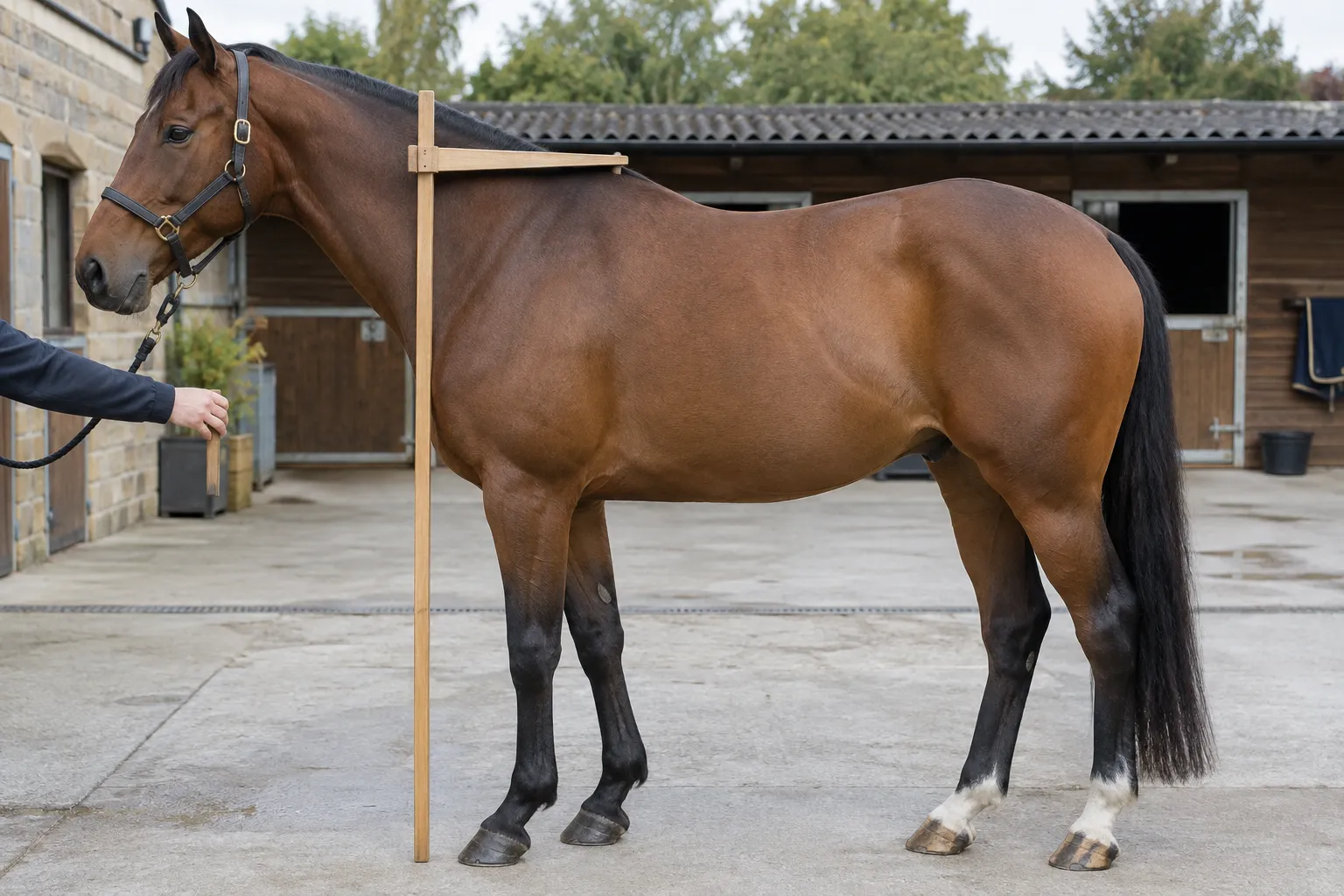
For the body length, the University of Arkansas extension service says: "Measure body length from the point of the shoulder straight back along the horse's side, and to the point of the buttock." A second pair of hands makes this much easier.
How it is worked out
This is our own method, not a weigh-tape formula. We treat the horse's body as a tube. Its round measurement is the heart girth and its length is the body length. The space inside a tube like that is girth × girth × length ÷ (4 × 3.1416). We then take each litre of that space as weighing a kilogram, the weight of a litre of water. That last step is our assumption.
For a 190 cm girth and a 165 cm length, that comes to about 475 kg. A tape round a breathing horse is never exact, so the tool also runs the sum with both readings 2 cm shorter and 2 cm longer. That gives the range: 460 to 490 kg for this horse.
How far to trust it
We looked for open records of horses with their girth, length and weighbridge weight, so we could test the method. We didn't find any, so it has not been tested against weighed horses. Treat it as a way to watch for change, not a number for a dose.
Tapes aren't exact either. In a 2023 study of 1716 horse records against a weighbridge, "the weigh tape had an average error of -5.68%" (Grimwood, Lancaster and Handel, Animals).
British Equestrian suggests checking weight "every two weeks or so" and writing it down. Measure the same way at the same time of day, and the trend tells you more than any one number. Our page on how much a horse weighs covers typical weights by type.
Sources
British Equestrian: Weigh taping and condition scoring; University of Arkansas Cooperative Extension: Estimating a Horse's Body Weight; Grimwood, Lancaster and Handel (2023), Factors Affecting Weigh Tape Reading in the Measurement of Equine Body Weight. All read 30 October 2026.