Horse years in human years.
Every converter gives a different answer, and the harder problem is the number you type into it.
Short answer: there is no agreed conversion. The British Horse Society says most horses show the first signs of ageing in their mid to late teens, and a 2011 review treats a horse as aged at 15 or over. The rest of this page shows why the calculators disagree.
It looks like a simple sum, and it isn’t. Ask how old a horse is in human years, read the first three answers you find, and you’ll come away with three different numbers. The disagreement is worth understanding, because it tells you something about how horses age that a single figure never could.
What the popular calculators do
The horse age calculator that currently ranks first in the UK states its method openly: “we can almost do a simple multiplication of the horse’s age by 3 to get its equivalent in human age”. Its published table follows that exactly, with no curve anywhere in it.
| Horse | 1 | 2 | 5 | 10 | 15 | 20 |
|---|---|---|---|---|---|---|
| Human, on a flat multiple of three | 3 | 6 | 15 | 30 | 45 | 60 |
Read the first column again. A flat multiplier says a yearling is comparable to a three-year-old child. It also says a five-year-old horse is fifteen in human terms, which is where the model comes apart, because five is the age at which a horse is dentally an adult. The MSD Veterinary Manual is plain about it: “Eruption of permanent dentition is typically complete by 5 years of age”. A model that puts an animal with a complete set of adult teeth at fifteen human years is not describing the same creature twice. To its credit, the calculator’s own small print says the results “should therefore be taken with care”.
The rival models correct for this by front-loading, counting the first few years heavily and then slowing down. They also disagree with each other about by how much. There is no official conversion published by a veterinary body, which is why the numbers float: this is a popular question, not a clinical one, and nothing anchors it.
The harder half of the question
All of that assumes you know the horse’s real age. For a registered horse with a passport and a recorded date of birth you do. For a great many others, the age you have been given is an estimate made from the teeth, and the estimate is softer than most owners realise.
MSD’s guidance, reviewed in July 2026, is direct about which of the familiar signs are worth anything. “The Galvayne’s groove and the 7-year hook, which have historically been used as age indicators, are variable, inconsistent, and thus of little value for age determination in horses.” Galvayne’s groove in particular is still repeated everywhere as though it were a reliable clock. It isn’t.
Accuracy is highest early and falls away after. Ageing by teeth “is most accurate during known eruption periods”, and once permanent dentition is complete it becomes “subject to inaccuracy related to influences of malocclusion, odontoplasty (dental floating), husbandry practices, and individual or breed variations”. In other words a horse that has had regular dental work, or has lived on a different diet, wears differently. MSD puts the ordinary rate of wear at about 2.5 mm a year until roughly 17, after which even that loosens.
What is established
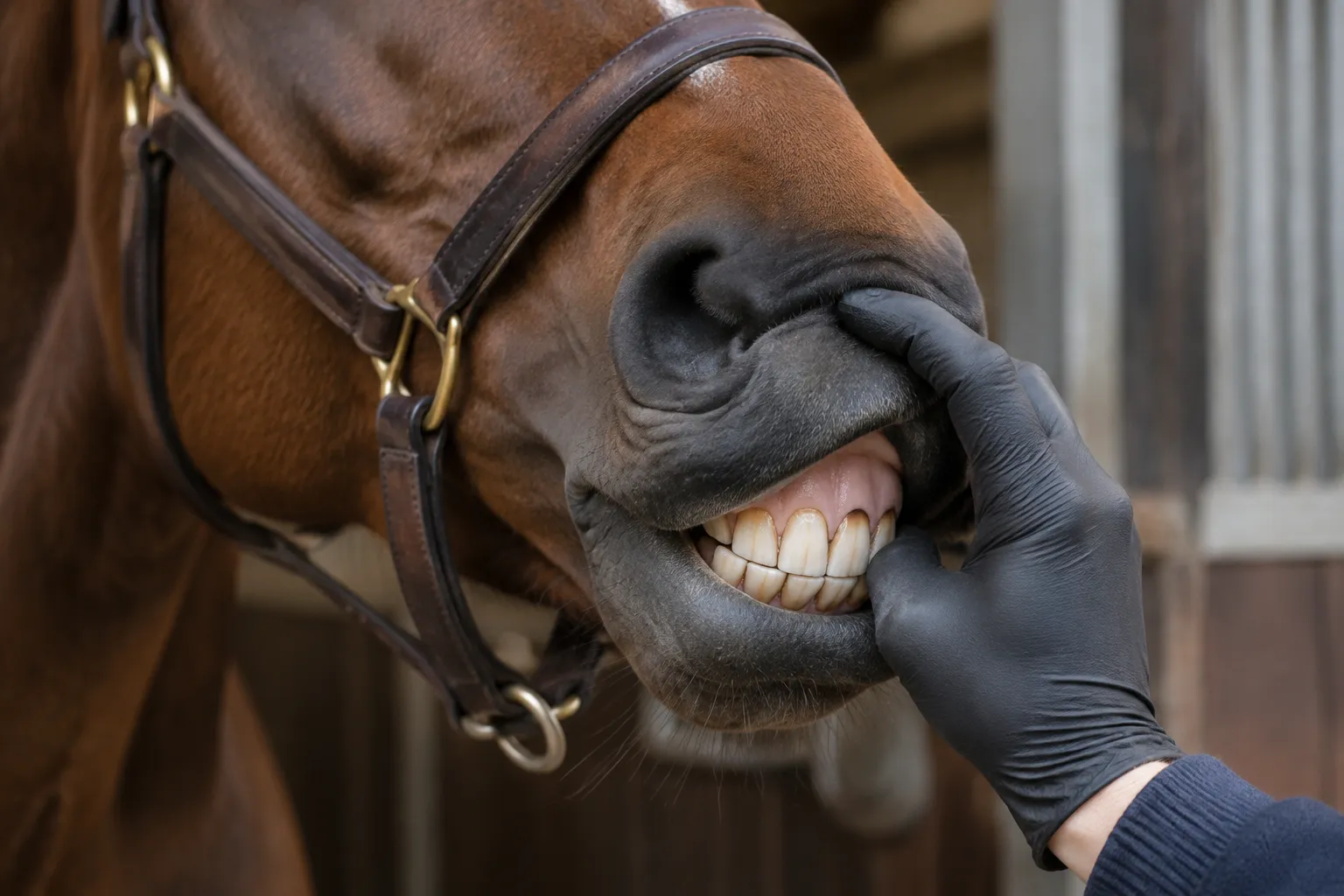
Leave aside the conversion nobody can source. The part that can be sourced is the sequence MSD lists as most useful for ageing a horse, which no calculator site publishes.
| Age | What is visible |
|---|---|
| 2½ yr | First permanent incisors erupt |
| 3½ yr | Second permanent incisors erupt |
| 4½ yr | Corner permanent incisors erupt |
| 5 yr | Corner incisors erupting; a dental star on the central incisors |
| 6 yr | Dental star on the middle incisors; cups gone from the upper central incisors |
| 7 yr | Dental star on the corner incisors |
| 8 yr | Central incisors trapezoidal; a white spot within the dental star |
| 10 yr | Enamel spots on the central incisors oval to triangular |
| 12 yr | Cups gone from all incisors |
| 18 yr | Enamel spots have disappeared from the central incisors |
| 20 yr | Enamel spots gone from the middle and corner incisors |
The shape of the arch changes too. MSD describes it as semicircular in a young horse and closer to a straight line in an old one, with the angle between upper and lower incisors becoming more acute with age. None of this gives you a human equivalent. It gives you something better, which is a defensible answer to the question underneath.
So what should you say?
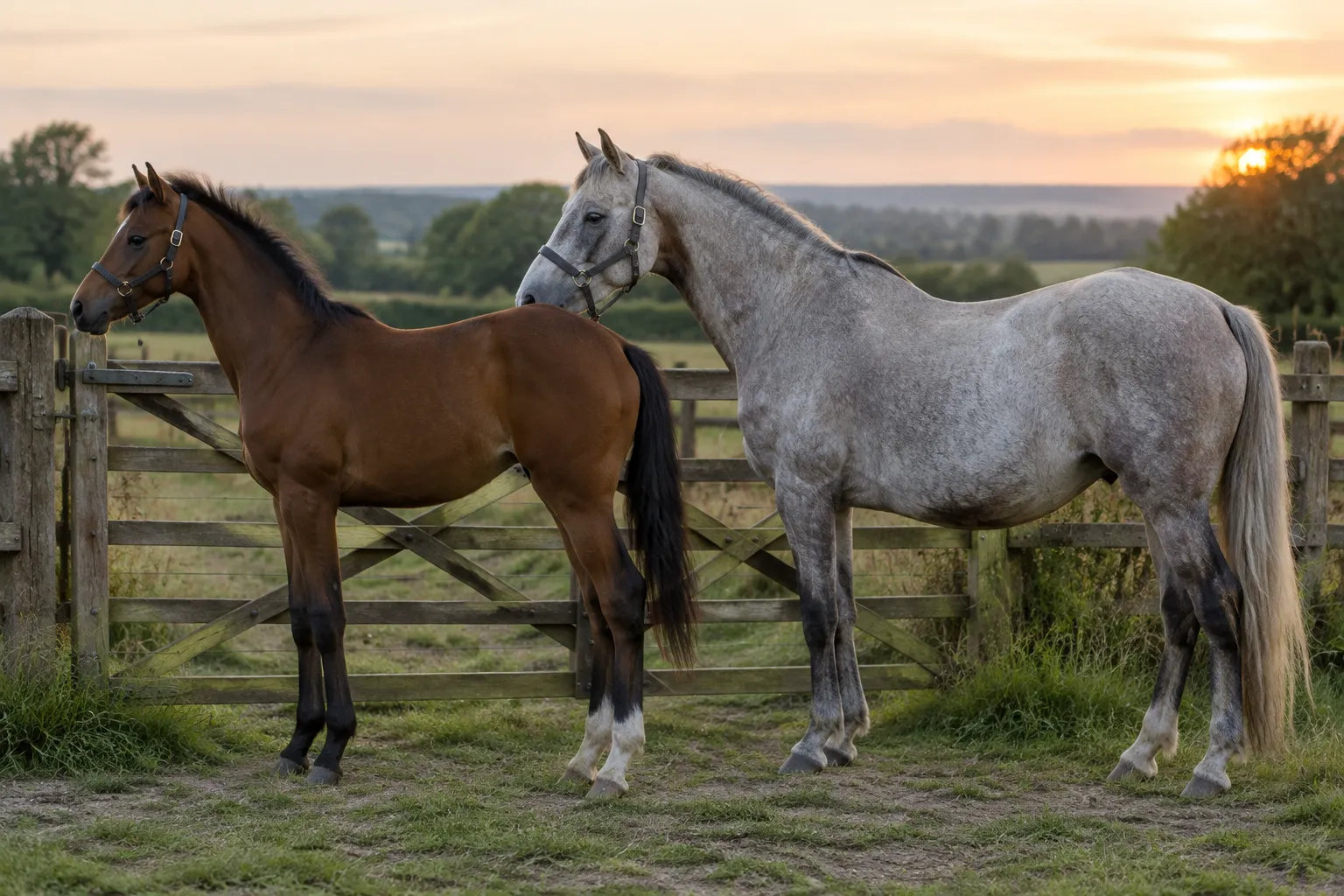
If you want a rough figure for conversation, the flat multiple of three is the one most people have met, and it is at least easy to check. If you want to be right, describe the stage instead of the number. A horse that has recently finished erupting its permanent teeth is a young adult whatever multiplier you apply, and a horse in its twenties is old by any of them. The stages are sourced. The multipliers are not.
For most owners the number is a way of saying something else anyway: that the horse has been around a long time, and that the years have counted. Marking the horse as it is now tends to say it better than an arithmetic conversion does. For a big birthday, our birthday gifts for horse owners start from the horse’s name or a photo, and retirement gifts mark the year a horse steps back from work.
Related reading: how long horses live, at what age a horse should be retired, and the rest of the guides.