National Hunt racing, and what the horses jump.
The hurdle height everybody quotes is the height of the panel, not the height of the jump. The regulator's own specification says so.
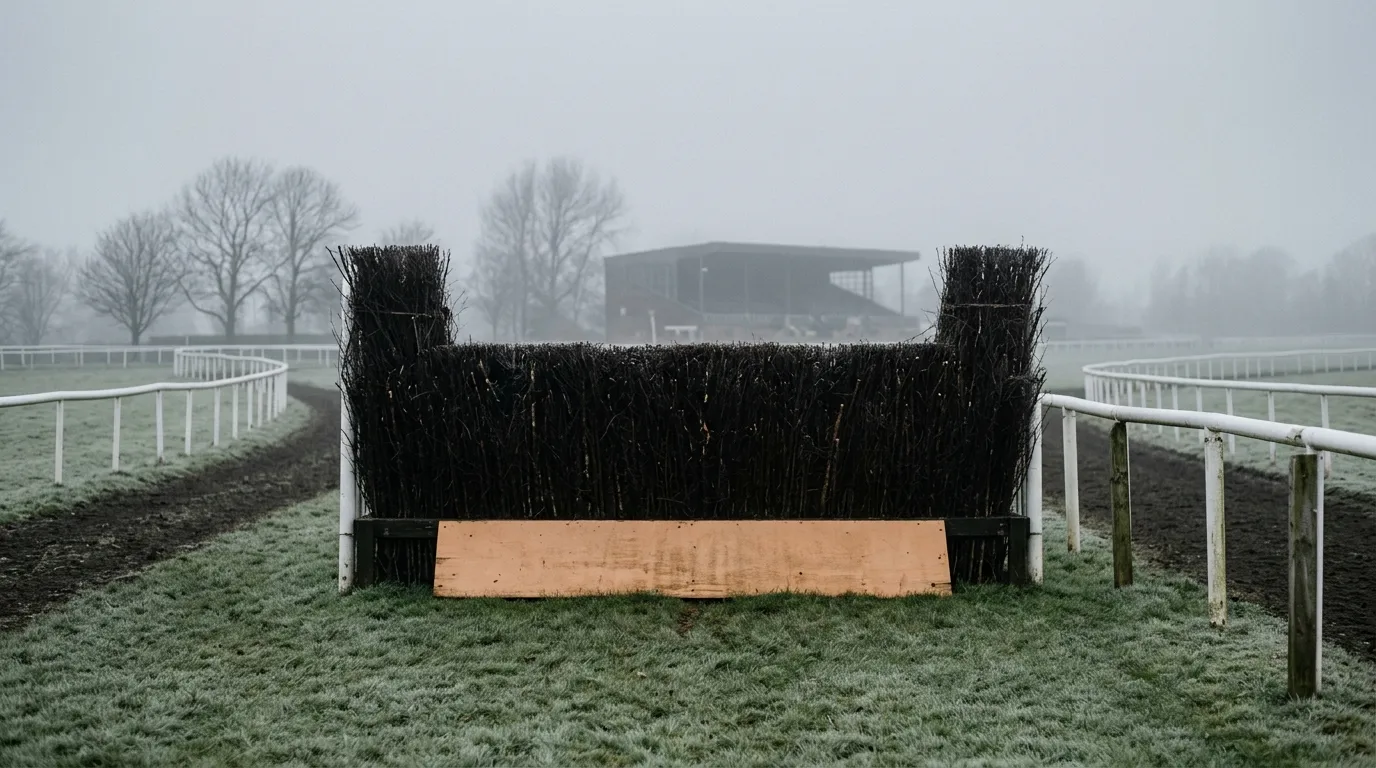
National Hunt is the formal name for jump racing in Britain: racing run under the Rules of Racing over obstacles, as against the flat. There are two obstacles, and almost everything else about the sport follows from which of them a race is run over.
The hurdle, and the number everybody repeats
Ask how high a hurdle is and you'll be told three feet six inches. Every beginner’s guide on the subject says it. It is the correct figure for the wrong thing.
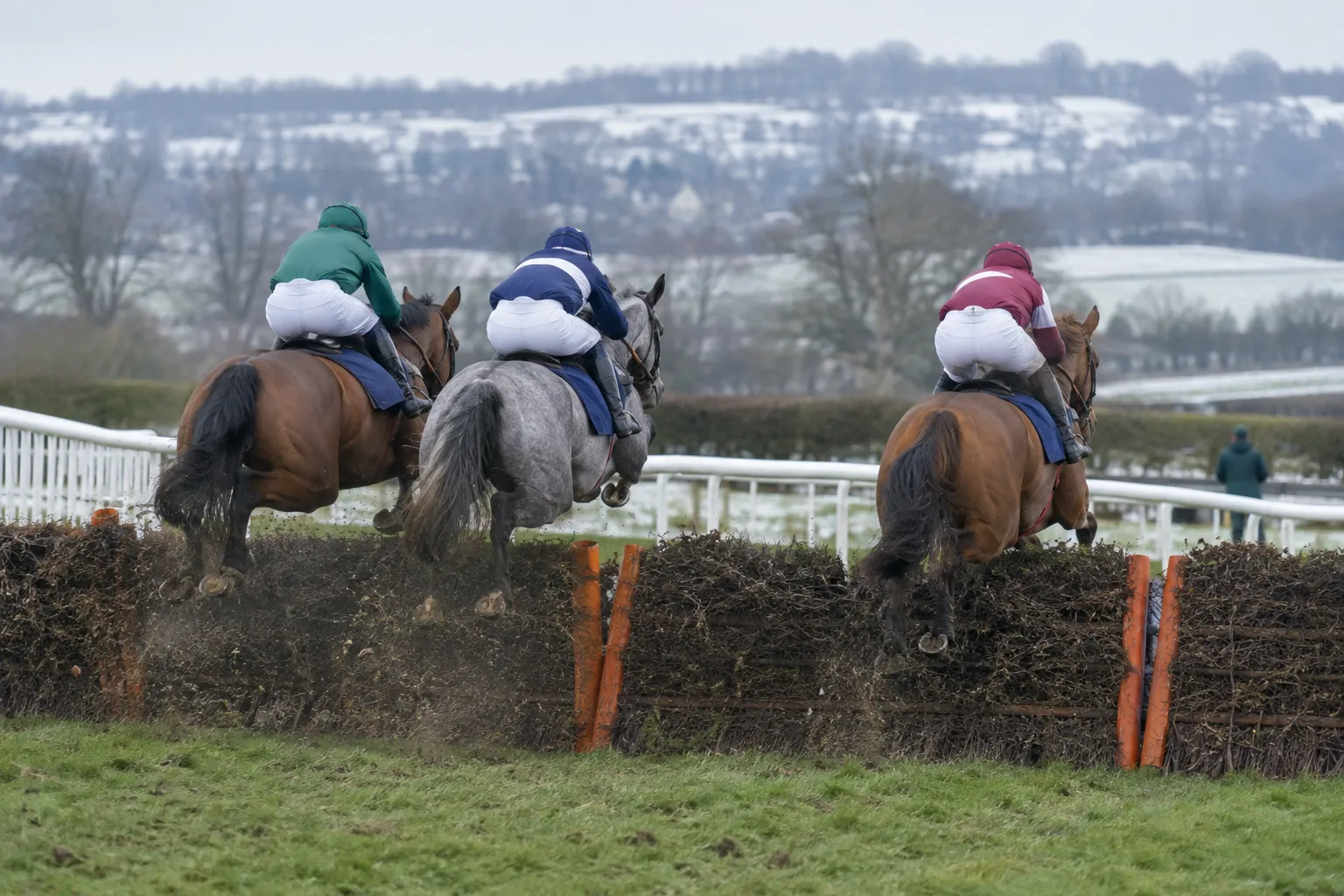
The British Horseracing Authority publishes the specification, and it separates two measurements that the guides run together. First the panel: “Timber Hurdles are to be not less than 3 feet 6 inches from the top bar to the bottom bar.” That is the hurdle lying flat, measured across itself. Then the obstacle as the horse meets it: “Hurdles are driven into the ground so that the bottom bar rests on the ground. The angle of the hurdle is such that the top bar is 37 inches above ground and the overlay from the top bar in the direction of racing is 20 inches beyond the bottom bar.”
Three feet six inches is forty-two inches. The top bar stands at thirty-seven. The five inches go into the lean, and the lean is deliberate: the hurdle gives way when it is struck, which is the whole point of it. So the widely quoted height is real, it is the height of the panel, not the height of the jump.
Two further figures rarely make it into the guides. The hurdle overhangs its own base by 20 inches in the direction of racing, so a horse is clearing something that leans away from it, not a vertical. And each flight “must be at least 30 feet in width”.
The fence, where depth matters more than height
Steeple chase fences are a different kind of object. The BHA sets the minimum: “Fences may vary in height from a minimum (at the time of pre-season BHA inspection) of 4 feet 6 inches measured on the take-off side.” Note the qualification. It is a minimum at inspection, not a fixed height, and it is measured from the side the horse takes off from.
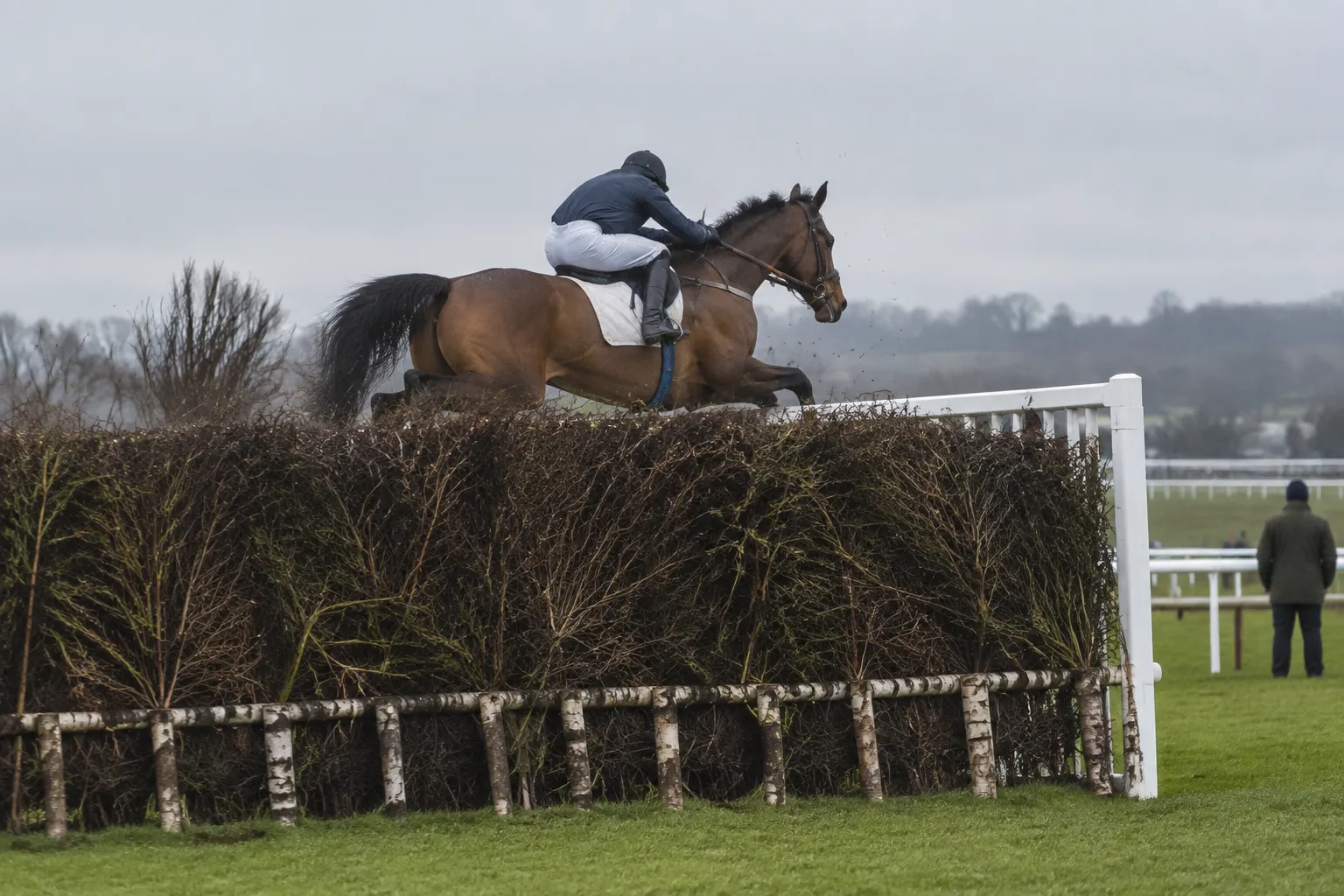
The number that describes the obstacle is the one nobody quotes. A fence is built “on a base between 6 feet and 6 feet 6 inches in depth”, measured from the take-off board to the back of the fence. A racing fence is therefore half as deep again as it is tall. The horse is not jumping a wall; it is jumping something closer to a hedge, and the length of the leap is set by the depth, not the height.
The rest of the specification is equally particular. The slope must reduce the fence “to not less than 1 foot 6 inches” thick at the top. Every fence on a course must be of the same materials, either all birch or birch with the bottom brought out in spruce “to a maximum of 3 feet 6 inches up the face of the fence”. And the detail that shows up in every photograph without anyone naming it: “Take-off boards are painted light matt orange.”
Both specifications above are quoted from the BHA’s published answers, which carry the date 12 June 2014. They are the regulator’s own wording, not a summary of it, and we have not found a later published revision of these particular figures.
Hurdles first, fences later
The two obstacles explain the shape of a jumping career. A horse that has never raced over obstacles does not begin over six-foot-deep birch; it begins over something that leans and gives way. The progression from hurdles to fences is the ordinary route, and plenty of horses never make the second step, which is a judgement about the horse, not a failure of it.
It is also why the two words are not interchangeable in a race title. A hurdle race and a steeple chase are different tests of the same animal, and the winner of one is not assumed to be capable of the other.
Where it sits alongside the rest
National Hunt is the professional end. The amateur end, run largely by hunts across farmland and tied to hunting by rule, is point-to-point, which is where a great many jumping horses start. The horses themselves are mostly Thoroughbreds, and what becomes of them afterwards is covered in what happens after racing.
More in the rest of the guides.
For the person who owns or shares a jumper, see horse racing gifts.