What is showjumping?
Showjumping is a discipline where horse and rider jump a course of fences as cleanly and quickly as possible.
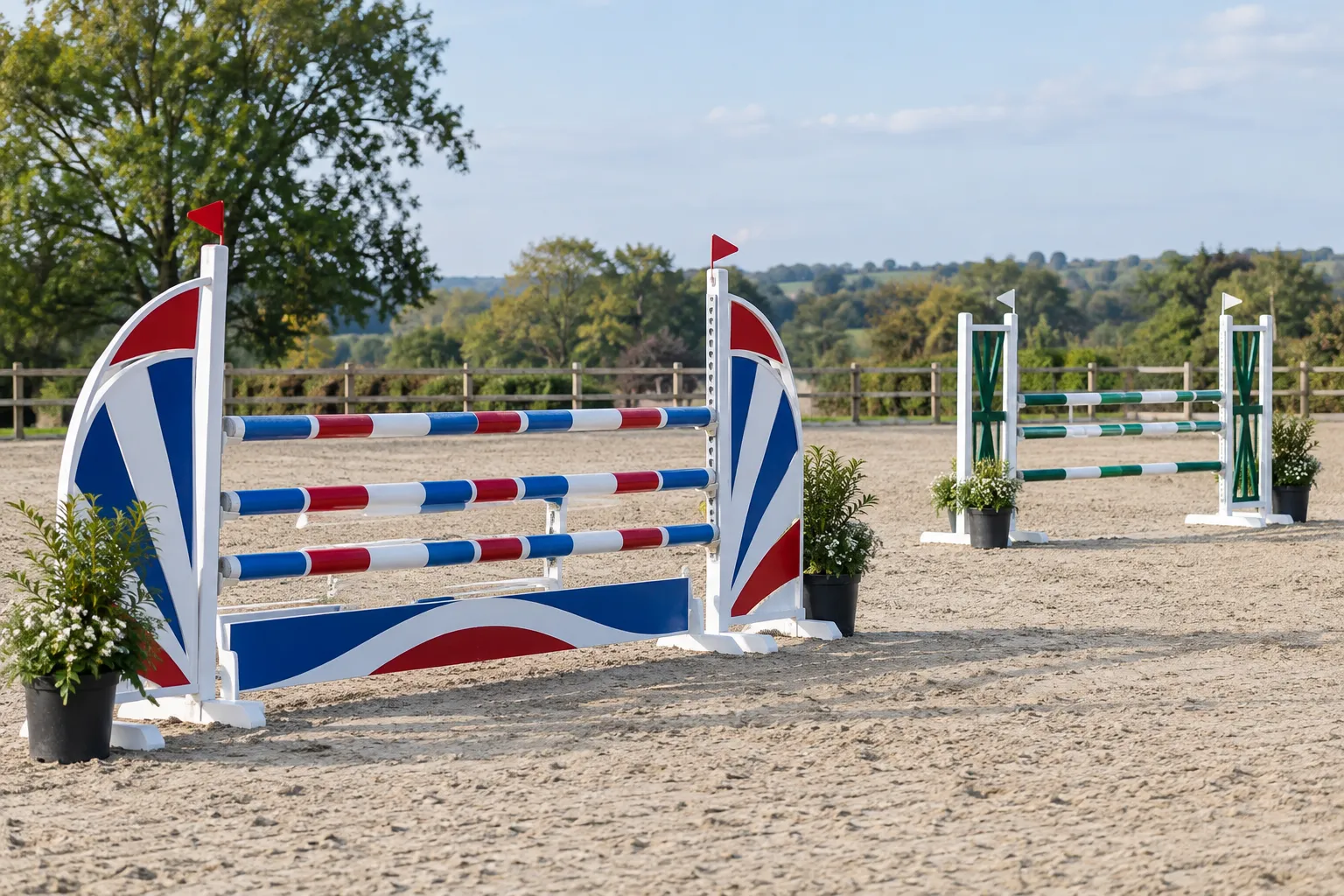
In showjumping, a horse and rider tackle a course of coloured fences, often poles balanced on cups that fall if knocked, against the clock. Faults are added for a knockdown, a refusal, or going over the time allowed, and the rider who jumps clear in the fastest time wins. The penalty values are not folklore: they are set in the FEI’s Jumping Rules and, domestically, in British Showjumping’s rulebook, and they change. The 2026 FEI rules were reported to alter both the refusal penalty and the number of refusals that eliminates, and we could not open the rulebook itself to read the current figures, so this page will not print numbers it cannot source. Check the current rulebook, or the schedule for the class you are entering.
The fences on a course
| Fence | What it asks of the horse |
|---|---|
| Upright | Poles stacked vertically: height and a careful front leg |
| Oxer | Two uprights close together: height and width at once |
| Triple bar | Three poles rising like a staircase: scope and a forward stride |
| Water tray or liverpool | A shallow tray of water under or in front of a fence: bravery |
| Combination | Two or three fences one or two strides apart: rideability |
How a class is decided
It’s one of the more spectator-friendly equestrian disciplines because the outcome is easy to follow: clear rounds, faults, and a jump-off if riders are tied. The jump-off is a shorter, raised course against the clock, so the rider who takes the tightest turns without a pole down wins. Riders walk the course on foot beforehand, counting strides between fences, because a horse cannot see the course in advance.
Where to start

Most riders start at unaffiliated shows run by riding clubs and local centres, often with clear round classes: jump the course without a fault and you win a rosette, with no jump-off and no clock to beat. Affiliated competition in Britain runs under British Showjumping, whose classes climb in height and prize money from the novice levels up to the international arenas.
Watching a class
If you're going to watch, stand near a combination or the water tray, where faults often happen, and stay for the jump-off. Arrive in time for the course walk: watching riders pace out the strides tells you which fences worry them before a horse has set foot in the arena. Big shows such as Hickstead and the Horse of the Year Show sell tickets for their international classes, while the showjumping rings at county shows are usually part of the price at the gate.
What makes a showjumper
It sits alongside dressage as one of the best-known riding disciplines, though the skills involved are quite different: a horse that is bold, careful with its legs, and responsive to a stride adjustment. Warmblood studbooks breed for this discipline separately from dressage, the Hanoverian and the KWPN among them, and the Irish Sport Horse has a long record over coloured poles. For the rider chasing clear rounds, see our gifts for horse riders.