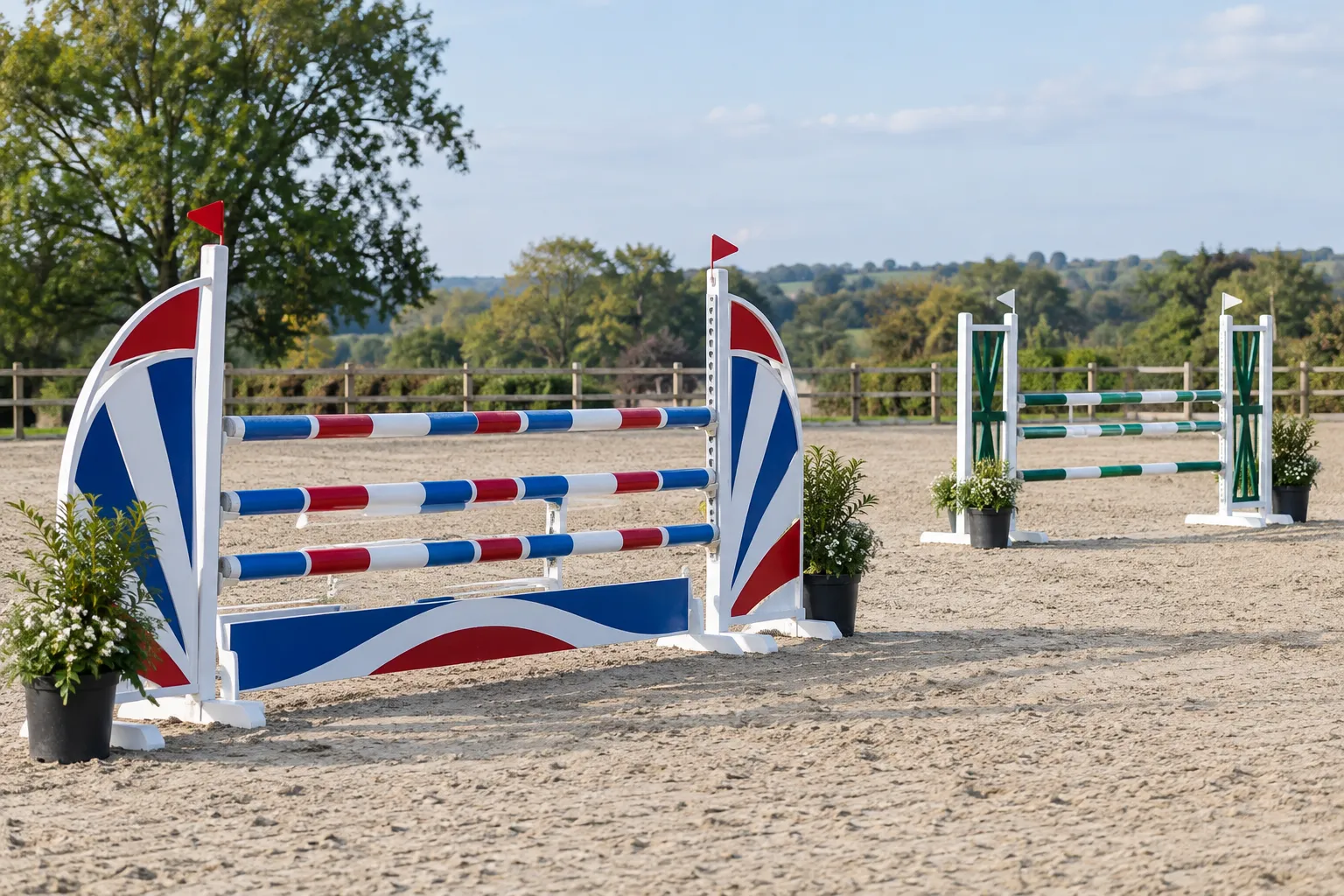
What is dressage?
Dressage is a discipline where a horse and rider perform a set sequence of precise movements, judged on accuracy and harmony, not speed.
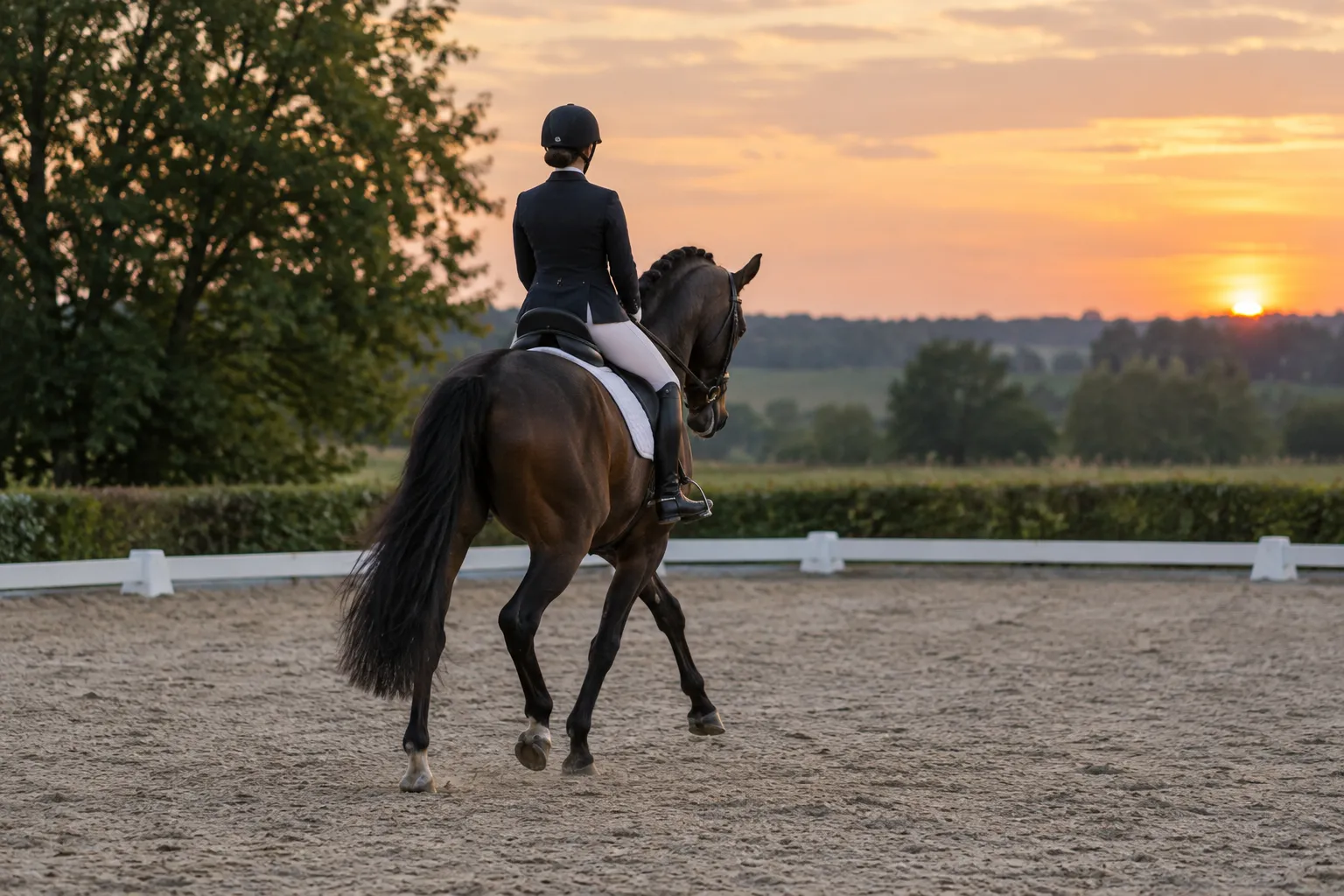
Dressage tests a horse and rider through a prescribed sequence of movements: transitions, circles, lateral work, and more advanced steps at higher levels, ridden from memory in an arena. Judges score each movement, and the horse and rider who show the most accuracy, rhythm, and apparent ease together come out on top.
How a dressage test is judged
Each movement in the test gets a mark out of ten from each judge, and some carry a coefficient that doubles them. There are also collective marks for the paces, the horse’s impulsion and submission, and the rider. The total is turned into a percentage, which is how results are published: at most levels a score in the 60s is respectable, and the 70s is usually in the ribbons.
The arena is a rectangle of sand or grass, 20 by 40 metres for many lower-level tests and 20 by 60 metres for the rest, with letters around the edge marking where each movement starts and ends.
The levels in Britain
| Level | What it asks for |
|---|---|
| Introductory and Preliminary | Walk, trot and canter on circles and straight lines |
| Novice and Elementary | Lengthened strides, simple changes, the start of lateral work |
| Medium and Advanced Medium | Medium and extended paces, half-pass, flying changes |
| Advanced, then the international levels up to Grand Prix | Pirouettes, tempi changes, piaffe and passage |
British Dressage runs the national levels; above them the FEI tests run from Prix St Georges to Grand Prix, the level ridden at the Olympics.
Dressage to music

At the top level riders also perform a freestyle to music, the Kür, choosing their own sequence of movements to a soundtrack. It is the easiest way into the sport for a newcomer, because the music makes the rhythm of the horse’s paces audible, and it is what most people picture when they think of Olympic dressage.
Starting out
Most riders start with an unaffiliated introductory test at a riding club or local centre, ridden in a 20 by 40 metre arena. At the lower levels a caller can usually read the test aloud as you ride, which takes the pressure off memory. Walking the test on foot beforehand, letter by letter, is how most people learn it, and a friend filming the test shows you what the judge saw.
Dressage and the other disciplines
Unlike showjumping or eventing, it doesn’t use obstacles or a clock; the discipline is often described as a conversation between horse and rider made visible, and it rewards the training put in over months and years, not a single day’s performance. It is also the first phase of eventing. It sits alongside showjumping as one of the best-known riding disciplines. The horses at the top of it come from the warmblood studbooks, which grade young horses on movement long before they compete. The World Breeding Federation for Sport Horses ranks those studbooks on "the points of the Top 6 performing horses of each studbook", and the KWPN heads its dressage table, with the Hanoverian among the German studbooks behind it. For the rider working towards it, see our gifts for horse riders.