What is a Thoroughbred?
A Thoroughbred is a horse breed developed for racing, prized above all for its speed and athleticism.
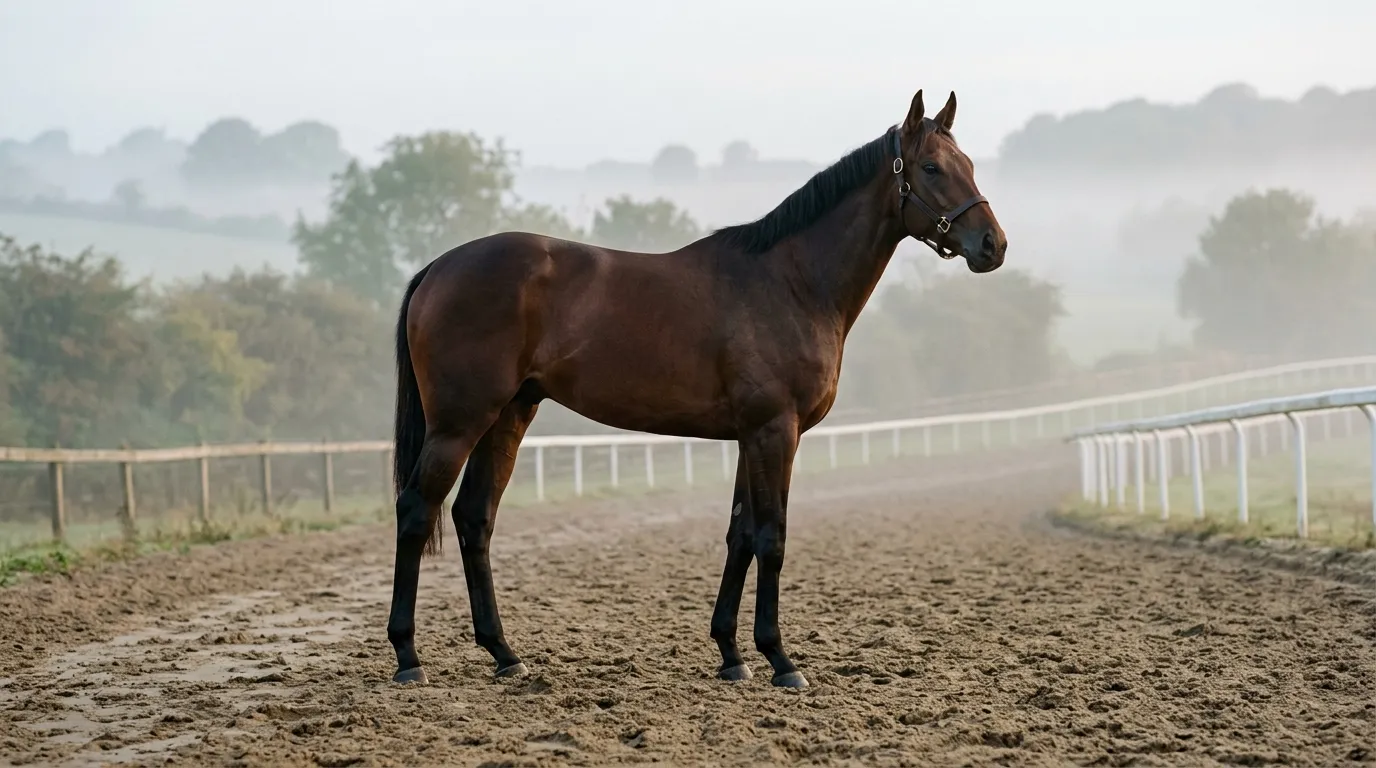
The Thoroughbred is the one British breed defined by a book rather than by a description. Weatherbys published the first volume of the General Stud Book in 1791, under James Weatherby, and still keeps it: a new edition appears every four years. A horse is a Thoroughbred because it is in the book, and it is in the book because its parents were. Breed histories name three imported stallions as the foundation of the male line — the Byerley Turk, the Darley Arabian and the Godolphin Arabian — though we could not source that to a racing authority, and the detail of how far each line actually carries is argued over by people who study it seriously. What the book indisputably records is centuries of breeding for one thing: speed, stamina, and the build to carry a rider at pace. A refined head, long sloping shoulder, and deep girth are the classic hallmarks, and the breed's influence runs through many of the sport horses ridden today.
Plenty of Thoroughbreds go on to a second career after racing, retrained for eventing, showing, hunting, or simply life as a much-loved riding horse. Their sensitivity and athleticism make them rewarding but demanding rides, which is part of why owners feel such a strong bond with them. Our gifts for Thoroughbred owners are made with exactly that in mind, and it's worth reading about the wider spread of horse breeds too.
The book, not the look
What actually makes a Thoroughbred a Thoroughbred is not the look but the paperwork. Weatherbys has kept the General Stud Book since 1791 and describes it as "the only verified record of Thoroughbreds in Great Britain and Ireland", and every Thoroughbred alive traces to three stallions imported into England: the Byerley Turk of the 1680s, the Darley Arabian of 1704 and the Godolphin Arabian of 1729.
How narrow the breeding has to be
The rule that surprises people is how narrow the breeding must be. Weatherbys’ own conditions of entry state that any foal "resulting from or produced by the processes of Artificial Insemination, Embryo Transfer, Cloning, or any other form of genetic manipulation ... shall not be eligible for registration in the General Stud Book or any Approved Thoroughbred Stud Book" — a position every Thoroughbred stud book in the world has operated since 1976. A stallion has to physically cover each mare, which is why a Thoroughbred sire covers a few hundred mares a year while a warmblood stallion can father thousands.
Racing is the short first chapter for most of them, and what follows it is covered in what happens to racehorses after racing.
Written by Craig Fearn, Stable & Hoof. Last updated .
Questions, answered
What does TB stand for in horses?
What are the characteristics of a Thoroughbred?
What are Thoroughbreds used for?
Can Thoroughbreds be bred by artificial insemination?
Try it
Type a horse's name and watch the print set itself. Free, no photo needed, about ten seconds.